Category: Astronomy History & Science

  • September 2026 – The Mother of Hubble

    Dr. Nancy Grace Roman – Courtesy NASA, Wikimedia Commons.

    In 1925, Nancy Grace Roman was born in Nashville, Tennessee. Her family moved frequently during her childhood, but it was her mother who first introduced her to the night sky. By the time Roman was 11 and living in Reno, Nevada, she had organized an astronomy club with her classmates. By high school, she already knew what she wanted to do with her life.

    It would not be an easy path.

    Roman earned her bachelor’s degree in astronomy from Swarthmore College in 1946 and her doctorate from the University of Chicago in 1949. She remained at the university for another six years, working at Yerkes Observatory and occasionally McDonald Observatory in Texas. With few opportunities for women to advance in academic astronomy, Roman eventually left for the Naval Research Laboratory, where she entered the emerging field of radio astronomy.

    In 1959, just six months after NASA was established, Roman joined the new agency. By 1960, she had become NASA’s first Chief of Astronomy and the first woman to hold an executive position there. Her responsibilities included planning astronomical missions and administering grants to support scientists across the country.

    It was there that Roman took on what would become her most famous challenge.
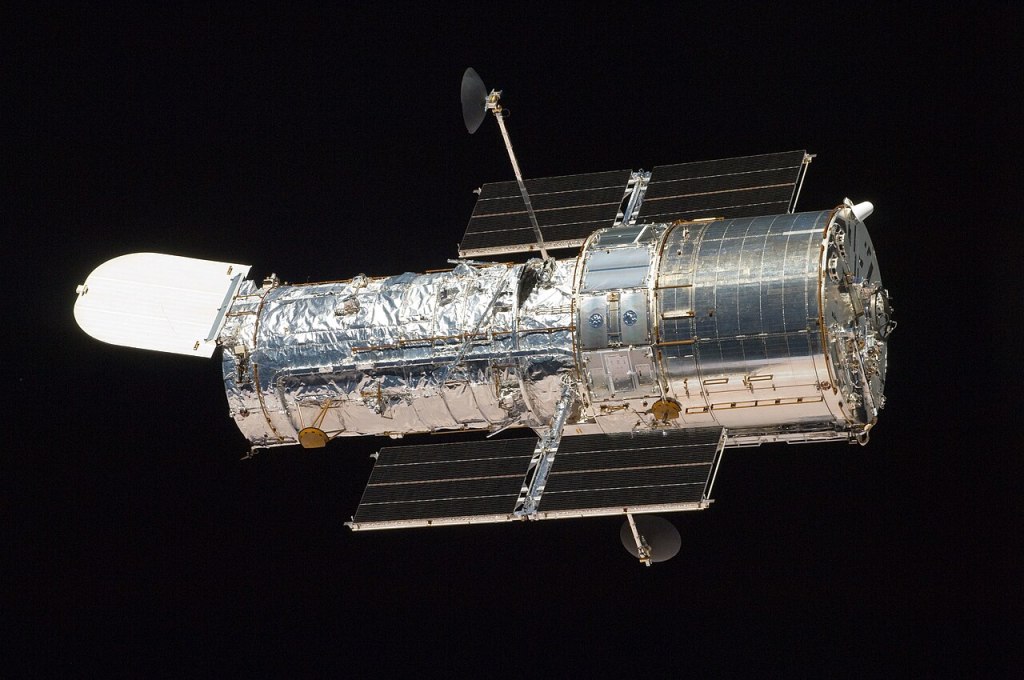
    The Hubble Space Telescope during STS-125 – Courtesy NASA, Wikimedia Commons.

    Astronomers had long wanted a large telescope above Earth’s atmosphere, where air and light pollution would no longer interfere with observations. The idea was ambitious, expensive, and far from guaranteed. Roman brought together astronomers and engineers, helped establish the scientific requirements, and spent years convincing NASA, the federal government, and Congress that the project was worth pursuing.

    The Large Space Telescope, as it was then known, eventually became the Hubble Space Telescope.

    Roman retired from NASA in 1979, more than a decade before Hubble launched in 1990. Her colleague and future Hubble Chief Scientist Ed Weiler eventually gave her the nickname “Mother of Hubble.” Astronomer Lyman Spitzer, who had advocated for a space telescope long before Hubble was approved, is often considered its “father.” Roman was instrumental in turning that idea into reality.

    Now, more than a century after her birth, Roman’s name is headed into space.
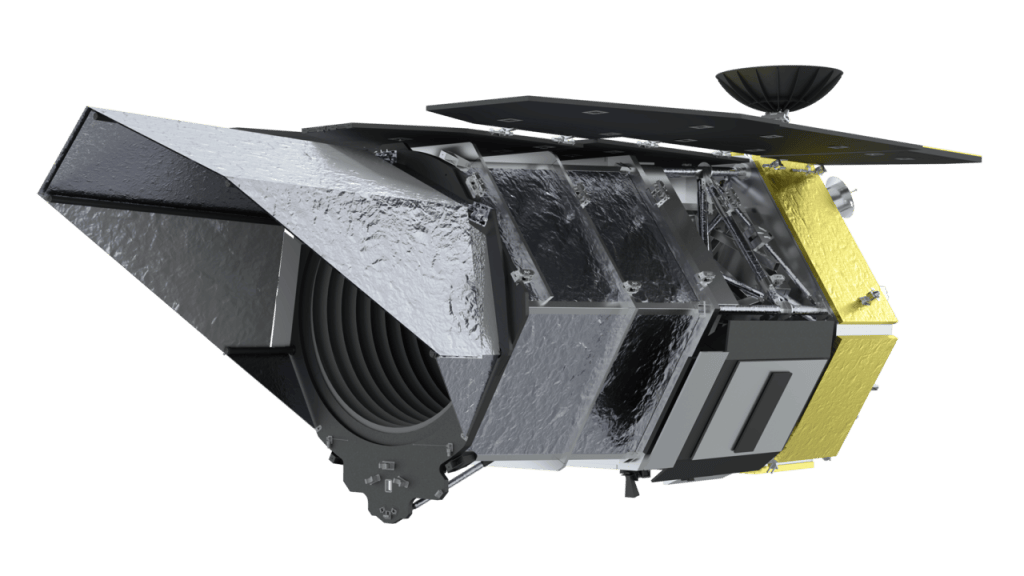
    Nancy Grace Roman Telescope – artist rendition, Courtesy NASA, Wikimedia Commons.

    As of this writing, NASA and SpaceX are targeting August 30, 2026 for the launch of the Nancy Grace Roman Space Telescope aboard a Falcon Heavy from Kennedy Space Center in Florida. Once launched, Roman will travel about one million miles from Earth to the Sun-Earth L2 point, where it will orbit the Sun while maintaining a useful position relative to Earth.

    Roman’s primary mirror is 7.9 feet across, the same size as Hubble’s. Its real advantage, however, is how much sky it can see at once. Its Wide Field Instrument will capture an area at least 100 times larger than Hubble’s field of view, allowing it to survey enormous portions of the universe much faster. Over its planned five-year primary mission, Roman will investigate dark energy and dark matter, study galaxies and exploding stars, and search for thousands of exoplanets. It will even attempt to directly image some distant worlds by blocking the light of their parent stars.

    Hubble changed astronomy by giving us a clearer view of the universe. Roman may change it again by giving us a much wider one.

    Nancy Grace Roman spent much of her career convincing people that looking beyond Earth’s atmosphere was worth the effort. Now, a telescope bearing her name is about to carry that vision nearly a million miles from home.

    Clear skies and happy viewing.

    Adam England is the owner of a local financial services firm and moonlights as an amateur astronomer, writer, and interplanetary conquest consultant.  Follow him on Instagram @TheBackyardAstronomerAZ and at http://www.ManzanitaInsuranceAndAccounting.com

  • The (Star)Light of Independence

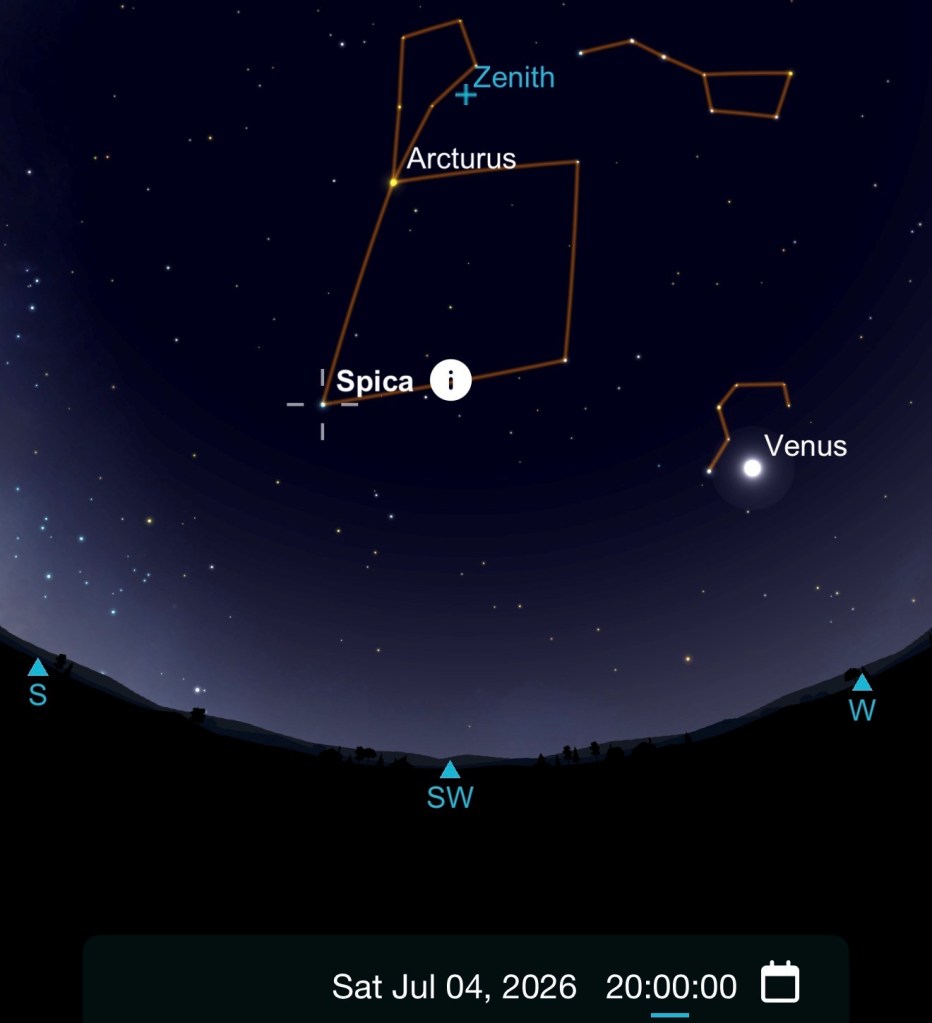
    Arc To Arcturus, Spike To Spica: Tracing A Line Through The Stars And American History This Independence Day– A Backyard Astronomer Special

    The Declaration of Independence, John Trumbull.

    The Big Dipper is one of those patterns that seems almost permanent once you learn it. Tonight, it is easy to pick out from a backyard in Arizona. It was just as easy to find from the deck of a wooden ship crossing the Atlantic in the 18th century, where a clear northern sky and a steady horizon were often all a navigator had to work with.

    It does not take much imagination to picture that same shape hanging over tall ships, guiding long crossings when coastal lights did not exist and shorelines were still uncertain. Polaris would have carried the weight of navigation, but the Dipper was the pointer, the familiar signpost rotating quietly around the pole night after night.

    From that same pattern, the first step is simple. Follow the arc of the Dipper’s handle outward and it lands on Arcturus.

    Arcturus is one of the brighter stars in the northern sky, and once you’ve identified it a few times, it becomes almost impossible to miss again. It sits about 37 light-years away, which means the light reaching us now left that star in the around 1989. That is recent enough to overlap with a world that already feels familiar—satellites, early personal computers, the modern shape of global communication beginning to settle into place.

    A lot has shifted since then, but not in ways the photons themselves could have witnessed. The light arriving at your eye is unchanged; the context around it is not.

    Extend that same arc a bit farther, and the line continues toward Spica.

    Arc to Arcturus, Spike to Spica. Sky oriented to Northern Arizona, 07/04/2026 at 8PM. SkySafari Pro.

    Spica is farther still, sitting roughly 250 light-years away. That distance places its light near the same point in time when the light of American independence first began its journey.

    When that light began its journey, the United States did not exist. The idea of it was still forming, debated, and untested. Since then, the country has expanded, fractured, reformed, industrialized, digitized, and extended its reach far beyond anything imagined at the time. Through all of that, the photons from Spica have been in transit, moving steadily outward with no awareness of the changes unfolding beneath them.

    So on a clear July night, there is something quietly fitting about that line across the sky. A simple hop from the Big Dipper leads to Arcturus, a relatively nearby star with light that has been traveling since late 20th-century Earth. Extend it again and you reach Spica, whose light has been en route across the entire span of American history.

    Arc to Arcturus. Spike to Spica. A navigational trick, yes, but also a reminder that when we look up, we are never really looking at “now.” We are looking at layered history, arriving one photon at a time.

    On Independence Day, the contrast feels sharper—an old sky overhead, and a relatively young nation still writing its own light into history.

    Adam England is the owner of a local financial services firm and moonlights (pun intended) as an amateur astronomer, writer, and interplanetary conquest consultant.  Follow him on Instagram @TheBackyardAstronomerAZ and at http://www.Manzanita-Insurance.com http://www.ManzanitaAccounting.com

  • May 2026 – A Fire in the Asteroid Belt

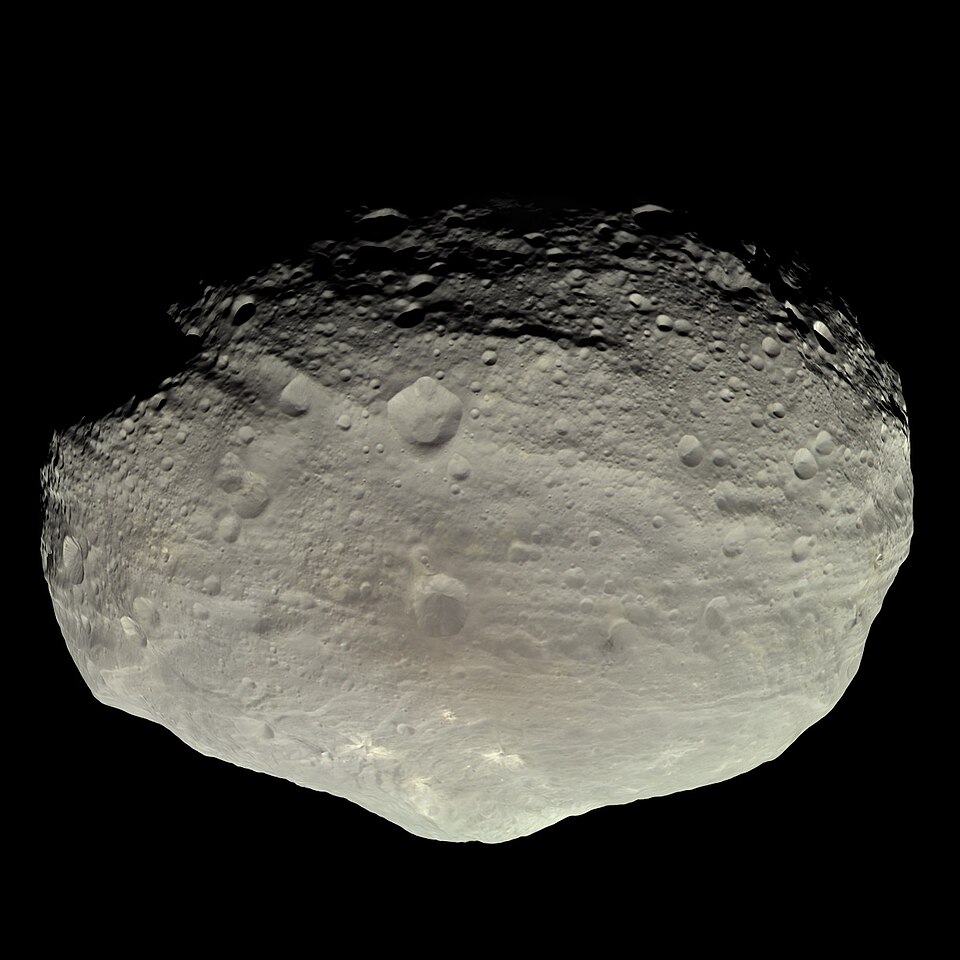
    Vesta – Imaged by Dawn spacecraft 2011, Courtesy NASA.

    The dawn of the 19th century marked a boom in astronomical discovery. Telescope technology improved rapidly, revealing a new class of objects orbiting between Mars and Jupiter.

    In 1801, Italian astronomer Giuseppe Piazzi discovered Ceres, the first and largest of these bodies. A year later, Heinrich Olbers identified Pallas. These objects didn’t behave like planets, yet they weren’t comets either. They occupied a region that seemed curiously empty.

    Olbers proposed a bold idea. He suggested to William Herschel that these bodies might be remnants of a destroyed planet. If so, additional fragments should lie along similar orbital paths. Searching near where the orbits of Ceres and Pallas intersected, Olbers made another discovery in 1807.

    He had found Vesta.

    Named after the Roman goddess of home and hearth, Vesta became the fourth asteroid discovered—designated 4 Vesta. While Olbers’ hypothesis captured imaginations for years, modern science tells a different story. These asteroids are not fragments of a single world, but leftover building blocks from the early Solar System. That Olbers found Vesta where he did was more coincidence than confirmation.

    Even so, Vesta stands apart.

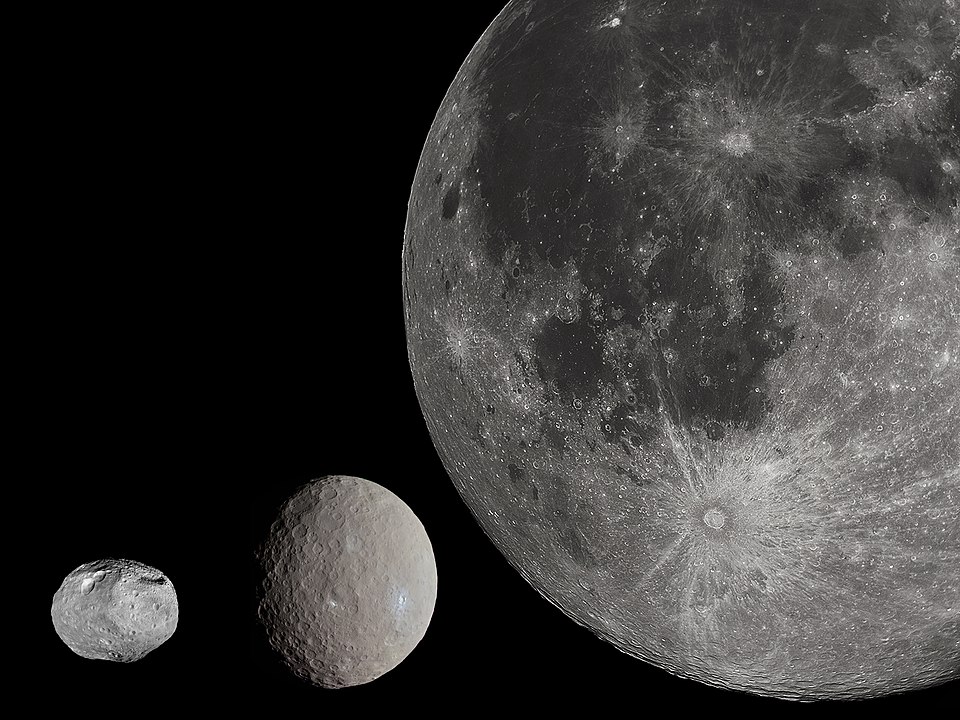
    Vesta Size Comparison – Courtesy NASA.

    With a diameter of about 330 miles, it is the second most massive object in the asteroid belt, behind Ceres. Unlike many smaller asteroids, Vesta is differentiated, with a core, mantle, and crust—more like a small planet than a typical space rock. In many ways, it is a world that nearly became one.

    Its surface tells a violent story. Massive impacts have carved enormous basins into its southern hemisphere, ejecting debris that has reached Earth as meteorites. These fragments give scientists a rare chance to study a protoplanet without leaving our planet.

    In 2011, NASA’s Dawn spacecraft arrived at Vesta, becoming the first mission to orbit a main-belt asteroid. Over a year, it mapped the surface in remarkable detail, revealing bright and dark regions, ridges, and deep craters.

    For backyard astronomers, Vesta offers a rare treat: it can be bright enough to see. Thanks to its high reflectivity, it may even reach naked-eye visibility under dark skies. More often, it appears as a bright, star-like point in binoculars or a small telescope, drifting slowly against the background stars.

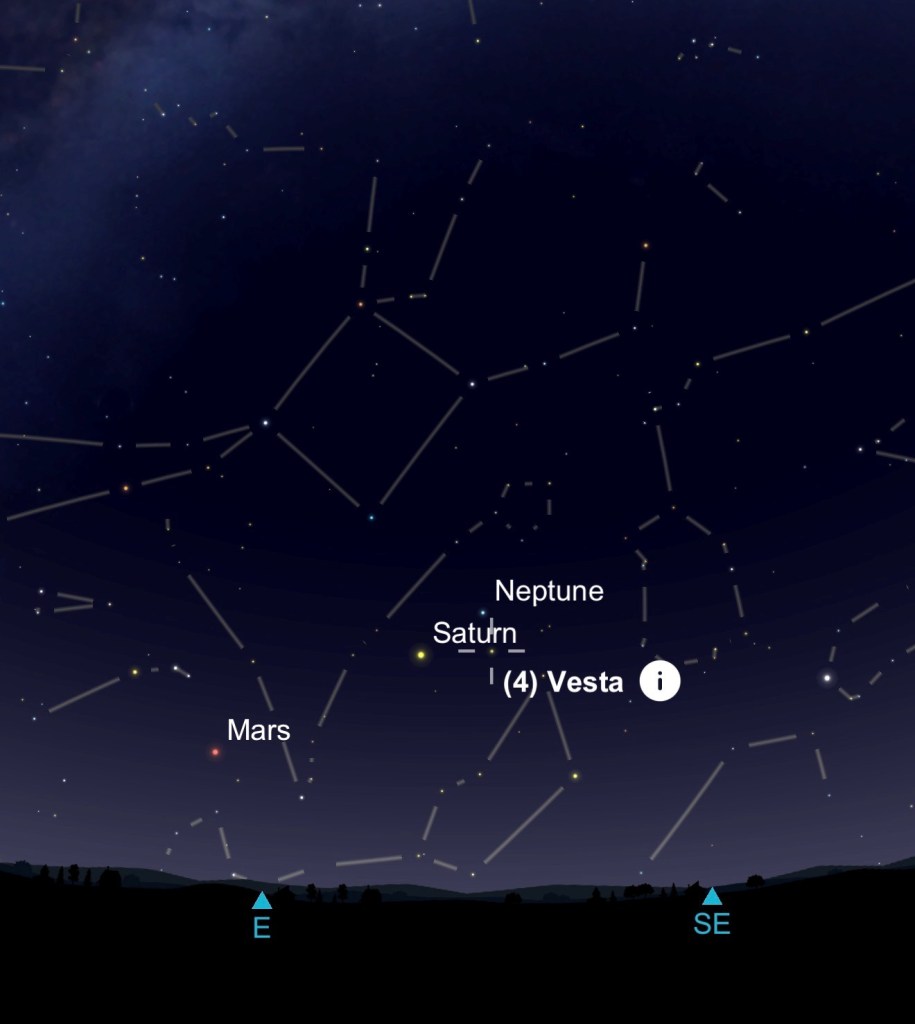
    Throughout May, Vesta will share the early morning sky with Saturn and Neptune, rising just before sunrise. Look low on the eastern horizon along the ecliptic, near the boundary of Pisces and Aquarius.

    Vesta location May 2026 – SkySafari.

    Unlike planets, Vesta won’t reveal a disk or surface detail in most backyard telescopes. The reward comes from tracking its motion. Over several nights, you can watch it shift among the stars—a subtle reminder that this “star” is actually a world in motion.

    So this May, take a moment to seek out Vesta. You’ll be looking at one of the earliest discovered members of the asteroid belt, a survivor from the dawn of the Solar System, and a world that almost was.

    Clear skies and happy viewing.

    #Astronomy #Space #STEM #STEMEducation #NASA

    Follow us at facebook.com/BackyardAstronomerAZ

    Check out the NAZ Astro mission of STEM education at facebook.com/NAZAstro

    Support STEM education patreon.com/NAZAstro

    Our awesome sponsors:

    facebook.com/manzanitains

    www.Manzanita-Insurance.com

    www.ManzanitaAccounting.com

    www.ManzanitaInsuranceAndAccounting.com

    www.BackyardAstroAZ.com

  • April 2026 – Earthshine: The Da Vinci Glow

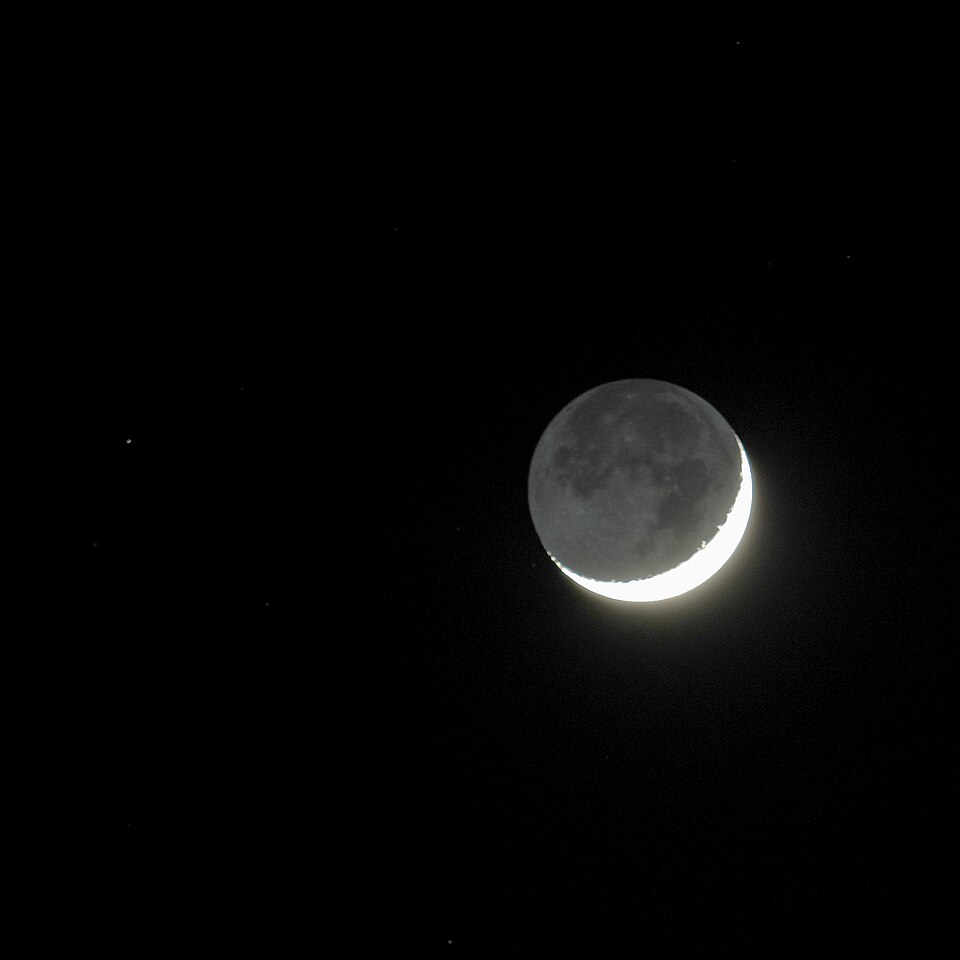
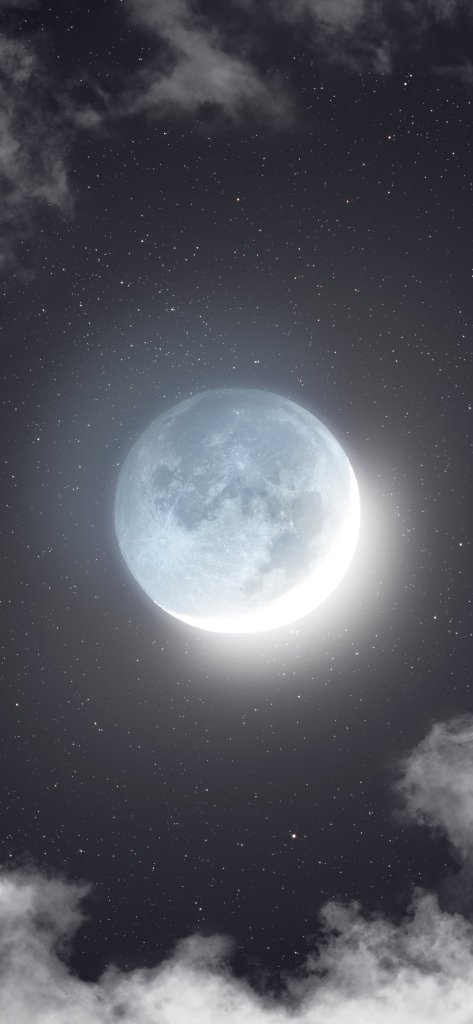
    Earthshine – Courtesy Bautsch, Wikimedia Commons.

    Step outside on a clear evening and look for a thin crescent Moon hanging low in the twilight. If the sky is dark enough, you may notice something unexpected: the rest of the Moon faintly glowing. Not bright like the crescent itself, but softly illuminated, as if the entire lunar disk were suspended in dim gray light.

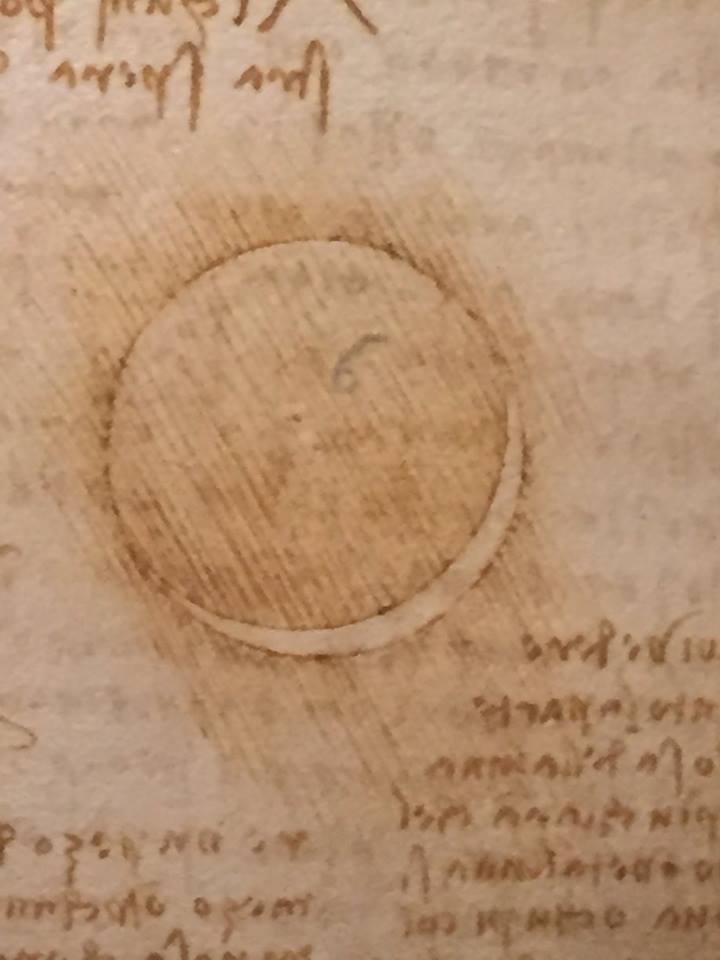
    This phenomenon is known as earthshine, sometimes called the Da Vinci Glow. More than five hundred years ago, the Renaissance artist and scientist Leonardo da Vinci correctly reasoned what caused it. The Moon’s night side, he proposed, is illuminated by sunlight reflecting off the Earth.

    Sketch of Earthshine by Leonardo Da Vinci from Codex Leicester (c. 1510).

    Just as the full Moon brightens our night sky, the Earth can do the same for the Moon.

    When the Moon appears as a thin crescent from our perspective, someone standing on the lunar surface would see nearly a full Earth in their sky. Our planet is far more reflective than the Moon, thanks to its clouds, oceans, and ice. Sunlight reflects off Earth, travels to the Moon, and softly illuminates the portion of the lunar surface that would otherwise be dark.

    It’s quite a journey for a ray of sunlight: Sun to Earth, Earth to Moon, and then back again to our eyes.

    The result is the ghostly glow that outlines the Moon’s darker hemisphere.

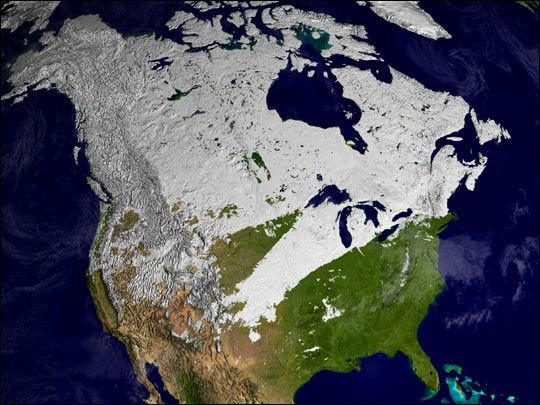
    Northern Hemisphere snow cover, February 2002 – Courtesy NASA.

    Earthshine is easiest to see when the Moon is in its crescent phases, just a few days before or after a new Moon. During this time the sunlit crescent is thin, allowing the dim Earth-lit portion to stand out more clearly.

    In April 2026, the new Moon occurs on April 17, making the best opportunities to observe earthshine occur on the surrounding nights.

    Look for it in the morning sky from April 14 through April 16, just before sunrise in the eastern sky. Another excellent window appears in the evening sky from April 19 through April 22, shortly after sunset in the west.

    You don’t need a telescope to see earthshine. In fact, it is often easiest to appreciate with the naked eye or a pair of binoculars, when the entire Moon fits comfortably in your field of view. Through a small telescope, the effect becomes even more striking. The dark portion of the Moon appears softly illuminated, revealing faint hints of maria and craters floating in the dim glow.

    Earthshine (composite) – Courtesy @AJamesMcCarthy

    Early spring can be one of the best seasons for earthshine in the Northern Hemisphere. Snow and ice left from winter increase Earth’s reflectivity, meaning more sunlight is bouncing off our planet and onto the Moon.

    What makes earthshine especially fascinating is that it reminds us that the Earth and Moon are constantly lighting each other.

    The Moon brightens our nights, guiding travelers and astronomers alike. At the same time, our own planet is shining back, casting its pale reflection across the lunar landscape.

    So the next time you see a slender crescent Moon in April’s twilight sky, look closely at the darker portion of the disk. That gentle glow you see is sunlight reflected from oceans, clouds, and continents — the light of Earth itself returning to the Moon.

    Clear skies and happy viewing.

    Adam England is the owner of a local financial services firm and moonlights as an amateur astronomer, writer, and interplanetary conquest consultant.  Follow him on Instagram @TheBackyardAstronomerAZ and at http://www.ManzanitaInsuranceAndAccounting.com
  • February 2026 – Back to the Moon

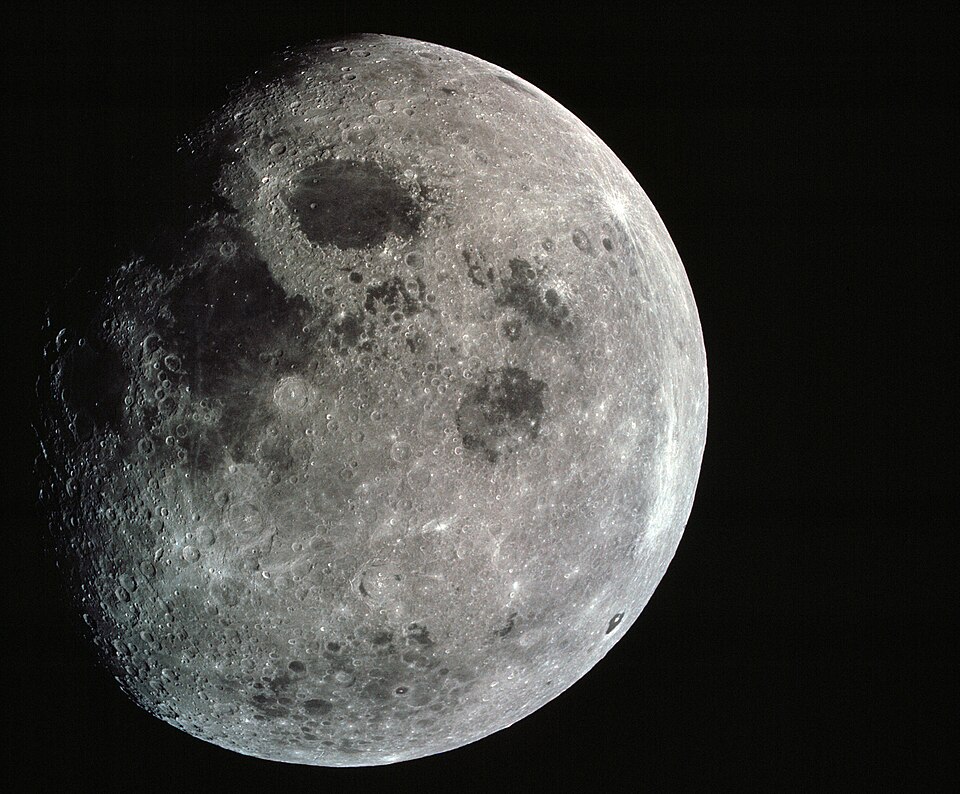
    The Moon, taken by the Apollo 8 crew – Courtesy NASA, Wikimedia Commons.

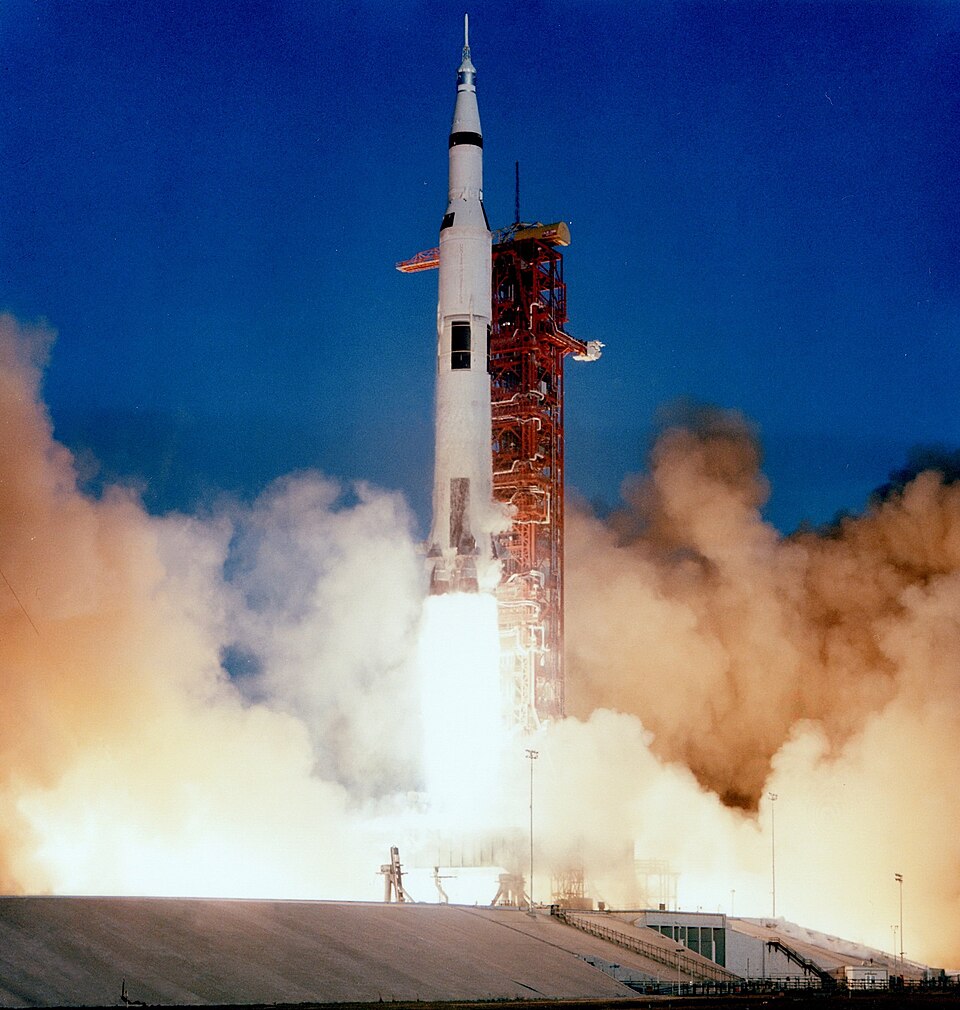
    Outside of space enthusiasts, Apollo 8 is an almost forgotten mission. On December 21, 1968, three astronauts launched aboard a Saturn V rocket from Florida’s Kennedy Space Center. Just 68 hours later, Frank Borman, Jim Lovell, and William Anders became the first humans to orbit the Moon. A mere eleven years after the launch of Sputnik—the first artificial satellite—and humanity was already preparing to set foot on another world.

    Liftoff of Apollo 8 – Courtesy NASA, Wikimedia Commons.

    That historic step, however, would come seven months later. The systems required to land on the Moon were still being built and tested. Apollo 8’s mission was instead one of proof: to validate the Command and Service Module, perform lunar orbital maneuvers, scout potential landing sites, demonstrate navigation and communications systems, and—most importantly—confirm that humans could travel to the Moon and return safely to Earth.

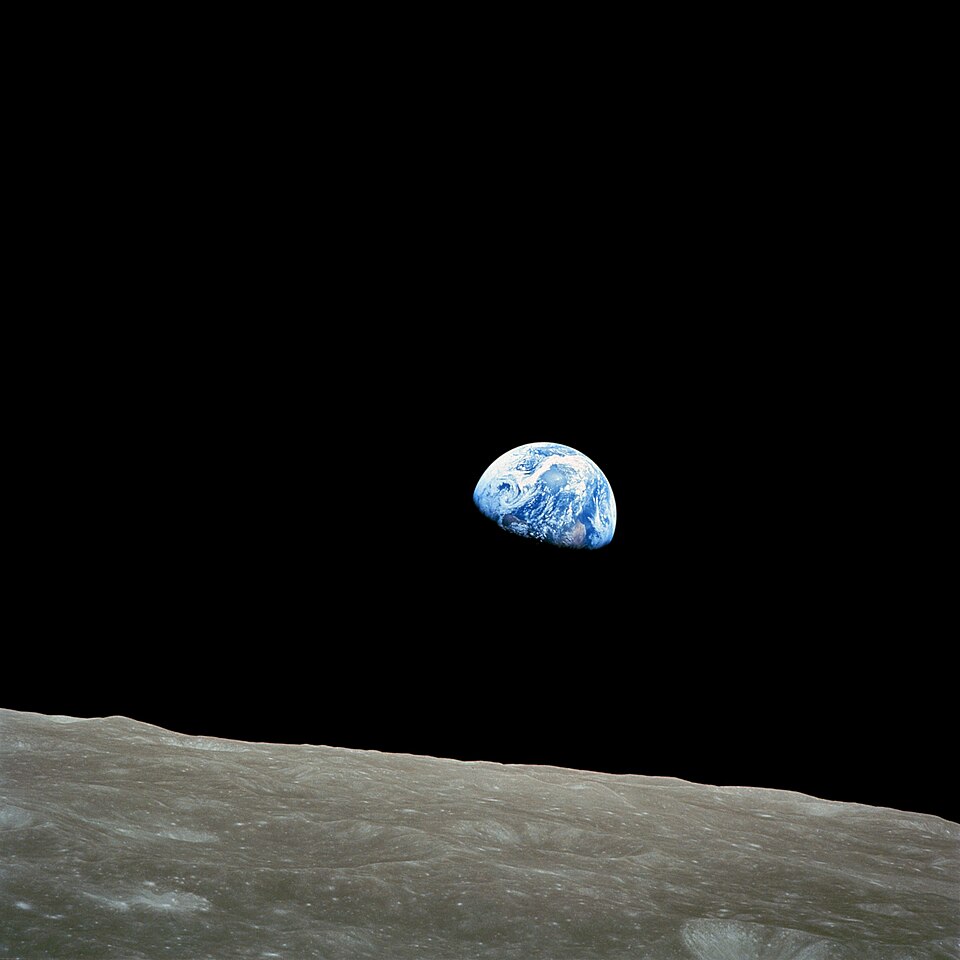
    These three men were the first to leave Earth orbit, the first to see the Moon’s far side with human eyes during ten lunar orbits, and the first to witness an Earthrise—an image forever immortalized by Lunar Module Pilot William Anders.

    “Earthrise” – taken by Apollo Astronaut Bill Anders, courtesy NASA, Wikimedia Commons.

    You may recognize the name Jim Lovell. Portrayed by Tom Hanks in the 1995 film Apollo 13, Lovell would later command that ill-fated mission and become the first human to travel to the Moon twice—though, like Apollo 8, his journeys would remain in orbit.

    Apollo 17, launched in December 1972, marked the last time humans traveled to the Moon. Three planned missions were canceled, and the remaining Saturn V rockets were placed in museums across the country. Fifty-four years later, humanity has yet to venture beyond low-Earth orbit.

    That is—until now.

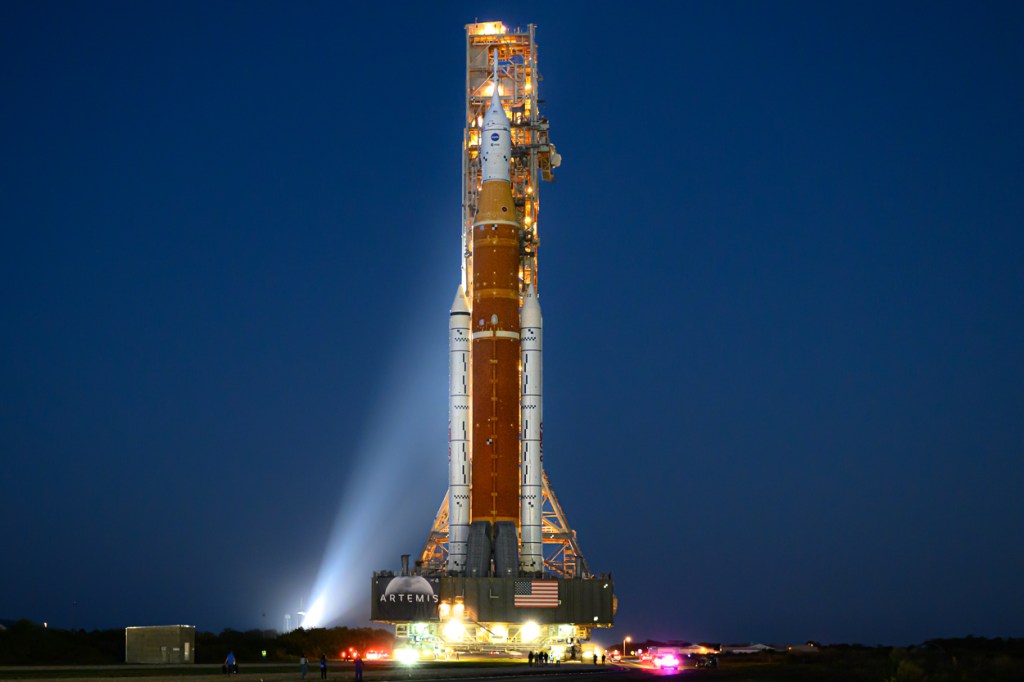
    With launch windows opening as early as Friday, February 6, 2026 will see humans once again orbit the Moon. Three American astronauts and one Canadian Space Agency (CSA) astronaut will strap themselves atop NASA’s Space Launch System (SLS) rocket and embark on a ten-day journey around the Moon and back aboard the Orion spacecraft.

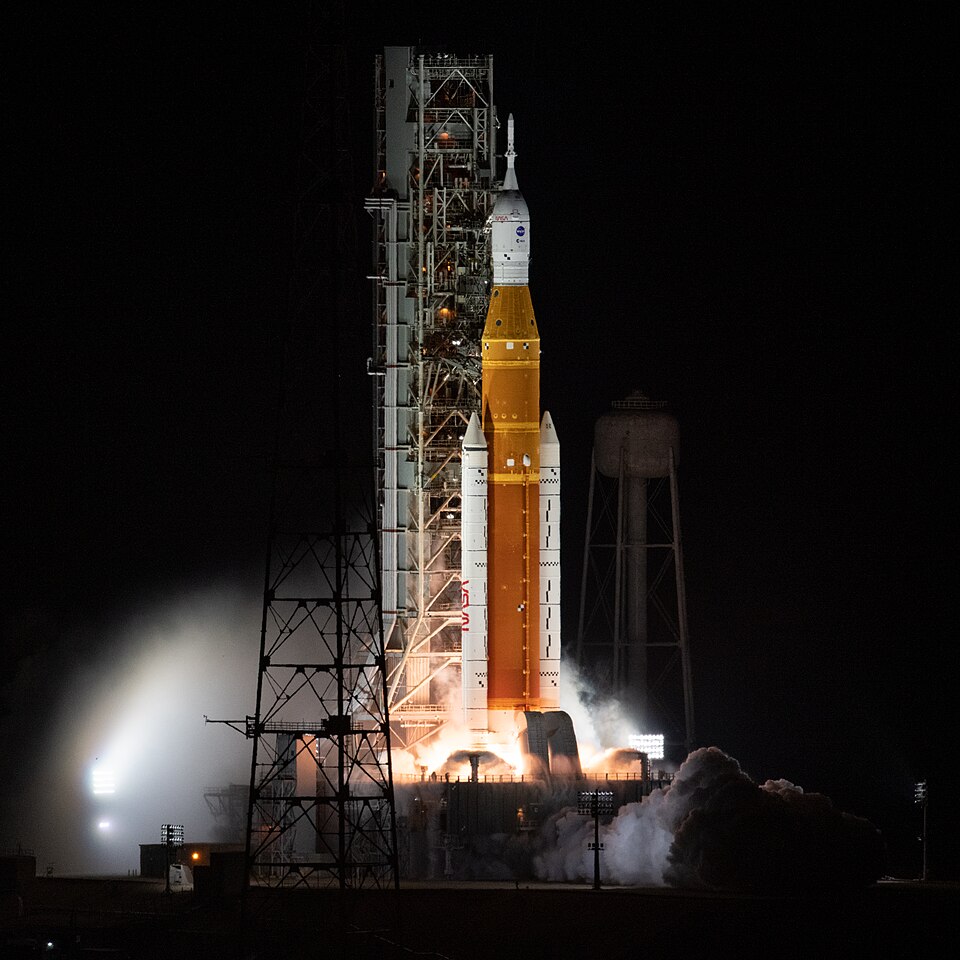
    Artemis I pad rollout – Courtesy @JohnKrausPhotos.

    While both the rocket and capsule have flown uncrewed test missions, this flight is historic in many ways:
    • The first crewed mission of SLS and Orion
    • The farthest humans have ever traveled from Earth—about 8,400 miles farther than Apollo 13
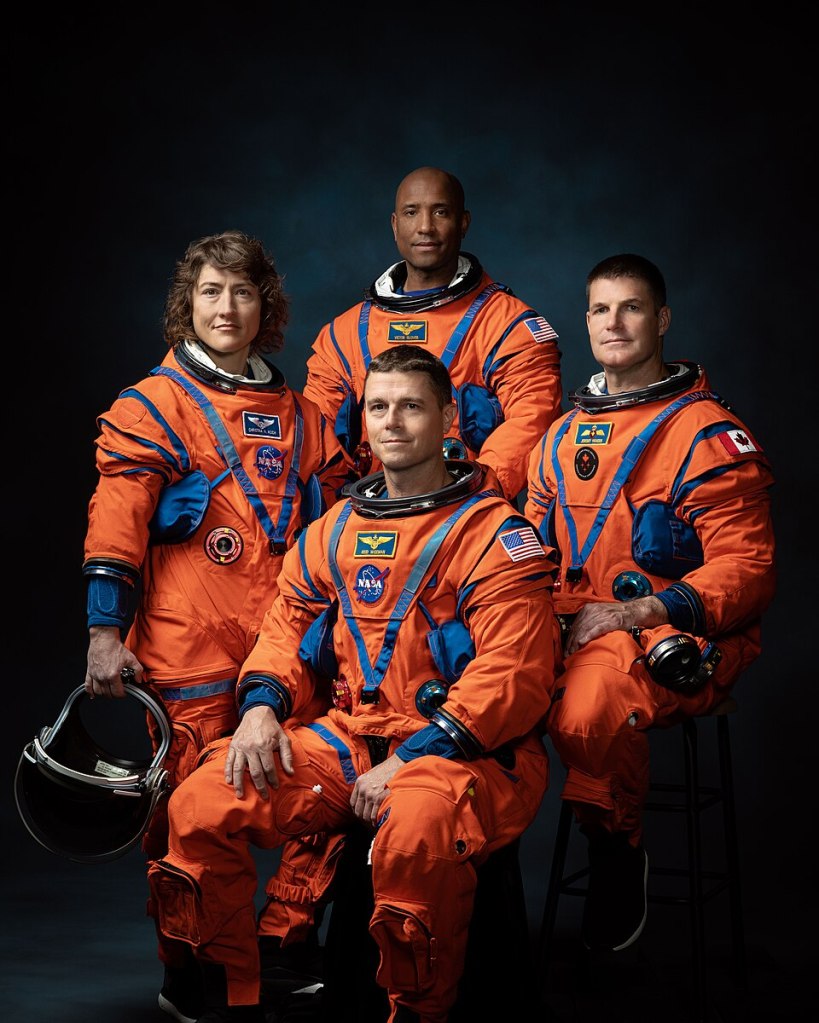
    • CSA astronaut Jeremy Hansen becoming the first non-American to orbit the Moon
    • Christina Koch becoming the first woman to travel to lunar orbit
    • Victor Glover becoming the first person of color to journey to the Moon

    PHOTO DATE: March 29, 2023. LOCATION: Bldg. 8, Room 183 – Photo Studio. SUBJECT: Official crew portrait for Artemis II, from left: NASA Astronauts Christina Koch, Victor Glover, Reid Wiseman, Canadian Space Agency Astronaut Jeremy Hansen. PHOTOGRAPHER: Josh Valcarcel

    Launch preparations began in late January, with a series of launch windows opening between February 6 and February 11. Coming shortly after NASA’s annual Week of Remembrance—honoring the crews of Apollo 1, Challenger, and Columbia—this mission underscores a truth that has always accompanied exploration: progress demands courage.

    NASA’s Space Launch System rocket carrying the Orion spacecraft launches on the Artemis I flight test, Wednesday, Nov. 16, 2022, from Launch Complex 39B at NASA’s Kennedy Space Center in Florida. NASA’s Artemis I mission is the first integrated flight test of the agency’s deep space exploration systems: the Orion spacecraft, Space Launch System (SLS) rocket, and ground systems. SLS and Orion launched at 1:47 a.m. EST, from Launch Pad 39B at the Kennedy Space Center. Photo Credit: (NASA/Joel Kowsky)

    Rigorous training, modern engineering, and layers of redundancy stand guard over today’s astronauts. Still, exploration has never been without risk. As President John F. Kennedy reminded the world in 1962, “We choose to go to the Moon…and do the other things, not because they are easy, but because they are hard.”

    This February, humanity once again accepts that challenge.

    Wishing these explorers godspeed.

  • May 2025 – Life In The Cosmos

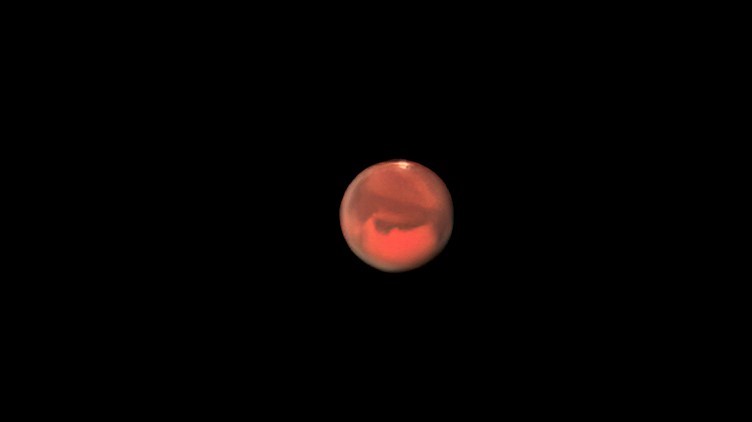
    Mars 10-02-2020, courtesy Prescott Astronomy Club member Joel Cohen.

    Humans have likely always looked at the sky and wondered if we are alone in the universe.  From the classical Roman god messenger Mercury to the angelic hosts of the Abrahamic religions, ancient belief systems often referred to Gods and other visitors as omnipotent beings capable of traversing Heaven and Earth.  As technology improved and enhanced humanity’s understanding of the universe, the habitability of neighboring planets became a legitimate scientific endeavor.  Natural geographic features of Mars were (incorrectly) interpreted as intentionally engineered, and the idea of intelligent Martians and Vesuvians populated the themes of science fiction.  Our fleet of robotic investigators throughout the Solar System can now confirm that no advanced species constructed canals on Mars, and that intelligent life – as we know it – could not survive on these inhospitable worlds.   This insight has led us to look deeper into the history of our own planet to discover what the origins of life may be.

    Martian canals, Percival Lowell, courtesy Wikimedia Commons.

    Taking it back a few hundred million years, the “Cambrian explosion” was a time in Earth’s history when life grew from single celled organisms to multi-cellular, complex life.  Fossil records show this began in the oceans, with large populations of phytoplankton gobbling up the abundant carbon and using sunlight as energy to convert up to half of the oxygen in our atmosphere.  One byproduct of this process is the compound Dimethyl Sulfide, which is only known to be naturally produced through this process.

    Astrobiologists use many different factors in the search for extraterrestrial life.  Earth-like conditions for habitability have led us to define the Goldilocks Zone where a planet may orbit its host star in a way that it would neither be too hot nor too cold, but “just right” for liquid water to exist.  A breathable atmosphere like ours would optimally be composed of about 3:1 nitrogen to oxygen, with trace amounts of other elements and compounds such as carbon dioxide, methane, and – you guessed it – dimethyl sulfide.

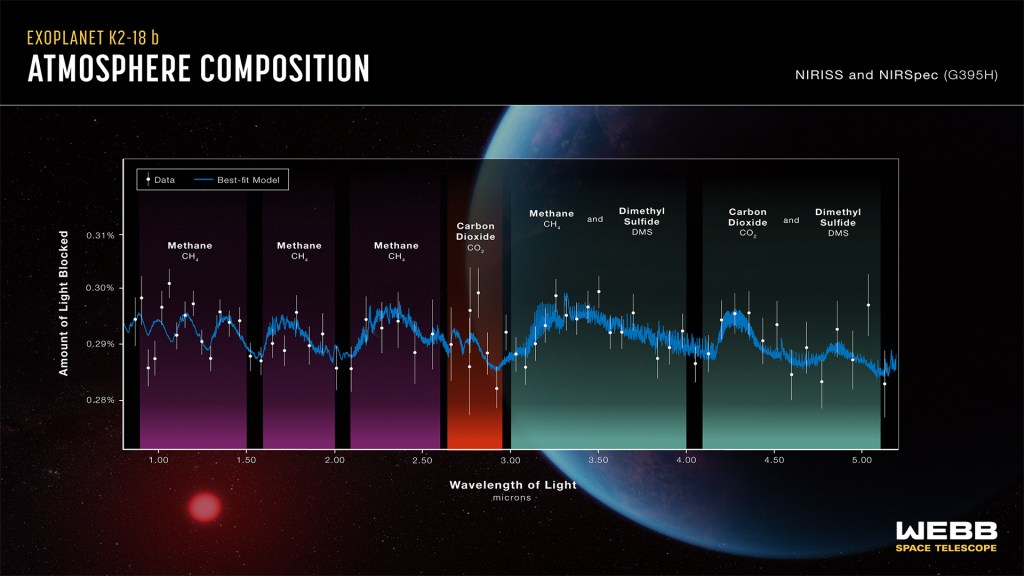
    K2-18b JWST spectra, courtesy NASA.

    The James Webb Space Telescope was constructed with extremely sensitive instruments that can measure the atmosphere of distant worlds by studying the light that has passed through it.  At 124 light years distant in the constellation Leo, the exoplanet K2-18b just happens to be in this Goldilocks Zone around a red dwarf star and about 8 times the mass of Earth. Following up on observations made by the Kepler and Hubble telescopes, JWST data indicates the atmosphere is likely made up of hydrogen, carbons, methane, and dimethyl sulfide.  If this is the case, it is possible that a form of early photosynthesis is active in the oceans of this alien world.

    Leo and Mars, May 2025, SkySafari

    As the constellation Leo moves to the southwest throughout the Spring, the planet Mars will enter the constellation later in the month of May.  While observing the Martian “canals” from your own backyard, your field of view may well include distant worlds teeming with the earliest forms of microbial life.

  • Sept/Oct 2024 – Aliens!

    Earth is a cool place.  It has oceans, forests, and mountains galore.  These different environments serve as host to millions of different types of animal and plant life, including us, humans.  Earth is the perfect size (24,901 miles around), perfect distance from the Sun (93 million miles!), and has the perfect combination of elements like oxygen, nitrogen and carbon.  Because everything is just perfect on Earth, life can survive and thrive.

    A plump pig, dated to around 43,000 BCE. Smithsonian.

    Humans seem to have long been fascinated by all this life.  45,000 years ago, someone drew a picture of a very plump pig on the wall of a cave in Indonesia, the oldest known drawing of an animal.  Around 2400 years ago, the Greek philosopher Aristotle wrote a book on animal biology, studying animals in detail and separating them into classes based on where they live, how they move, and how their physical makeup may be similar or different.  Many great expeditions have been made into the jungles of Africa, the mountains of Asia, forests of the Americas, and the depths of the oceans, all to study the plants and animals that live there.  Now, as technology has allowed us to begin exploring space, it makes sense that we continue searching for more life on other worlds.

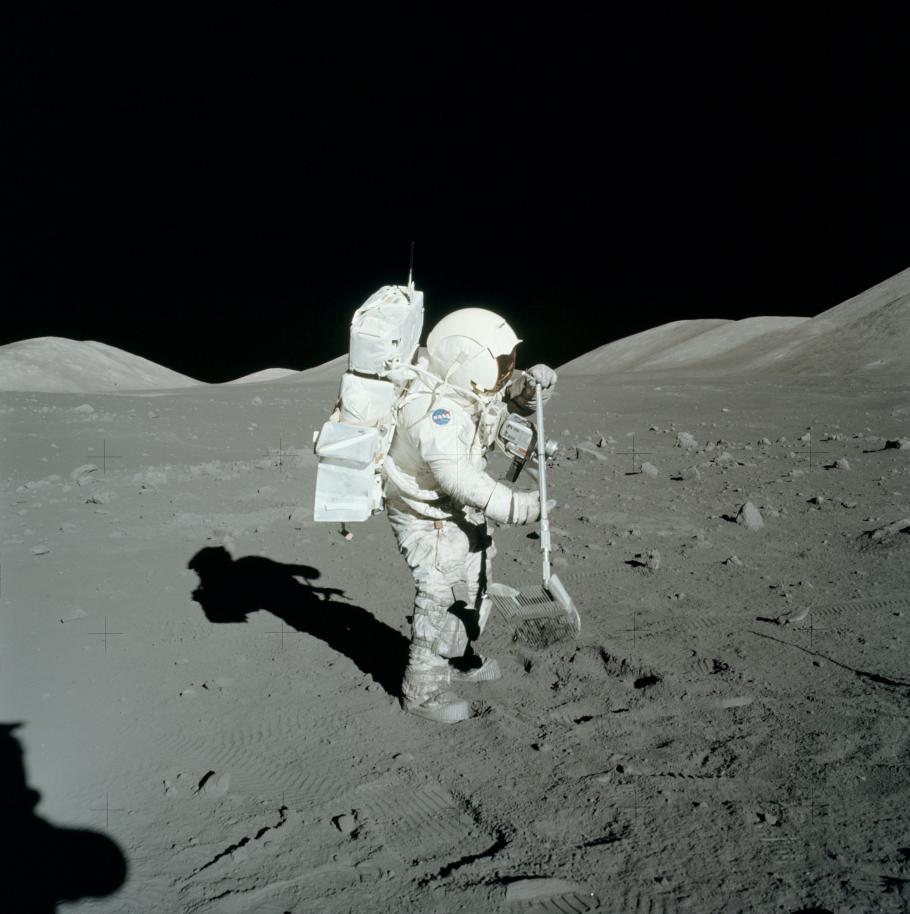
    Astronaut Harrison Schmitt, Apollo 17, Courtesy NASA.

    July 20th, 1969, humans first stepped foot on another world – the Moon.  These astronauts brought back rocks to study, but alas, no little creatures were discovered, but we continued to look.  NASA and other space agencies sent robotic probes to Mars, Saturn’s moon Titan, and asteroids around the solar system.  They have found various elements and chemicals that we find to be essential to life on Earth, but as of yet we have not found any other planet, moon, or space rocks that have life.

    The Pale Blue Dot, Earth as viewed by Cassini from Saturn, 2013. Courtesy NASA.

    So, are we alone in the universe?  This is a question we continue to ponder.  With an estimated 1.4 million kinds of animals and over 400,000 types of plants on Earth, it seems like we should find lots of life in a place as big as the universe.  But as our satellites explore further into space, it feels more and more like we live on a very small planet in the vast darkness of space.

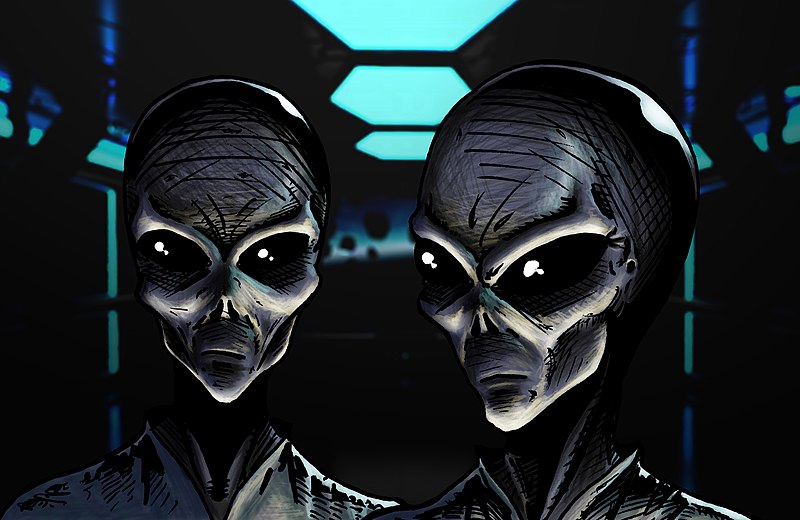
    The Grey Aliens, as imagined by artist MjolnirPants, Wikimedia Commons.

    After our Sun, the next closest star to Earth is Proxima Centauri, just over 4 light years away.  That is a one-way distance of about 25 trillion miles, and even our biggest rockets and fastest spaceships would take about 70,000 years to arrive there.  That is just to the closest star system, and there are billions of star systems in the Milky Way Galaxy, and the Milky Way is one of billions of galaxies in the universe.  See what I mean?  The universe is HUGE.

    With how many galaxies, stars, and planets there are in the universe, many scientists believe that life must surely have developed on more than just our planet.  With our current technology, we cannot easily visit these distant worlds.  It is possible that in the future we will discover different types of rocket engines and spacecraft propulsion, or we may even learn how to teleport around the galaxy.  Similarly, it is possible that an alien species on a far-off planet has already discovered some of these technologies and is using it to explore the universe.  Maybe they stop by and visit Earth sometimes, on their own hunt for life in the cosmos.  Are these the UFOs and aliens we hear about in the news, see in blurry videos on YouTube, and dream of in science fiction?  Do they look like us, or possibly like Grogu from Star Wars?  Are they friendly or not? 

    Maybe we will meet aliens tomorrow, in a thousand years, or possibly never, but the idea has sparked in us a desire to continue to explore and learn more about the world and universe around us.  It has planted the seed in the minds of generations of authors to imagine distant worlds and alien civilizations, and inspired countless engineers and scientists to study STEM and design the rockets, spacecraft, and robots that we send out into the cosmos.  And for me, it makes my imagination run wild when I look through my telescope out into the night sky and wonder who might just be looking back.

  • May 2024 – The Sombrero Galaxy

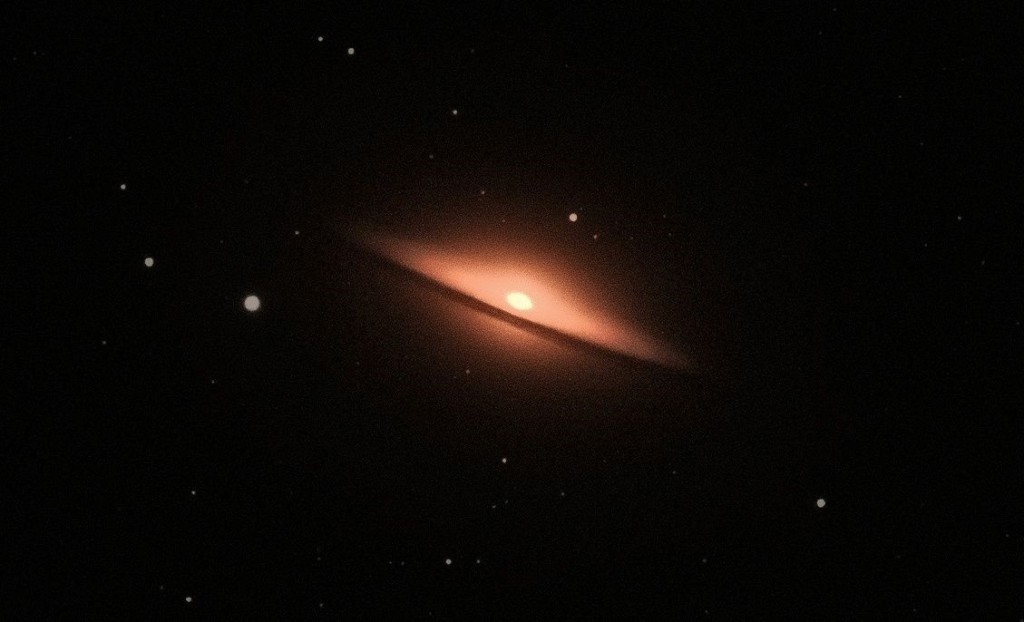
    M104 Sombrero Galaxy, courtesy Joel Cohen, Prescott Astronomy Club.  Taken from Prescott Valley, AZ with Astro-Physics Starfire 178 7-inch f/9 APO.

    The late 18th Century was a golden age of astronomical discoveries.  After Galileo famously pointed his early invention at the heavens in 1609, Dutch glassmakers spent decades perfecting the lens technology that allowed for larger telescopes and more precise visual observations.  Every reigning monarch in Europe just had to have the latest and greatest telescopes, observatories, and professional astronomers at their personal disposal, and all of these eyes on the sky began to record diverse celestial phenomena.  Astronomers the world over spent night after night gazing at the heavens and journalizing their observations in both the written word and sketches.  With no “astronomy buds” group texts, mass peer emails, or posts of their findings on social media, the spread of these discoveries often took years for a publication to disseminate throughout the powerful capitals which fostered the Age of Enlightenment.  As such, it was quite common for multiple observers to happen upon the same fuzzy patch of sky and note their unique, personal discovery.  Essentially an informal and independent peer review, many of the nebulae, galaxies, comets, and even planets that we are so familiar with today were found in this manner.  The Sombrero Galaxy is one such amazing find that you can also discover as a modern backyard astronomer.

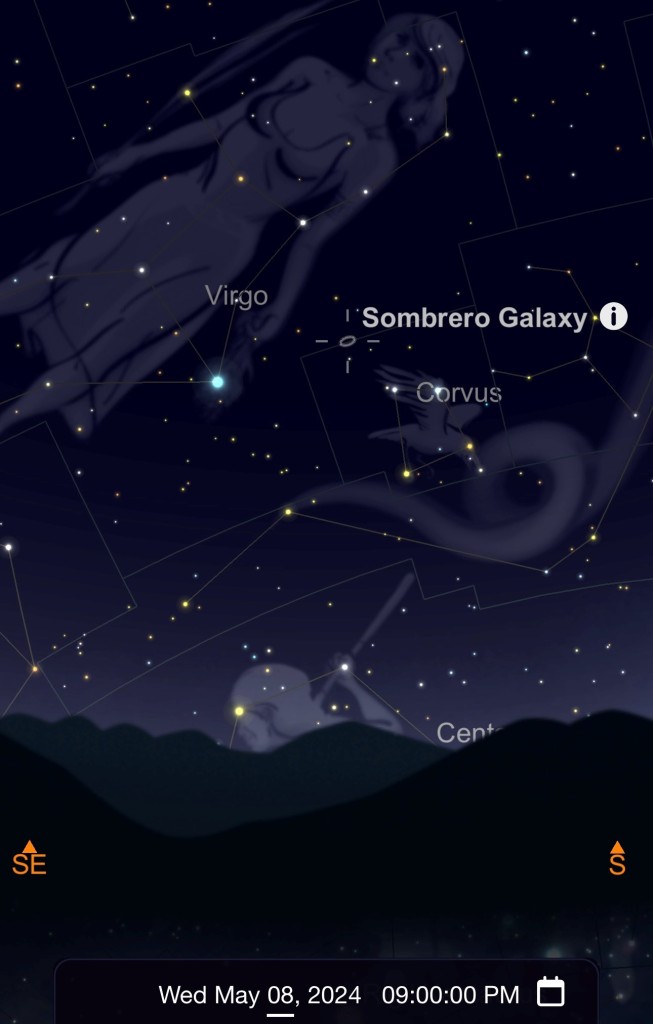
    M104 Sombrero Galaxy location on the night of 8 May 2024, SkySafari.

    Scientifically catalogued as Messier Object 104 (M104), it was independently discovered by no less than three separate astronomers between 1781 and 1784.  Charles Messier himself noted and dismissed the Sombrero Galaxy, as he quickly discerned it was not a comet like those he was actively searching for.  Viewed from Earth, this galaxy is seen edge-on, and its full breadth of approximately 100,000 light years is observed as a thin strip of light.  Compared to a face-on galaxy, where the stars are spread across a much larger swath of space, edge-on galaxies appear brighter and are often easier for the amateur astronomer to locate.   With a 100mm/4inch telescope, one can pick out this illuminated belt separate from the surrounding stars.  11.5° west of the bright blue-giant star Spica and 5.5° north-east of Eta Corvi, it is situated in the space between the hand of Virgo and wing of Corvus.  Take advantage of the May 8th New Moon for extra dark skies and look to the SSE in the 9 o’clock hour.  If you have a telescope in the 8” range, you will begin to discern the galactic center bulging around the supermassive blackhole that gravitationally binds the galaxy.  It is this dense, bright nucleus resembling the crown of a hat from which the name is derived.  10” and larger scopes with optimal viewing conditions will also discern the dust lane, a dark swath of dispersed material that encircles the galaxy.  This strip of darkness is mostly composed of molecular hydrogen and primordial dust, and infrared astronomy has revealed it is the primary nursery for the birth of new stars around the circumference of the Sombrero Galaxy.  It is by studying these stellar generating regions that we can begin to understand the process by which our own Sun and solar system were formed, and our place within the Milky Way Galaxy and the Universe.

  • Sputnik and the “October Sky”

    October 4th, 1957 was truly the beginning of a new age.  While humans had spent the last few decades dreaming of, dabbling in, and testing their mettle in the high reaches of Earth’s atmosphere, the launch of Sputnik 1 on that day was the true harbinger of what was to come in the new frontier beyond Earth.  The Soviet-made sphere was roughly 23 inches in diameter with a mass of 83.6 kg/184 lbs, with 1 watt of power provided by three silver/zinc batteries designed to last just two weeks.  It was programmed to issue a series of beeps on various frequencies, encoded to provide information about temperature and pressure around the first satellite.  A team of engineers working on the project watched and waited with apprehension for more than 90 minutes after it launched to make sure Sputnik survived a full orbit of the Earth, and then called Soviet Premier Nikita Khrushchev to announce their success with the first human-made object to orbit the Earth.  By the following night, amateur radio operators and astronomer joined professional scientists and engineers around the world to track the satellite’s path across the sky.  The American Radio Relay League – the largest association of amateur radio operators in the United States – quickly issued directions to its members around the country and the world on how to tune in to hear the signals coming from space.  Whole communities gathered outside with warm beverages and craned necks hoping to witness the dawn of the Space Age. 

    The 1999 film “October Sky” relates the story of one such community.  Coalwood, West Virginia was a small mining town, not unlike hundreds of others dotting the central Appalachian region.  Then 14-year-old Homer Hickam, Jr. was one such observer, and seeing Sputnik fly overhead the West Virginia sky that week was a catharsis to a boy who was supposed to grow up and work the coal mines, just like every other boy in Coalwood.  A ragtag group of friends developed a new passion for rockets and the self-education that would be required to make them fly.  The self-proclaimed “Big Creek Missile Agency” spent the next two and a half years learning to weld, teaching themselves calculus and trigonometry, destroying countless of their mothers’ borrowed kitchenware, and eventually winning the National Science Fair gold and silver medal in the field of propulsion. 

    Members of the Big Creek Missile Agency display one of their rockets.

    To celebrate the 65th anniversary of the launch of Sputnik 1 and the beginning the Space Age, tune in to our podcast for the audio version of this article series and a special Backyard Astronomer interview with retired NASA engineer and co-founder of the “Big Creek Missile Agency” Homer Hickam.

  • The James Webb Space Telescope

    As early as 1923, space telescopes were proposed to peer deeper into the universe, without the obstruction of the Earth’s tenuous atmosphere.  By the 1970s congress had funded the first of these great space telescopes, with the 2.4 meter primary mirror completed in 1981 for a Ritchey-Chreitien Cassegrain type telescope which finally launched in 1990 in the cargo bay of the Space Shuttle Discovery, carrying the name Hubble. A few servicing missions later, the Hubble Space Telescope has been gracing our computer screensavers with images of the cosmos for over 31 years.

    courtesy http://www.NASA.gov

    Before it’s launch, however, NASA knew that the narrow visible spectrum that Hubble was designed to observe in was not the end-all goal of space telescopes.  A series of additional orbiting laboratories able to capture light from all ends of the spectrum were developed, including the Chandra X-Ray Telescope, the Spitzer Space Telescope in the infrared, and the Kepler planet hunter telescope, but NASA engineers and astronomers dreamed of something bigger and better.  In 1989, the concept was floated for a much, MUCH larger space telescope that could open like an umbrella, with multiple mirrors converging to create a 4-meter aperture telescope that could image across a much larger swath of the visible to near infrared spectrum.  The next three decades of scientific advancements, engineering marvels, as well as numerous delays and drastic budget overruns have led up to this moment. 

    On December 25th the James Webb Space Telescope will launch aboard an Ariane 5 rocket from the European Space Agency spaceport in French Guyana, South America at 5:20 AM MST.  Whereas Hubble orbits at about 330 miles above the Earth, making it a previously accessible target for repair and upgrade mission with the now retired fleet of Space Shuttles, The JWST will orbit the Sun at what is known as the L2 Lagrange point.  This is a unique point in space where the gravitation forces of the Sun and Earth balance each other and create a stable point in space for an object to remain in relative equilibrium.  There are 5 such Lagarange points created by the Sun/Earth gravity wells, with the benefit of the L2 point being that it will always be in a line with the Earth directly between it and the Sun, helping to block the Sun’s light – and astronomers like it dark!  The JWST will take approximately a month to reach this point 1.5M km from earth, about 3 times further than the moon.  During this time, the observatory will open its mirrors, solar panels, and a unique solar shield that will add additional protection from the light and heat of the sun, allowing for more detailed observations in the near and mid-infrared.

    20 countries, more than 30 years, 9.7 billion dollars, and human capital that could never be accurately calculated, will all culminate in a Christmas gift to the world early this Saturday morning.  God speed James Webb!