
The dawn of the 19th century marked a boom in astronomical discovery. Telescope technology improved rapidly, revealing a new class of objects orbiting between Mars and Jupiter.
In 1801, Italian astronomer Giuseppe Piazzi discovered Ceres, the first and largest of these bodies. A year later, Heinrich Olbers identified Pallas. These objects didn’t behave like planets, yet they weren’t comets either. They occupied a region that seemed curiously empty.
Olbers proposed a bold idea. He suggested to William Herschel that these bodies might be remnants of a destroyed planet. If so, additional fragments should lie along similar orbital paths. Searching near where the orbits of Ceres and Pallas intersected, Olbers made another discovery in 1807.
He had found Vesta.
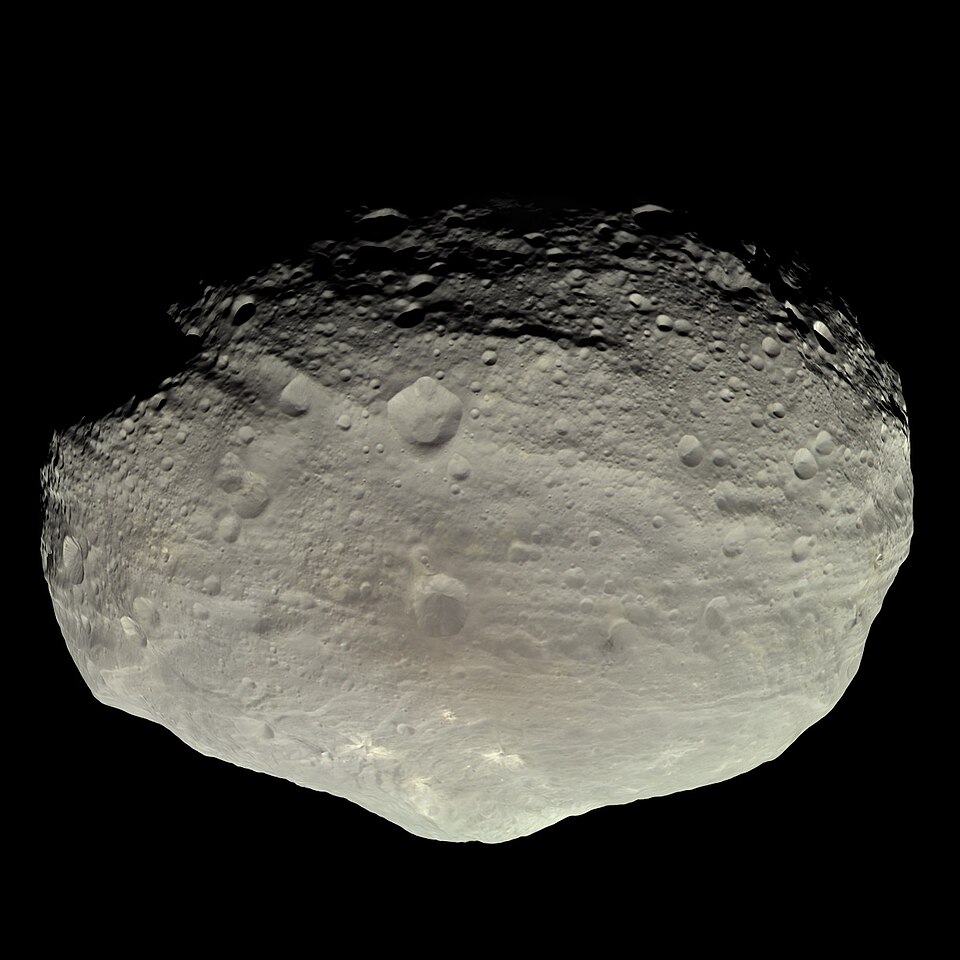
Named after the Roman goddess of home and hearth, Vesta became the fourth asteroid discovered—designated 4 Vesta. While Olbers’ hypothesis captured imaginations for years, modern science tells a different story. These asteroids are not fragments of a single world, but leftover building blocks from the early Solar System. That Olbers found Vesta where he did was more coincidence than confirmation.
Even so, Vesta stands apart.
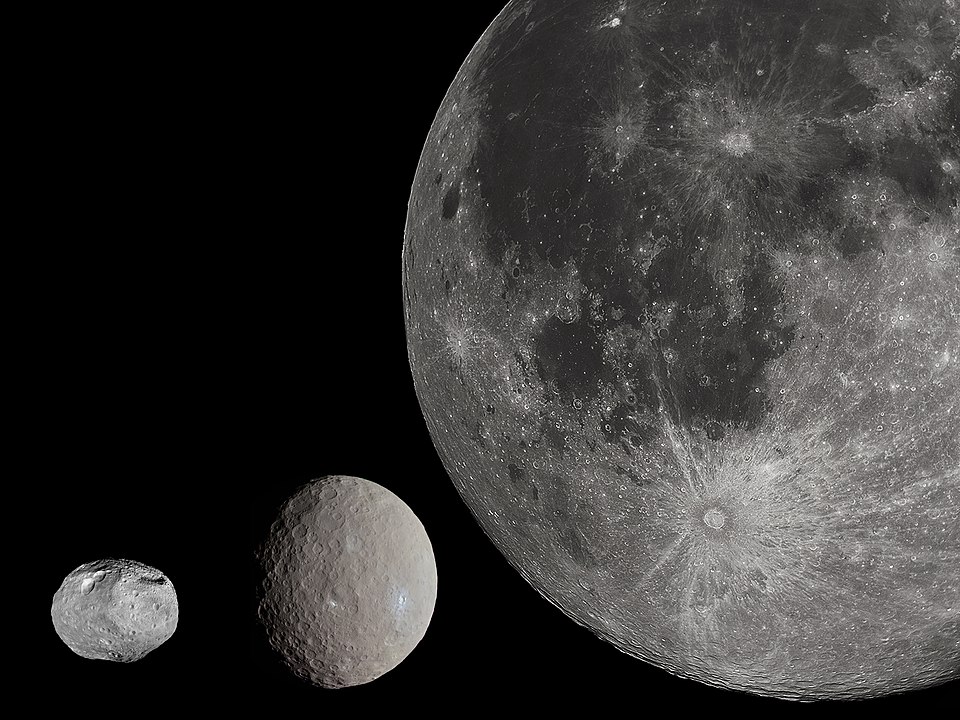
With a diameter of about 330 miles, it is the second most massive object in the asteroid belt, behind Ceres. Unlike many smaller asteroids, Vesta is differentiated, with a core, mantle, and crust—more like a small planet than a typical space rock. In many ways, it is a world that nearly became one.
Its surface tells a violent story. Massive impacts have carved enormous basins into its southern hemisphere, ejecting debris that has reached Earth as meteorites. These fragments give scientists a rare chance to study a protoplanet without leaving our planet.
In 2011, NASA’s Dawn spacecraft arrived at Vesta, becoming the first mission to orbit a main-belt asteroid. Over a year, it mapped the surface in remarkable detail, revealing bright and dark regions, ridges, and deep craters.
For backyard astronomers, Vesta offers a rare treat: it can be bright enough to see. Thanks to its high reflectivity, it may even reach naked-eye visibility under dark skies. More often, it appears as a bright, star-like point in binoculars or a small telescope, drifting slowly against the background stars.
Throughout May, Vesta will share the early morning sky with Saturn and Neptune, rising just before sunrise. Look low on the eastern horizon along the ecliptic, near the boundary of Pisces and Aquarius.
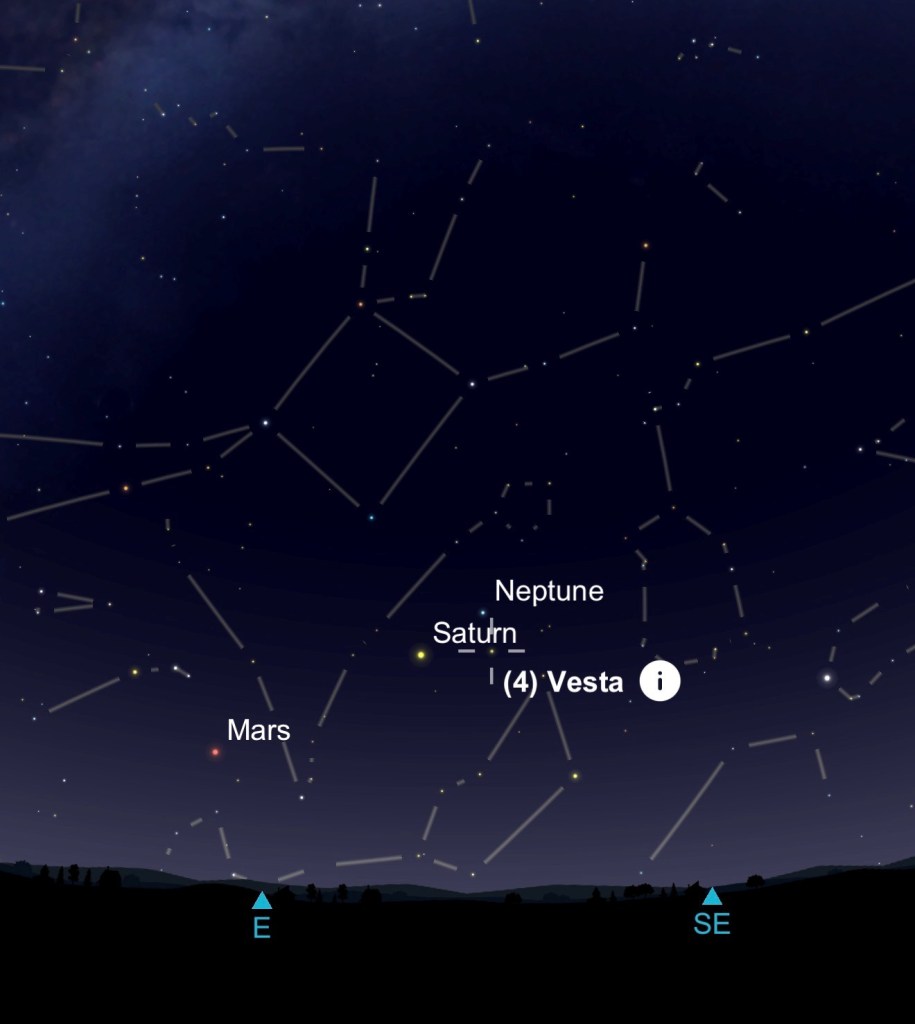
Unlike planets, Vesta won’t reveal a disk or surface detail in most backyard telescopes. The reward comes from tracking its motion. Over several nights, you can watch it shift among the stars—a subtle reminder that this “star” is actually a world in motion.
So this May, take a moment to seek out Vesta. You’ll be looking at one of the earliest discovered members of the asteroid belt, a survivor from the dawn of the Solar System, and a world that almost was.
Clear skies and happy viewing.
#Astronomy #Space #STEM #STEMEducation #NASA
Follow us at facebook.com/BackyardAstronomerAZ
Check out the NAZ Astro mission of STEM education at facebook.com/NAZAstro
Support STEM education patreon.com/NAZAstro
Our awesome sponsors:
 The Backyard Astronomer