
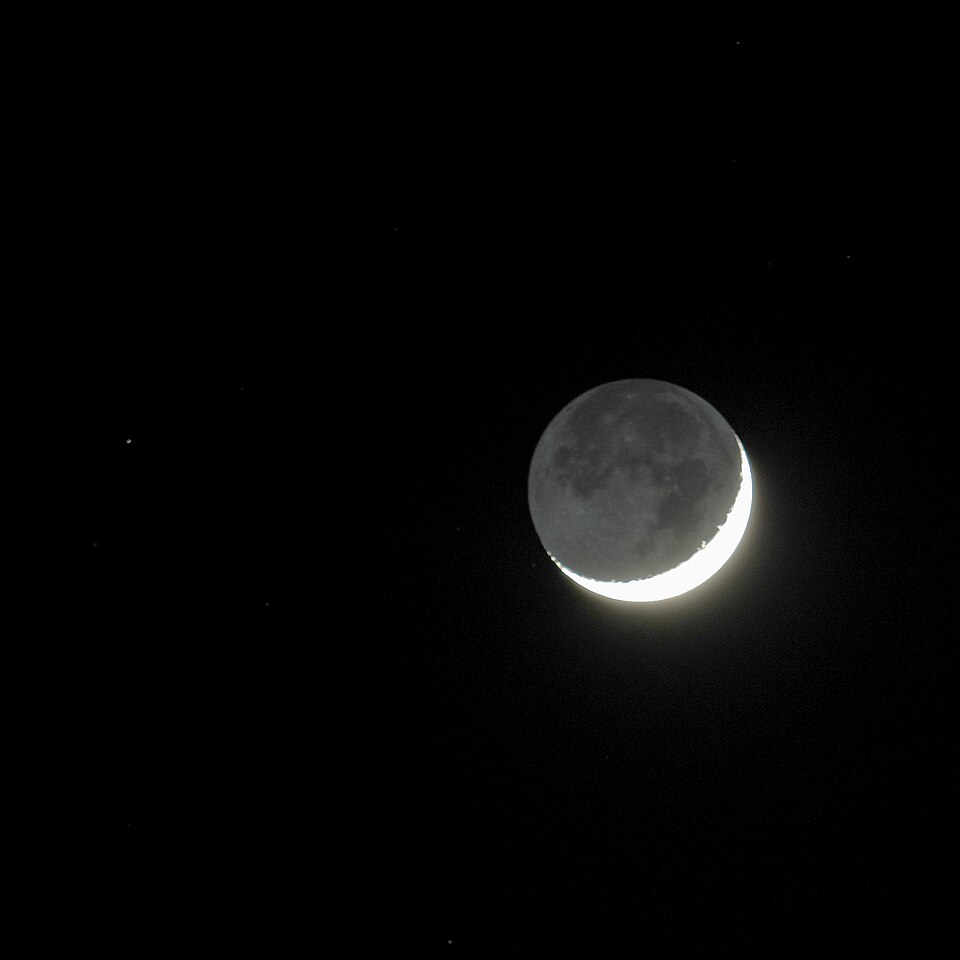
Step outside on a clear evening and look for a thin crescent Moon hanging low in the twilight. If the sky is dark enough, you may notice something unexpected: the rest of the Moon faintly glowing. Not bright like the crescent itself, but softly illuminated, as if the entire lunar disk were suspended in dim gray light.
This phenomenon is known as earthshine, sometimes called the Da Vinci Glow. More than five hundred years ago, the Renaissance artist and scientist Leonardo da Vinci correctly reasoned what caused it. The Moon’s night side, he proposed, is illuminated by sunlight reflecting off the Earth.
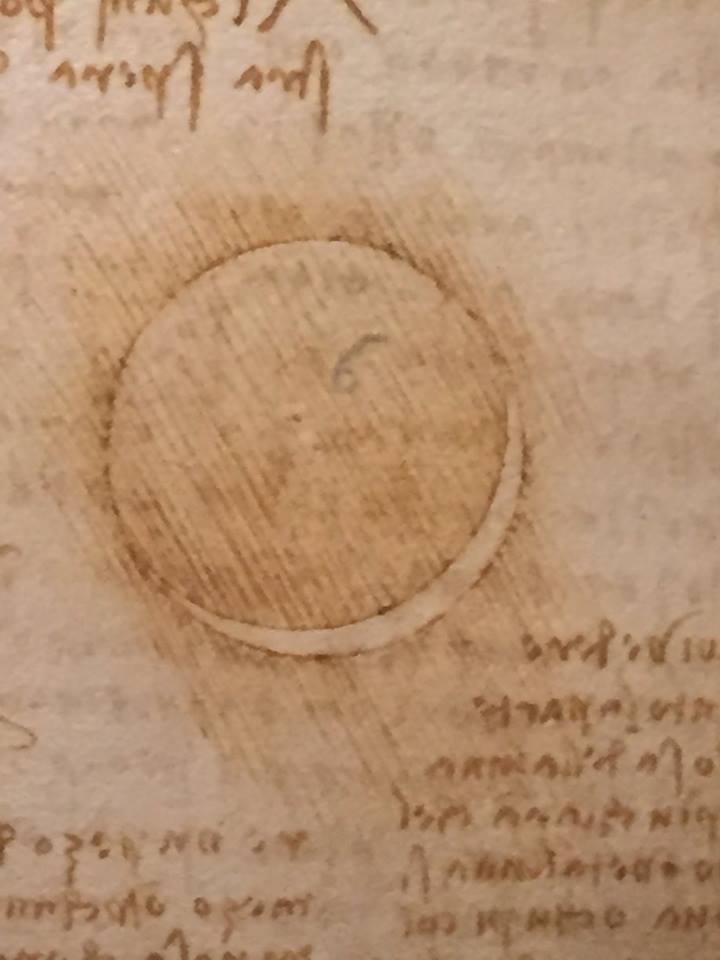
Just as the full Moon brightens our night sky, the Earth can do the same for the Moon.
When the Moon appears as a thin crescent from our perspective, someone standing on the lunar surface would see nearly a full Earth in their sky. Our planet is far more reflective than the Moon, thanks to its clouds, oceans, and ice. Sunlight reflects off Earth, travels to the Moon, and softly illuminates the portion of the lunar surface that would otherwise be dark.
It’s quite a journey for a ray of sunlight: Sun to Earth, Earth to Moon, and then back again to our eyes.
The result is the ghostly glow that outlines the Moon’s darker hemisphere.
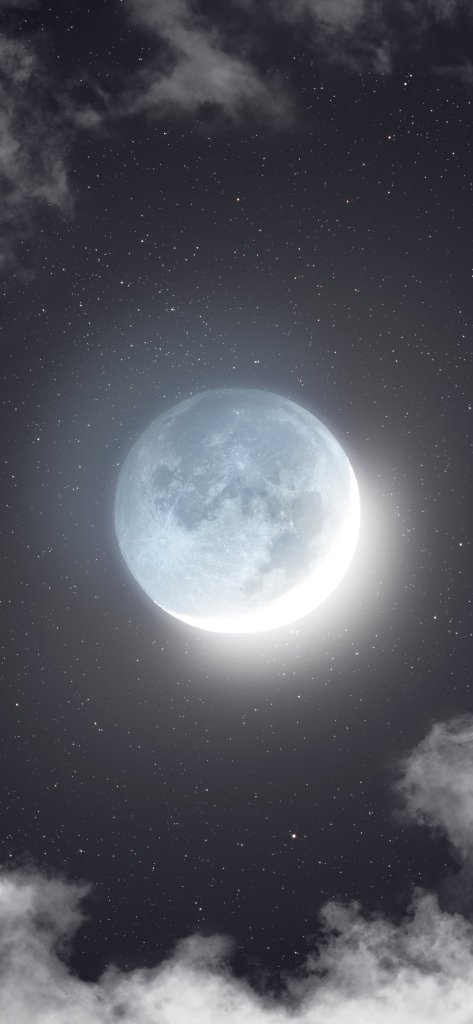
Earthshine is easiest to see when the Moon is in its crescent phases, just a few days before or after a new Moon. During this time the sunlit crescent is thin, allowing the dim Earth-lit portion to stand out more clearly.
In April 2026, the new Moon occurs on April 17, making the best opportunities to observe earthshine occur on the surrounding nights.
Look for it in the morning sky from April 14 through April 16, just before sunrise in the eastern sky. Another excellent window appears in the evening sky from April 19 through April 22, shortly after sunset in the west.
You don’t need a telescope to see earthshine. In fact, it is often easiest to appreciate with the naked eye or a pair of binoculars, when the entire Moon fits comfortably in your field of view. Through a small telescope, the effect becomes even more striking. The dark portion of the Moon appears softly illuminated, revealing faint hints of maria and craters floating in the dim glow.
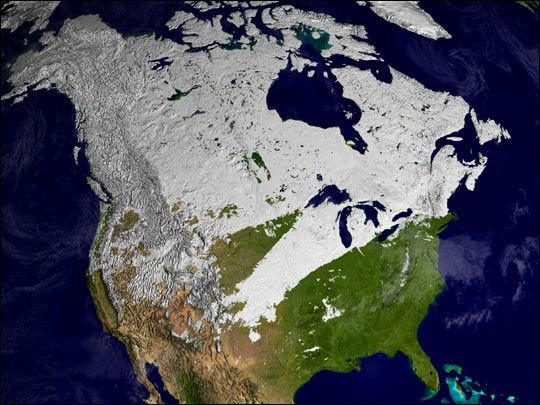
Early spring can be one of the best seasons for earthshine in the Northern Hemisphere. Snow and ice left from winter increase Earth’s reflectivity, meaning more sunlight is bouncing off our planet and onto the Moon.
What makes earthshine especially fascinating is that it reminds us that the Earth and Moon are constantly lighting each other.
The Moon brightens our nights, guiding travelers and astronomers alike. At the same time, our own planet is shining back, casting its pale reflection across the lunar landscape.
So the next time you see a slender crescent Moon in April’s twilight sky, look closely at the darker portion of the disk. That gentle glow you see is sunlight reflected from oceans, clouds, and continents — the light of Earth itself returning to the Moon.
Clear skies and happy viewing.
Adam England is the owner of a local financial services firm and moonlights as an amateur astronomer, writer, and interplanetary conquest consultant. Follow him on Instagram @TheBackyardAstronomerAZ and at http://www.ManzanitaInsuranceAndAccounting.com

