Category: Spaceflight & Exploration

  • Arizona’s Orbital Tow Truck: Giving a Space Telescope a Second Chance – A Backyard Astronomer Special

    On Saturday, June 27, a Flagstaff, AZ Startup Will Attempt Something Never Before Done in Space: Rescue an Aging Scientific Observatory
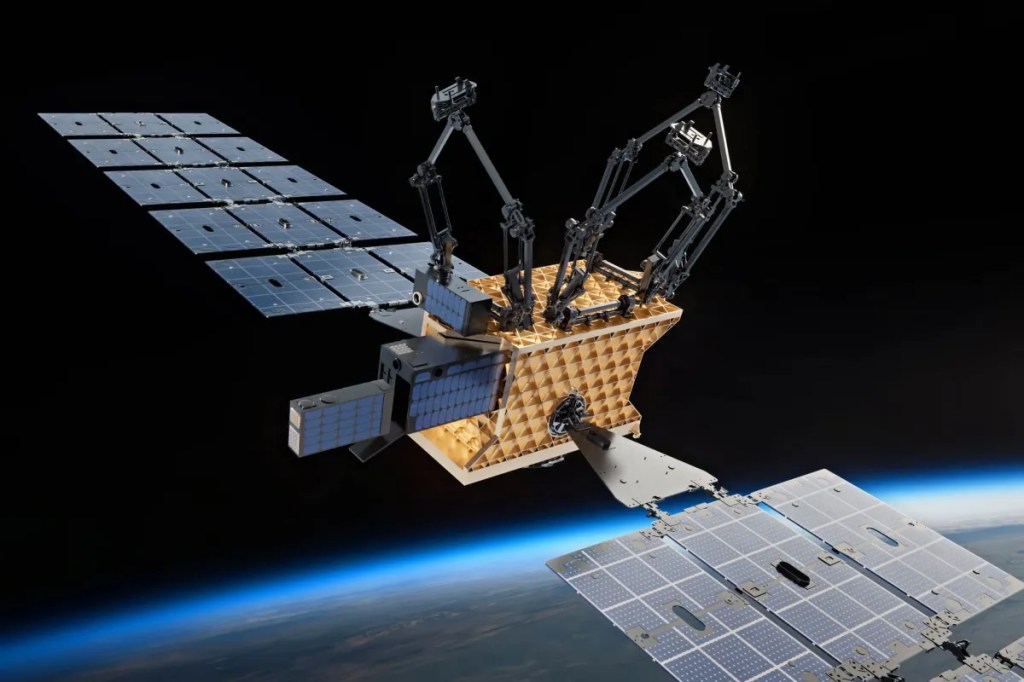
    Katalyst Space Technologies rendition of a servicing mission. Courtesy Katalyst Space Technologies

    Most of us who spend time under the night sky have watched a satellite drift overhead. Sometimes it’s the International Space Station blazing across the darkness. Other times it’s a dim point of light that most people would never notice. Frankly, it’s one of my fondest memories of growing up in Northern Arizona: laying on the trampoline in our backyard and watching the bright points of light zoom overhead.

    What we don’t often think about is that every one of those objects is slowly falling.

    That statement sounds strange at first. After all, satellites are supposed to stay in orbit. Yet even hundreds of miles above Earth, there are still traces of our atmosphere. The air is incredibly thin, but it is there. Over months and years, that tiny amount of drag gradually steals energy from orbiting spacecraft. Given enough time, the result is inevitable. The orbit shrinks, the satellite descends, and eventually it reenters Earth’s atmosphere.

    For many spacecraft, that outcome is part of the plan.

    Today’s satellite operators typically reserve enough fuel to perform a controlled deorbit at the end of a mission. Rather than leaving a dead spacecraft wandering through orbit indefinitely, they can guide it toward a safe reentry, usually over remote stretches of ocean. This helps reduce the amount of long-term debris circling our planet.

    Not every spacecraft has that luxury.

    Many older satellites were launched during a different era. Their designers were focused on accomplishing a scientific mission, not necessarily on how the spacecraft would be retired twenty years later. Once those satellites run out of fuel or lose critical systems, there may be little that can be done except wait for nature to take its course.

    That is where an Arizona company hopes to change the story.

    A Big Idea from Northern Arizona
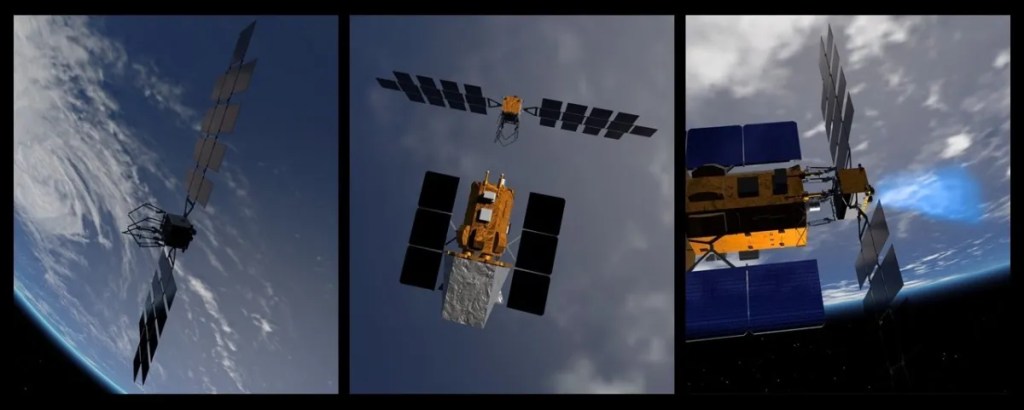
    Artist illustrations of how Katalyst Space’s LINK spacecraft (left) will attach to NASA’s Neil Gehrels Swift Observatory and boost its orbit. Courtesy Katalyst Space

    Katalyst Space Technologies was founded in Flagstaff in 2020 with a goal that would have sounded like science fiction not very long ago.

    Instead of replacing aging satellites, what if we could service them?

    Imagine a roadside assistance vehicle, but operating hundreds of miles above Earth. Rather than changing a tire or delivering gasoline, it could provide propulsion, guidance, or other capabilities that an aging spacecraft no longer possesses.

    The company’s proposed mission involves NASA’s Neil Gehrels Swift Observatory, commonly known simply as Swift. Since its launch in 2004, Swift has been one of NASA’s most productive observatories, helping astronomers study gamma-ray bursts and other high-energy events across the universe.

    After more than two decades in orbit, however, Swift faces the same challenge as many long-lived spacecraft. Atmospheric drag continues its slow work year after year. Solar activity can make the situation even worse. When the Sun becomes more active, Earth’s upper atmosphere expands slightly, increasing drag on satellites in low Earth orbit.

    The process is gradual, but it never really stops.

    An Orbital Rescue Mission
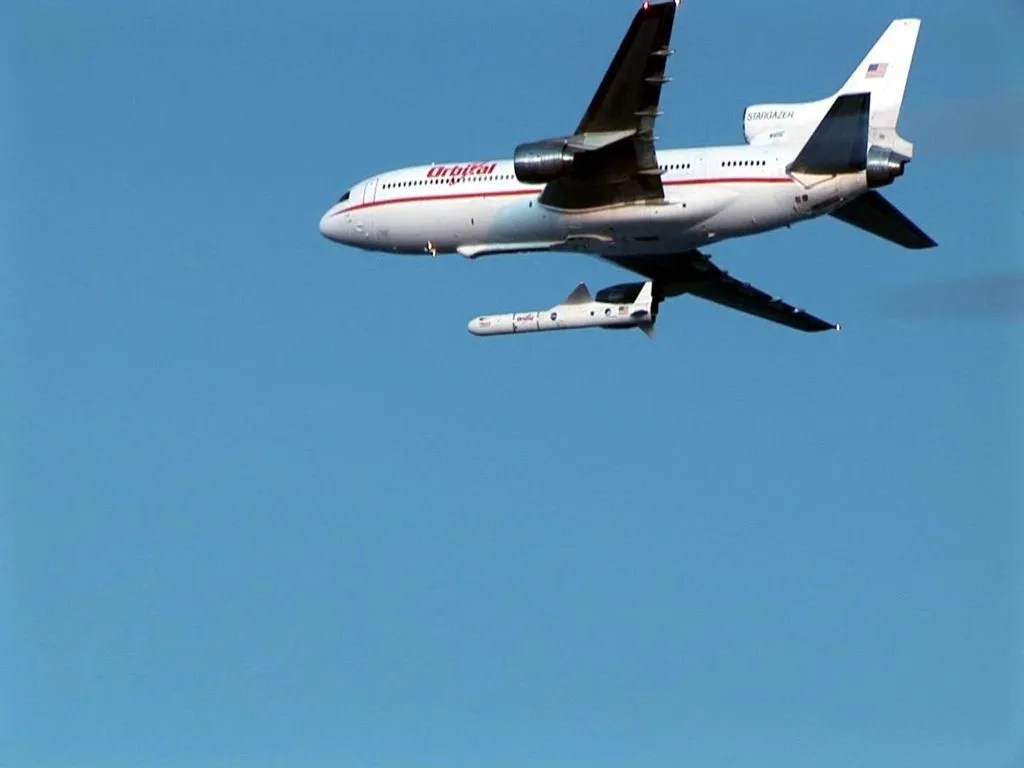
    Launch of a Pegasus XL rocket. Courtesy NASA

    Katalyst’s proposed solution is unlike anything that has been attempted before.

    The plan calls for launching a spacecraft known as LINK aboard a Pegasus XL rocket. Pegasus itself is a fascinating piece of aerospace engineering. Instead of launching from a pad on the ground, the rocket is carried beneath an aircraft and released at high altitude before igniting its engines.

    Once in orbit, LINK would seek out Swift, rendezvous with it, and attach to the aging observatory.

    If everything goes according to plan, the servicing vehicle would then provide the propulsion needed to raise Swift into a higher orbit. In effect, the telescope would receive a new lease on life without ever returning to Earth.

    For astronomers, that is exciting enough on its own. Swift continues to produce valuable scientific observations, and extending its mission could provide years of additional research opportunities.

    Yet the implications may extend far beyond a single telescope.

    Cleaning Up the Neighborhood
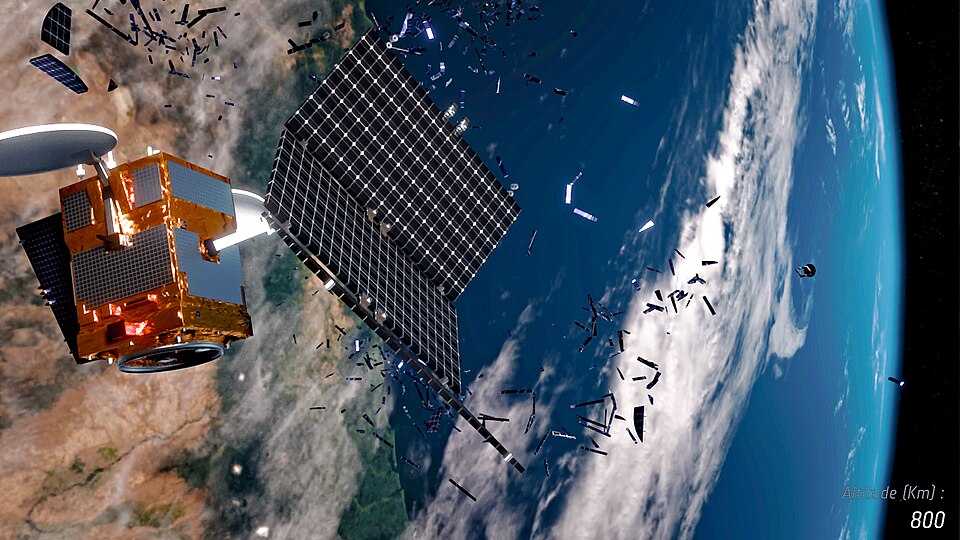
    Artist impression of a satellite breakup and debris in orbit. Courtesy ESA.

    One of the challenges facing the modern space industry is the growing population of objects in orbit.

    Some are functioning satellites. Others are spent rocket stages, mission hardware, or spacecraft that have long since completed their work. In lower orbits, atmospheric drag eventually brings many of these objects back down. Depending on altitude, that process may take years or decades.

    Higher up, things can remain in orbit much longer.

    Every object represents a potential collision hazard. Even a relatively small piece of debris can cause significant damage when traveling at orbital velocities. Because of this, space agencies and commercial operators have devoted increasing attention to orbital sustainability.

    Much of that effort focuses on preventing future debris. Another approach may be to actively manage what is already there.

    A technology capable of rendezvousing with older spacecraft could potentially do more than extend missions. It might also help stabilize damaged satellites, move defunct objects into safer disposal trajectories, or reduce risks before they become larger problems.

    There is still plenty of work ahead before such services become routine. Space has a way of humbling even the best engineering teams. Nevertheless, the idea is compelling.

    A Different Future for Satellites

    For most of the Space Age, satellites have been treated as disposable machines.

    We launch them, use them for as long as possible, and eventually replace them.

    That approach made sense when access to orbit was rare and expensive. Today, however, launch costs are falling, satellite technology is advancing rapidly, and the number of spacecraft in orbit continues to grow.

    It may be worth asking whether retirement should always be the final chapter.

    Aircraft are maintained throughout their operational lives. Ships undergo repairs and upgrades. Even telescopes on Earth receive new instruments and improvements over time. Perhaps some spacecraft could eventually follow a similar path.

    That possibility is what makes the proposed Swift mission so interesting.

    Success would not simply mean extending the life of a telescope. It could demonstrate a new way of thinking about our presence in orbit. Instead of viewing spacecraft as single-use assets, we might begin to see them as infrastructure that can be maintained, upgraded, and preserved.

    For a company that started in Flagstaff, that is an ambitious vision.

    As amateur astronomers, we often spend our evenings looking outward toward distant galaxies, nebulae, and planets. Sometimes it is worth remembering that an equally fascinating story is unfolding much closer to home.

    A few hundred miles overhead, humanity is learning not only how to reach space, but how to take care of what we leave there.

    And if Katalyst succeeds, the future of spaceflight may involve a lot fewer goodbyes, and a lot more stunning images and scientific discoveries, for years to come.

    Adam England is the owner of a local financial services firm and moonlights (pun intended) as an amateur astronomer, writer, and interplanetary conquest consultant.  Follow him on Instagram @TheBackyardAstronomerAZ and at http://www.Manzanita-Insurance.com http://www.ManzanitaAccounting.com
  • March 2026 – Element One: From Rocket Leaks to Starlight

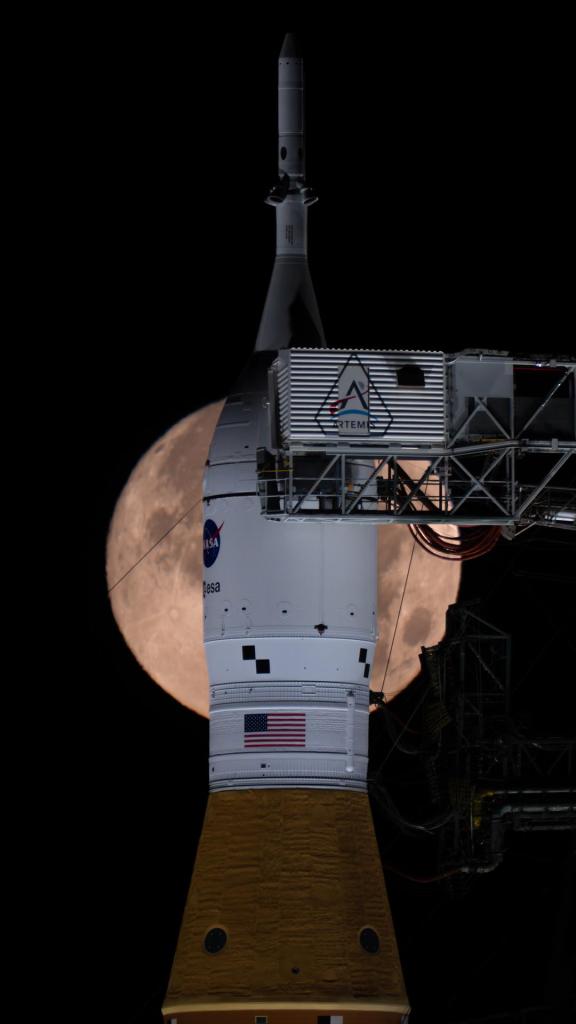
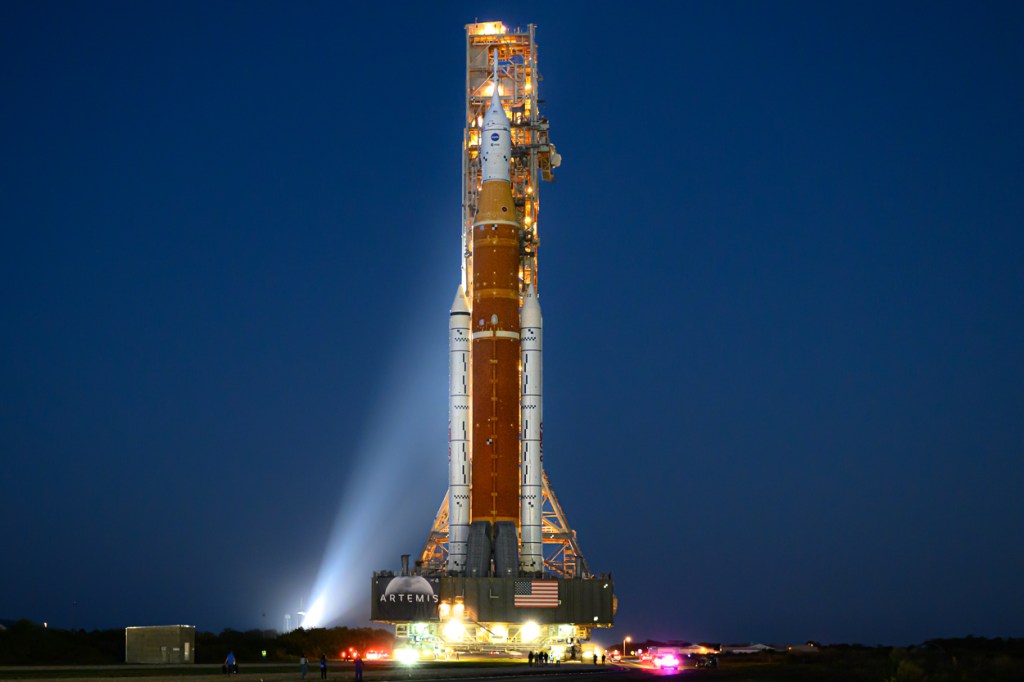
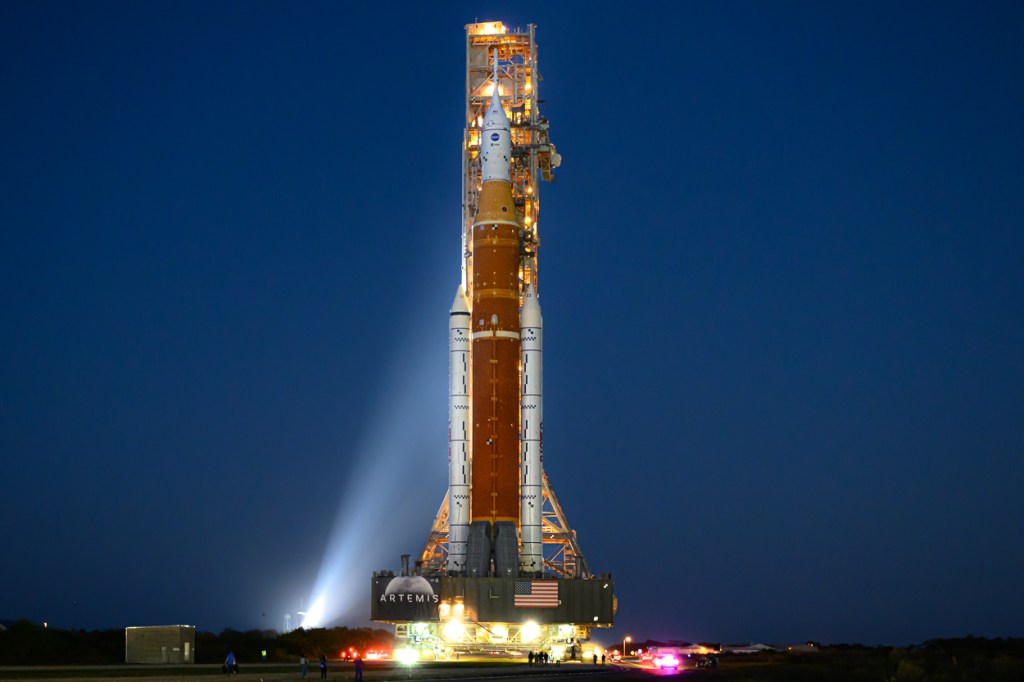
    Artemis I pad rollout – Courtesy @JohnKrausPhotos

    During preparations for the Artemis II mission, engineers conducting a wet dress rehearsal encountered a familiar adversary: a hydrogen leak.

    The core stage of NASA’s Space Launch System is fueled by liquid hydrogen and liquid oxygen, super-cooled to hundreds of degrees below zero. The plumbing is intricate, the seals precise, and the engineering represents decades of refinement. And yet, hydrogen has a way of slipping through.

    Hydrogen atoms are the smallest in the universe — just one proton orbited by a single electron. When paired into H₂ molecules, they are still far smaller than oxygen or nitrogen, the primary components of the air we breathe. They can escape through microscopic imperfections in seals that would easily contain larger molecules. What appears airtight to us is, to hydrogen, full of open doors.

    It’s a reminder that even our most powerful rockets are built to harness the simplest element in existence.

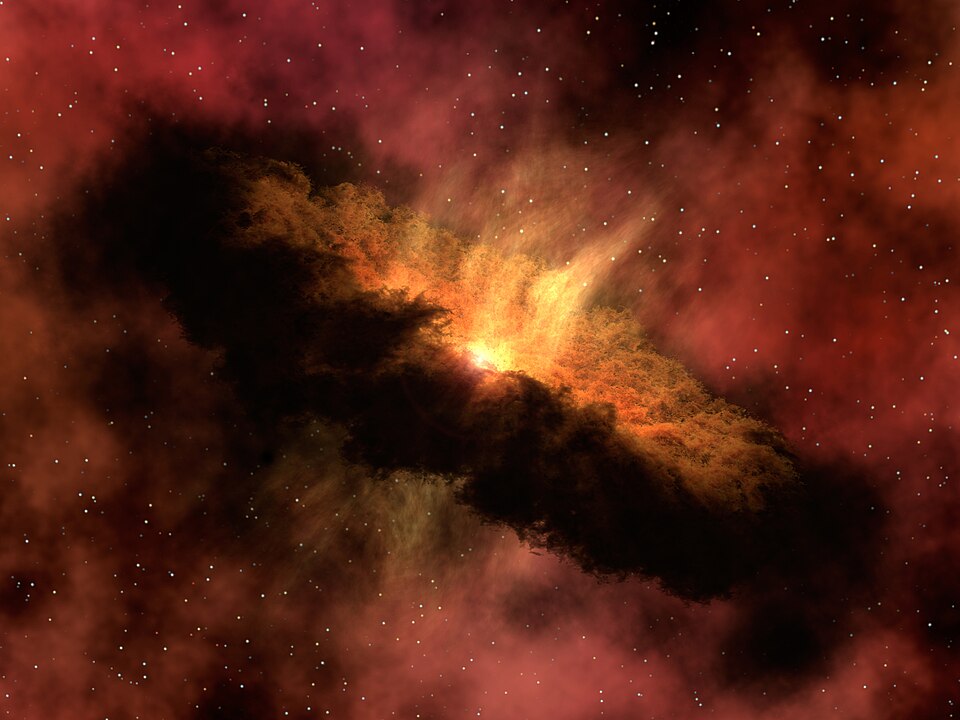
    Protoplanetary Disk, Artist rendering – Courtesy NASA, Wikimedia Commons.

    Hydrogen is element number one on the periodic table. It was the first element to form after the Big Bang, emerging within minutes of the universe’s birth. Before there were stars, galaxies, and planets — there was hydrogen.

    Today, it still makes up roughly three-quarters of the normal matter in the cosmos.

    Gravity gathers vast clouds of hydrogen gas into enormous nebulae. Over millions of years, those clouds collapse under their own weight. Pressure builds. Temperatures climb. And eventually, deep within a forming star, hydrogen nuclei begin to fuse into helium.

    That fusion releases extraordinary energy.

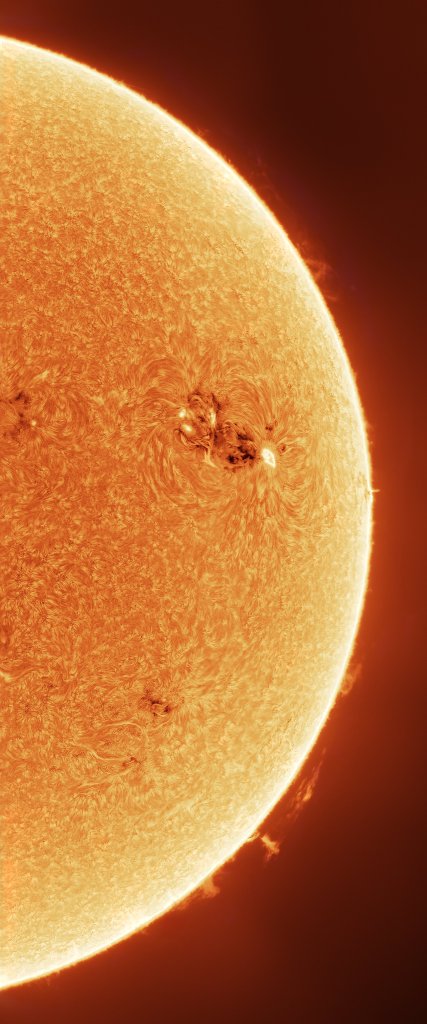
    The Sun, 7 February 2026 – Courtesy @AJamesMcCarthy.

    Our own Sun converts roughly 600 million tons of hydrogen into helium every second. A small fraction of that mass becomes energy — the sunlight that warms your skin, drives our weather, and sustains life on Earth. Every sunrise is powered by hydrogen forged in the first moments of time.

    And when stars exhaust their hydrogen fuel, they change. Some swell into red giants. The most massive explode as supernovae. Others quietly shed their outer layers. But the story always begins the same way: hydrogen pulled together by gravity, fusing under pressure.

    That same element fuels our journeys outward.

    Liquid hydrogen, combined with liquid oxygen, powered the upper stages of the Saturn V rockets that carried Apollo astronauts to the Moon. It fueled the Space Shuttle’s main engines. Today, it powers the Space Launch System — the rocket preparing to return humans to lunar orbit. Hydrogen offers exceptional efficiency, producing high specific impulse and clean exhaust: mostly water vapor.

    But it demands respect. Stored at minus 423 degrees Fahrenheit, it must be handled with extreme care. It seeps, it boils, it expands. It reminds us that the most abundant element in the universe is also the lightest — and among the most challenging to tame.

    Yet for backyard astronomers, hydrogen is not something confined to launch pads and fuel lines. It is visible in the night sky.

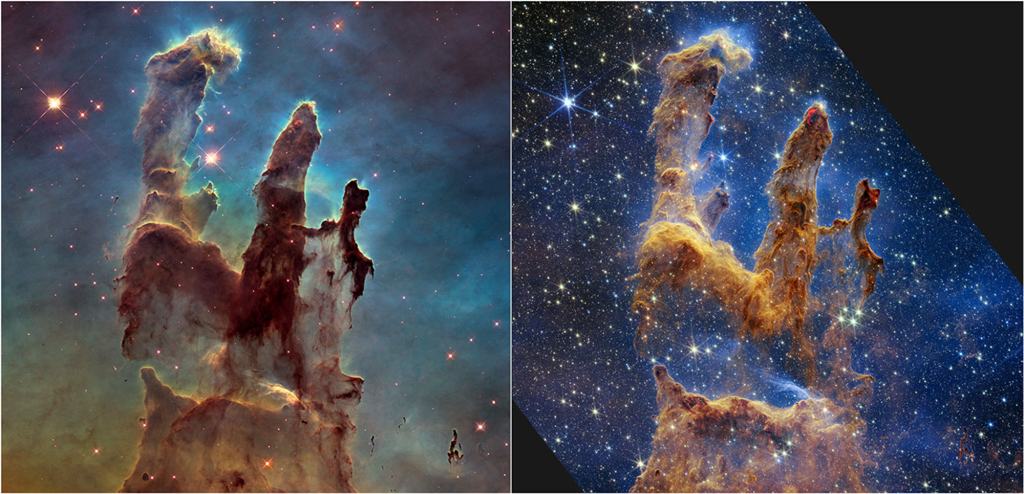
    Pillars of Creation, Hubble (L) and James Webb (R) – Courtesy NASA.

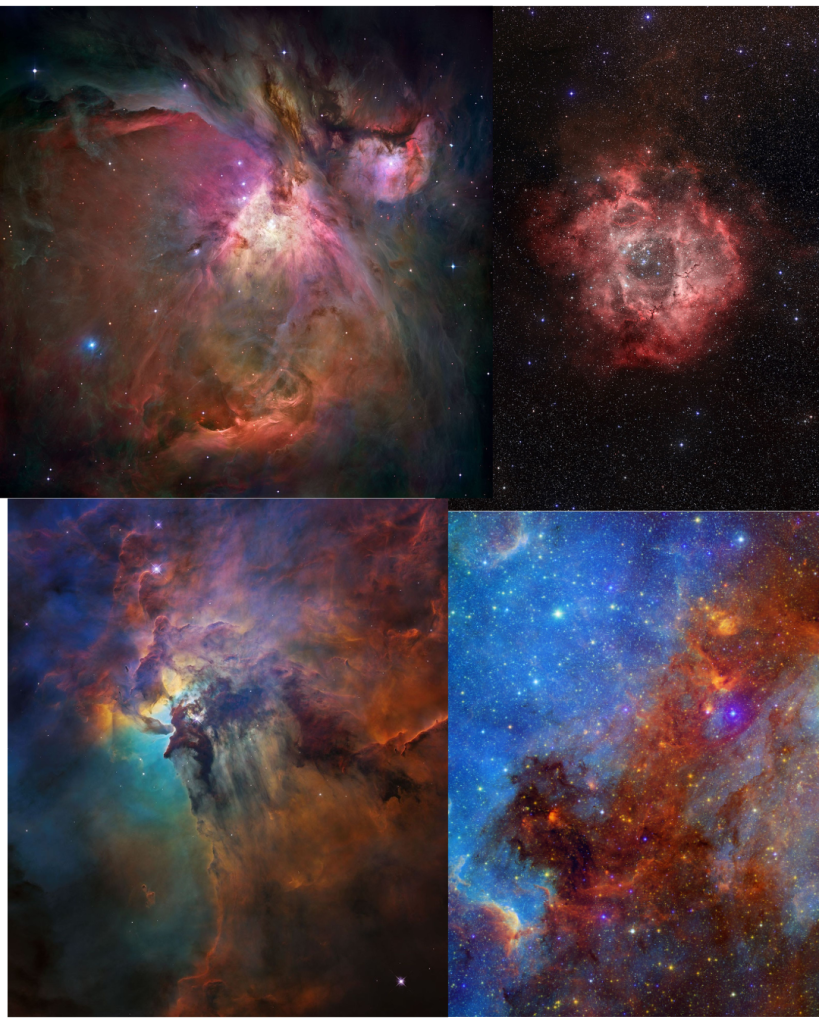
    When you look at the Orion Nebula through a telescope, you are seeing vast clouds of glowing hydrogen. The pink and red hues captured in long-exposure photographs come primarily from hydrogen-alpha emission, a specific wavelength of light released when electrons in hydrogen atoms drop to lower energy levels. The Rosette Nebula, the North America Nebula, the Lagoon — these are all immense hydrogen clouds, nurseries where new stars are being born.

    Orion, Rosette, Lagoon and North America Nebulas – Courtesy NASA.

    To the eye at the eyepiece, they often appear gray or faintly greenish. Our night vision simply isn’t sensitive to deep red. But the light is there, traveling hundreds or thousands of light-years to reach your telescope. With a hydrogen-alpha filter, even modest backyard setups can isolate this signature glow, revealing structure and contrast otherwise invisible.

    When you observe these nebulae, you are witnessing hydrogen in the act of becoming something more.

    The same element that challenges engineers on the launch pad fuels the stars above your head. The same atom that slips through seals in a rocket engine composes the glowing clouds stretching across the Milky Way. The smallest atom in existence shapes the largest structures in the universe.

    Artemis II Wet Dress Rehearsal – Courtesy NASA.

    From leaks to light, from fuel tanks to fusion cores, hydrogen connects our exploration of space with the cosmos itself.

    So the next clear March evening, turn your telescope toward Orion. Look into that faint luminous cloud. Remember that before Earth, before the Sun, before humans built rockets — there was hydrogen.

    Element One.

    Clear skies, and happy viewing.

    Adam England is the owner of a local financial services firm and moonlights as an amateur astronomer, writer, and interplanetary conquest consultant.  Follow him on Instagram @TheBackyardAstronomerAZ and at http://www.ManzanitaInsuranceAndAccounting.com
  • February 2026 – Back to the Moon

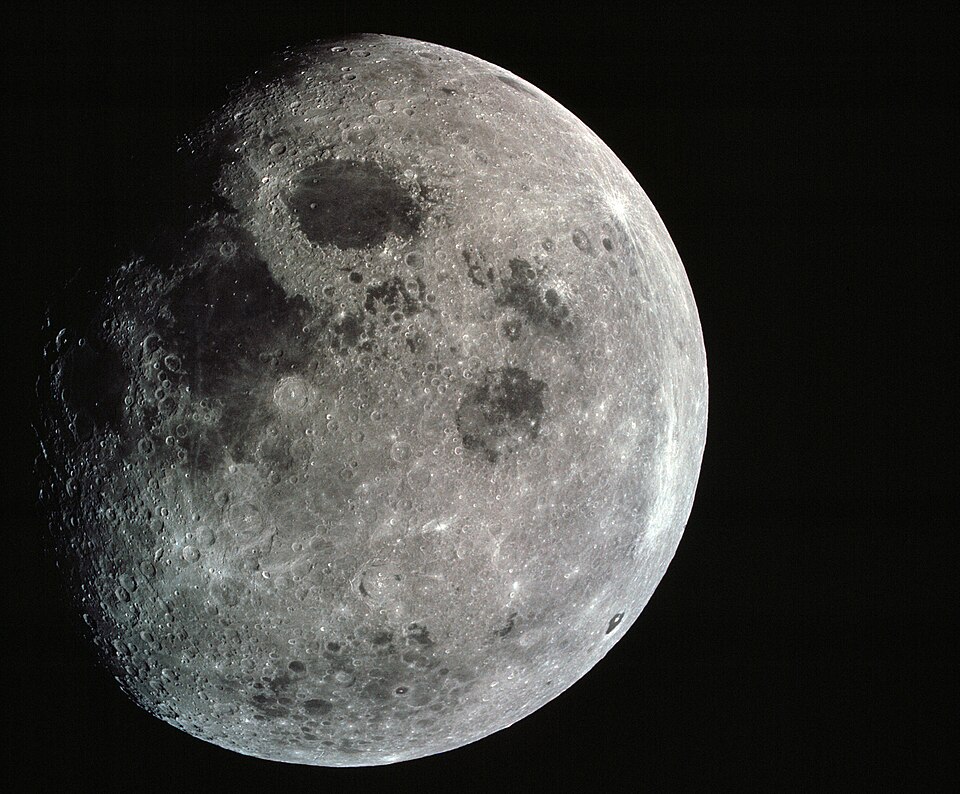
    The Moon, taken by the Apollo 8 crew – Courtesy NASA, Wikimedia Commons.

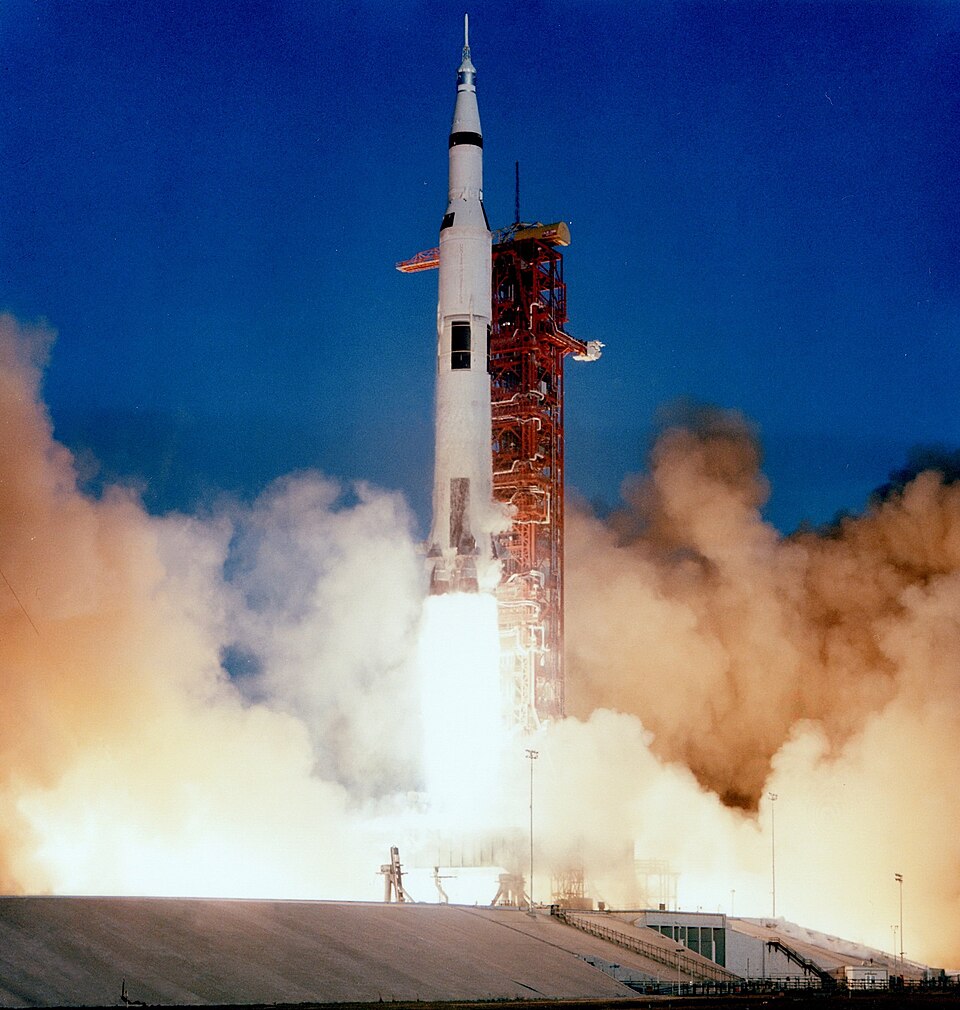
    Outside of space enthusiasts, Apollo 8 is an almost forgotten mission. On December 21, 1968, three astronauts launched aboard a Saturn V rocket from Florida’s Kennedy Space Center. Just 68 hours later, Frank Borman, Jim Lovell, and William Anders became the first humans to orbit the Moon. A mere eleven years after the launch of Sputnik—the first artificial satellite—and humanity was already preparing to set foot on another world.

    Liftoff of Apollo 8 – Courtesy NASA, Wikimedia Commons.

    That historic step, however, would come seven months later. The systems required to land on the Moon were still being built and tested. Apollo 8’s mission was instead one of proof: to validate the Command and Service Module, perform lunar orbital maneuvers, scout potential landing sites, demonstrate navigation and communications systems, and—most importantly—confirm that humans could travel to the Moon and return safely to Earth.

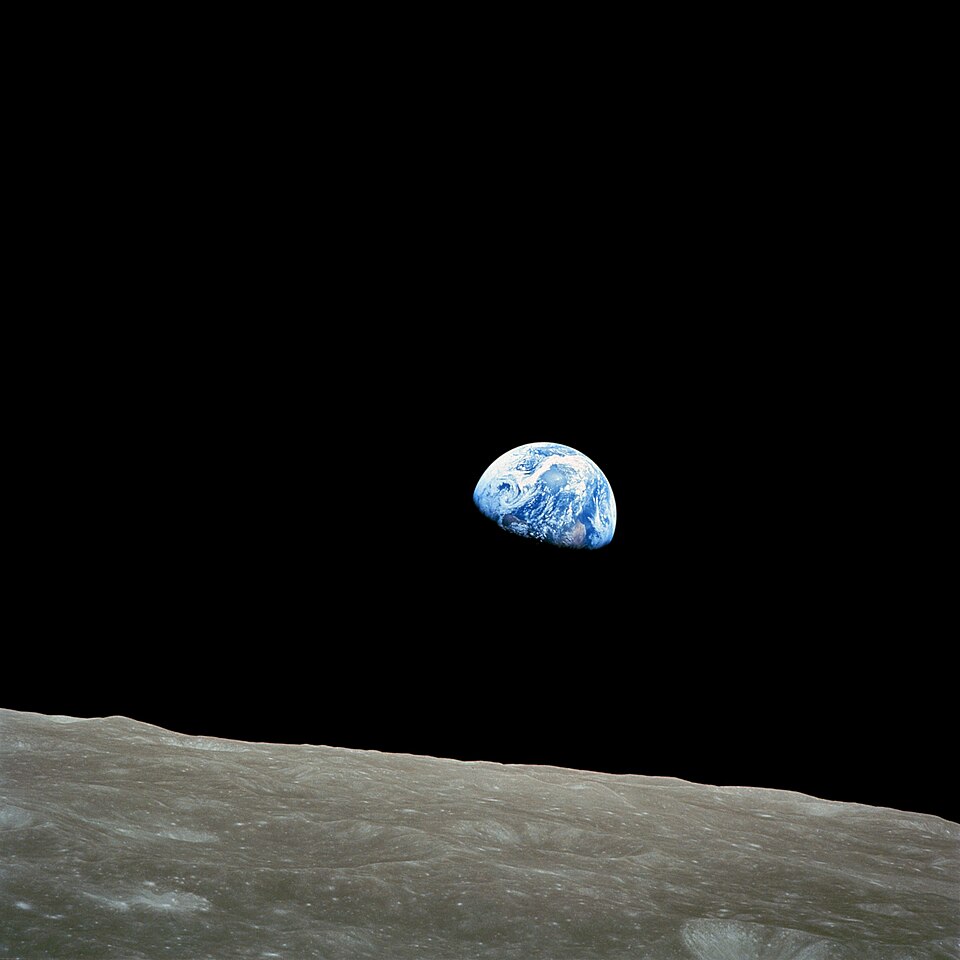
    These three men were the first to leave Earth orbit, the first to see the Moon’s far side with human eyes during ten lunar orbits, and the first to witness an Earthrise—an image forever immortalized by Lunar Module Pilot William Anders.

    “Earthrise” – taken by Apollo Astronaut Bill Anders, courtesy NASA, Wikimedia Commons.

    You may recognize the name Jim Lovell. Portrayed by Tom Hanks in the 1995 film Apollo 13, Lovell would later command that ill-fated mission and become the first human to travel to the Moon twice—though, like Apollo 8, his journeys would remain in orbit.

    Apollo 17, launched in December 1972, marked the last time humans traveled to the Moon. Three planned missions were canceled, and the remaining Saturn V rockets were placed in museums across the country. Fifty-four years later, humanity has yet to venture beyond low-Earth orbit.

    That is—until now.

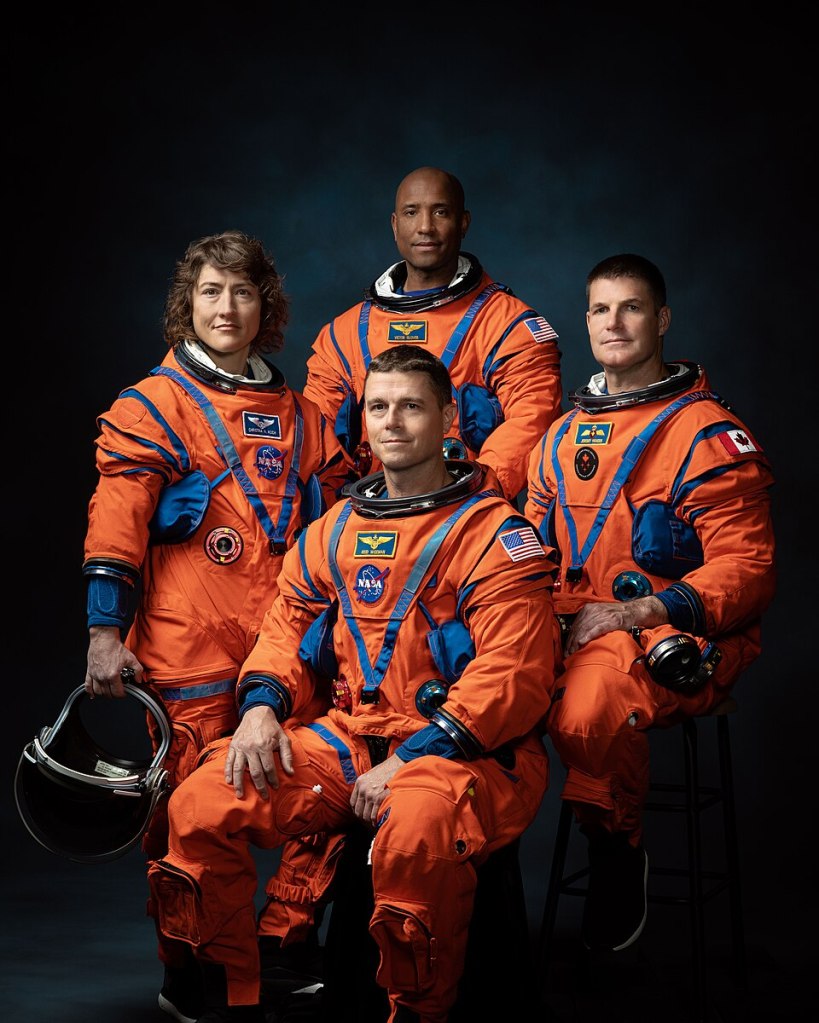
    With launch windows opening as early as Friday, February 6, 2026 will see humans once again orbit the Moon. Three American astronauts and one Canadian Space Agency (CSA) astronaut will strap themselves atop NASA’s Space Launch System (SLS) rocket and embark on a ten-day journey around the Moon and back aboard the Orion spacecraft.

    Artemis I pad rollout – Courtesy @JohnKrausPhotos.

    While both the rocket and capsule have flown uncrewed test missions, this flight is historic in many ways:
    • The first crewed mission of SLS and Orion
    • The farthest humans have ever traveled from Earth—about 8,400 miles farther than Apollo 13
    • CSA astronaut Jeremy Hansen becoming the first non-American to orbit the Moon
    • Christina Koch becoming the first woman to travel to lunar orbit
    • Victor Glover becoming the first person of color to journey to the Moon

    PHOTO DATE: March 29, 2023. LOCATION: Bldg. 8, Room 183 – Photo Studio. SUBJECT: Official crew portrait for Artemis II, from left: NASA Astronauts Christina Koch, Victor Glover, Reid Wiseman, Canadian Space Agency Astronaut Jeremy Hansen. PHOTOGRAPHER: Josh Valcarcel

    Launch preparations began in late January, with a series of launch windows opening between February 6 and February 11. Coming shortly after NASA’s annual Week of Remembrance—honoring the crews of Apollo 1, Challenger, and Columbia—this mission underscores a truth that has always accompanied exploration: progress demands courage.

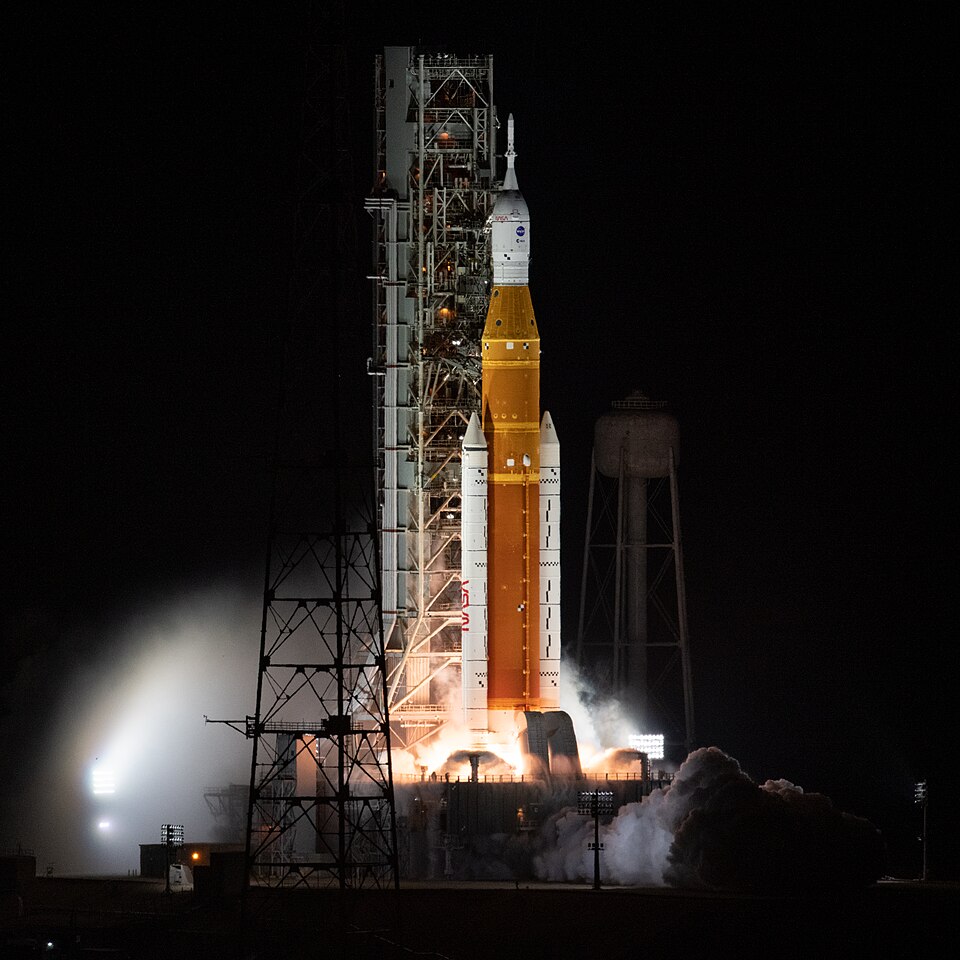
    NASA’s Space Launch System rocket carrying the Orion spacecraft launches on the Artemis I flight test, Wednesday, Nov. 16, 2022, from Launch Complex 39B at NASA’s Kennedy Space Center in Florida. NASA’s Artemis I mission is the first integrated flight test of the agency’s deep space exploration systems: the Orion spacecraft, Space Launch System (SLS) rocket, and ground systems. SLS and Orion launched at 1:47 a.m. EST, from Launch Pad 39B at the Kennedy Space Center. Photo Credit: (NASA/Joel Kowsky)

    Rigorous training, modern engineering, and layers of redundancy stand guard over today’s astronauts. Still, exploration has never been without risk. As President John F. Kennedy reminded the world in 1962, “We choose to go to the Moon…and do the other things, not because they are easy, but because they are hard.”

    This February, humanity once again accepts that challenge.

    Wishing these explorers godspeed.

  • December 2025 – Occupy Space

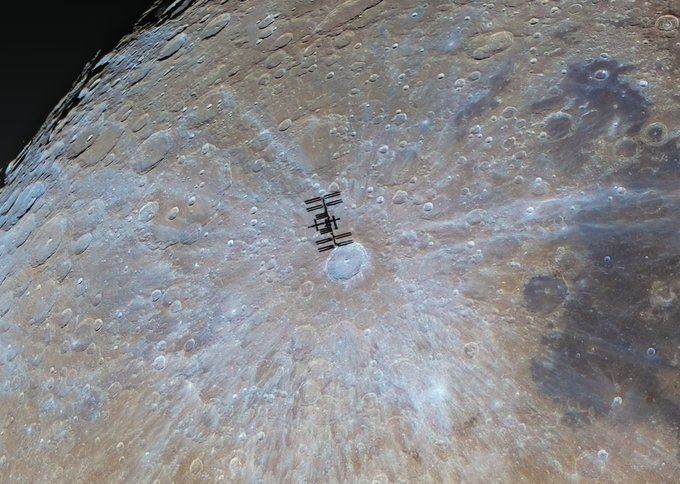
    ISS Transiting the Moon – Courtesy Andrew McCarthy on X @AJamesMcCarthy

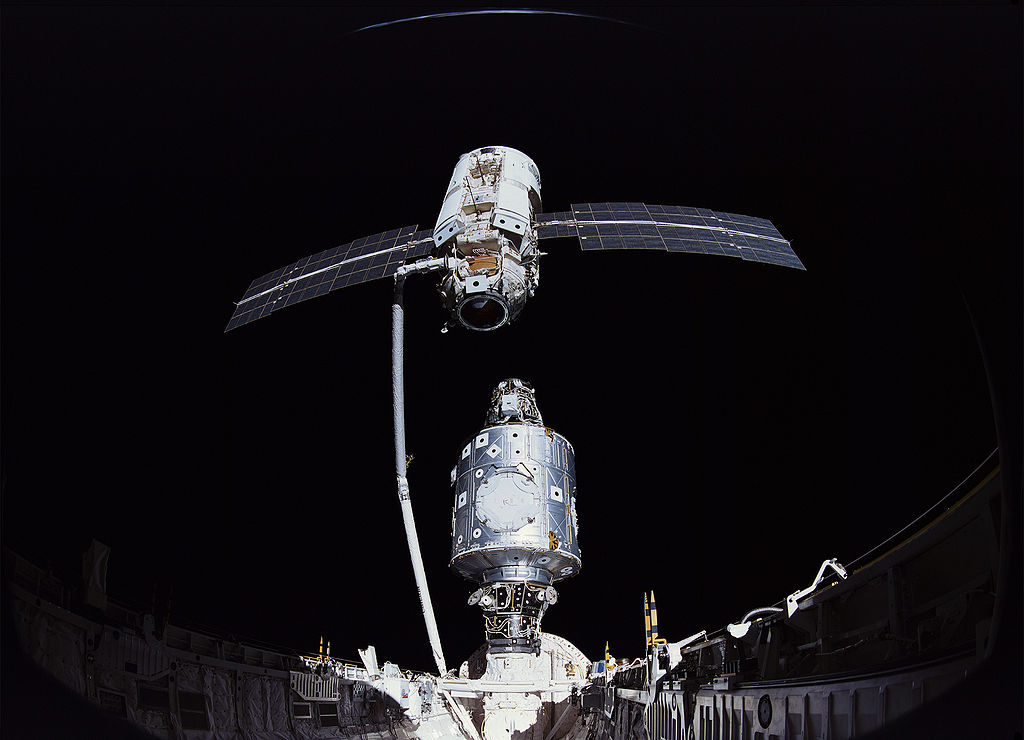
    On December 4th, 1998, Space Shuttle Endeavour lifted off carrying some very special cargo: Unity, the first U.S.-built module of what would become the International Space Station. Two days later, NASA astronaut Nancy Currie skillfully maneuvered the shuttle’s Canadarm to capture Russia’s already-orbiting Zarya module. Eight days and three spacewalks after launch, Endeavour undocked—leaving behind a pair of connected modules and the first heartbeat of the ISS.

    STS-88 connecting the first two modules of the ISS – Courtesy NASA.

    Over the next three years, the station slowly took shape as new components arrived: science labs, living quarters, trusses, and the massive double-sided solar arrays that now define its silhouette. On November 2nd, 2000, a Russian Soyuz delivered Expedition 1—three astronauts who stepped inside the ISS and marked the beginning of continuous human presence in space. As of this year, humanity has lived off-world for 25 straight years.

    Contributions from the Japanese Space Agency (JAXA), the Canadian Space Agency (CSA), the European Space Agency (ESA), and private industry have expanded the ISS into a truly global endeavor. One of the more unusual additions is the Bigelow Expandable Activity Module (BEAM), an experimental inflatable habitat. Originally designed for a two-year test, BEAM has now served nearly a decade, proving its durability while offering extra storage and insight into how we might live on the Moon or Mars. Eight docking ports now allow crewed and automated spacecraft to come and go with supplies, experiments, and new inhabitants.

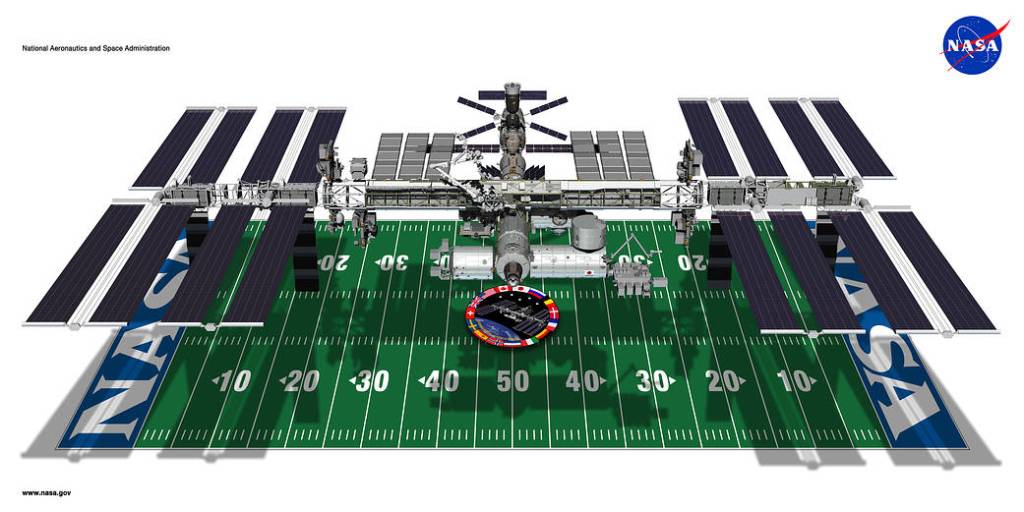
    Artist Rendering of the ISS scale– courtesy Nasa.gov.

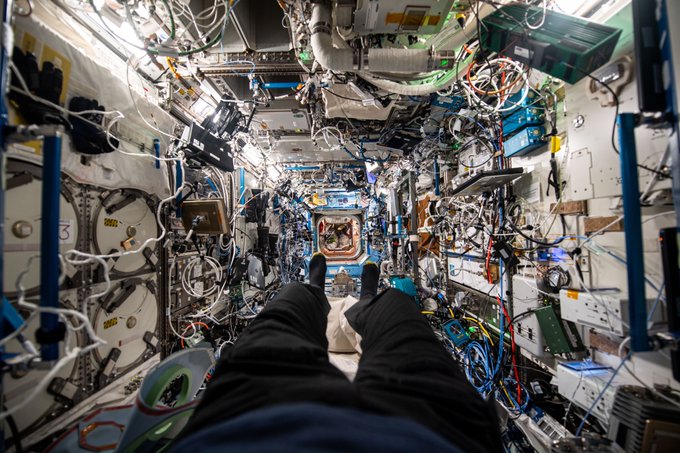
    Today’s ISS spans nearly the area of a football field—though much of that footprint comes from its enormous solar arrays. The panels gather sunlight directly and also harvest light reflected from Earth below. Inside, the station holds 35,491 cubic feet of pressurized volume, though almost two-thirds of it houses equipment, life-support systems, and storage. After a quarter century of upgrades, experiments, and expansions, the interior has become a labyrinth of cables and conduits—20th-century hardware woven into 21st-century technology.

    Interior of the ISS – courtesy ESA Astronaut Marcus Wendt.

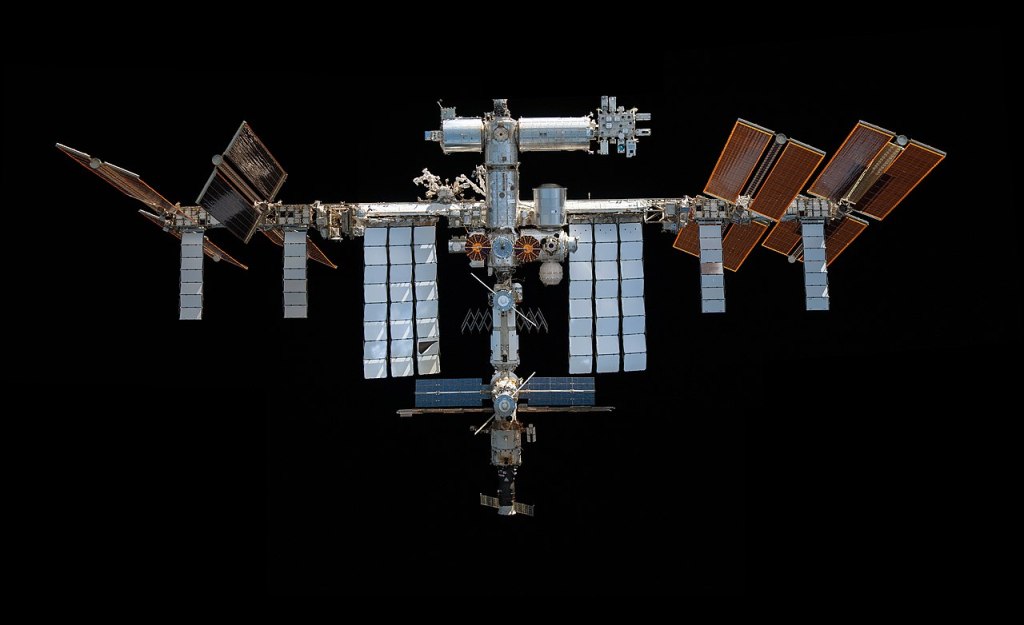
    And like all aging spacecraft, the ISS is feeling the strain. Without the luxury of a trip to the mechanic, astronauts work constantly to keep the station healthy. But time has brought cracks, air leaks, computer glitches, and the occasional micrometeoroid impact. Originally designed for a 15-year mission, the ISS is expected to be retired and de-orbited over Point Nemo—the most remote place on Earth—sometime around 2030, having served twice its planned lifetime.

    The ISS – imaged by SpaceX Crew Dragon 1.

    For now, though, our orbital outpost remains one of the brightest manmade objects in the night sky. At 260 miles up, its sprawling solar arrays reflect sunlight beautifully during the twilight hours. You can find sighting opportunities at nasa.gov/spot-the-station. Passes usually last 3–5 minutes, and you won’t need binoculars or a telescope—just step outside after sunset or before sunrise and watch for a brilliant, fast-moving light with no blinking aircraft markers.

    As we prepare to hand low-Earth orbit over to commercial space stations, take a moment this month to look up. That bright streak racing overhead at 17,500 mph represents 25 years of cooperation, perseverance, and human ingenuity—proof that we truly can learn to occupy space.

  • December 2024 – Rockets, Satellites, and Acronyms

    The media was abuzz in November with Congressional Hearings on UAPs.  As governments do, this new acronym was created to better describe unknown objects as “Unidentified Anomalous Phenomena” as opposed to our classic UFOs or “Unidentified Flying Objects”.  One early “UFO” that was soon identified was the CCCP’s Sputnik I, the first artificial satellite to orbit the Earth, a product of the Soviet Union’s space program.  One observer of this early UAP was Homer Hickam, a 14-year-old son of the West Virginia coal community.  As retold in his written memoir and later in the 1999 film adaptation of “October Sky”, seeing this strange object traverse the night sky inspired a young Homer and his friends to build their own rockets, leading Homer to a career at NASA and a lifelong passion for space.

    Camera: DCS420A .Serial #: 420-2040.Width: 1524.Height: 1012.Date: 11/24/97.Time: 11:39:45.DCS4XX Image.FW Ver: 081596 .TIFF Image.Look: Product.———————-.Counter: [88].ISO: 100 .Aperture: F2.8.Shutter: 60 .Lens (mm): 28 .Exposure: M .Program: Po .Exp Comp: 0.0.Meter area: Mtrx.Flash sync: Norm.Drive mode: S .Focus mode: S .Focus area: Wide.Distance: 3.4m.

    67 years later, the world has seen thousands of rockets having launched more than 12,000 satellites to places like LEO and GEO – more of those pesky acronyms, these specifically designating areas such as Low Earth Orbit and Geostationary Earth Orbit – the superhighways on which our satellites circle the globe.  On any given day, weather permitting, while enjoying the crisp beauty of a Northern Arizona sunset, you can observe many of these satellites.  As the Sun sets in the West and shadows fall across the land, the sky high above us may still reflect the Sun’s rays off the metallic frames and solar panels of many of these satellites.  They will often get dimmer as they move East and into the shadow, or sometimes gain in brightness if moving West.  The brightest of these is the ISS.  Humanity’s continuously inhabited outpost in LEO since November 2000, the International Space Station represents global cooperation never before seen, and shines as a literal beacon in the night sky.  The station and it’s solar arrays span nearly the area of an American football field, and reflect an enormous amount of light in the twilight hour, and you can see it overhead by visiting www.spotthestation.nasa.gov and typing in your city it will give you the time and direction to watch for the next ISS flyover.

    ISS 110mm nadir mosaic created with imagery from Expedition 66.

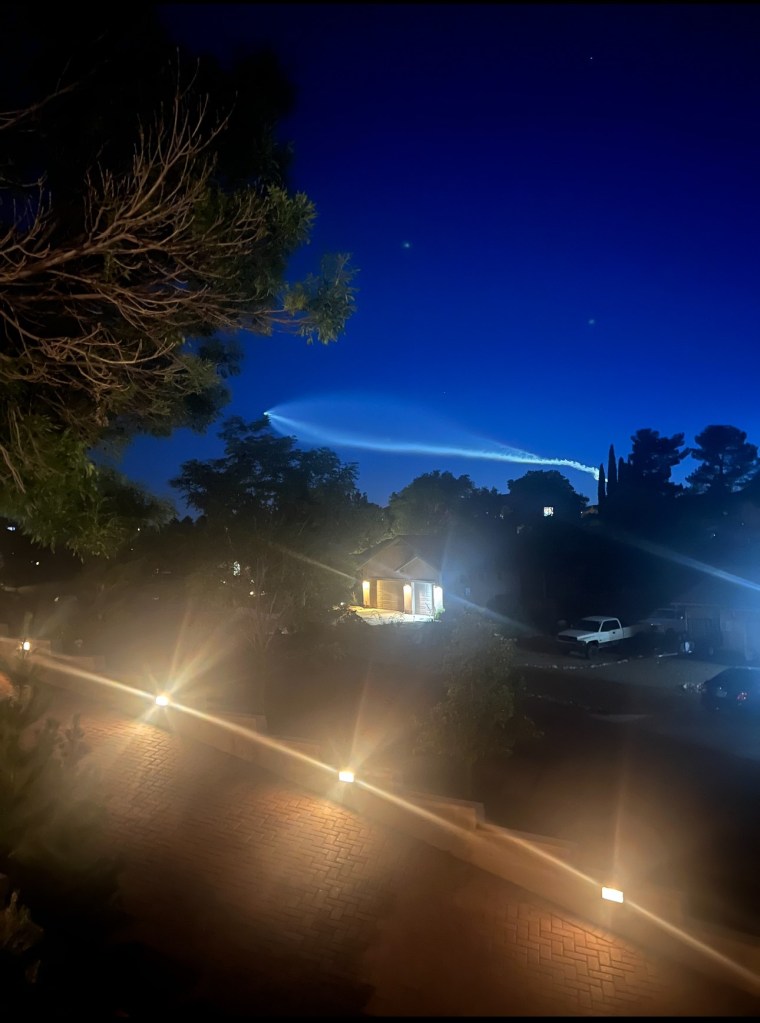
    It used to be that only those residing in a small radius of Cape Canaveral, Florida could see regular rocket launches, however the locations and cadence at which Space X and other private companies are now launching rockets allows us in Arizona to sometimes see this marvel without travelling long distances.  www.spacelaunchschedule.com is one site where you can view a list of upcoming launches, and if you sort by Vandenburg SFB (Space Force Base) in California, look for launch windows around sunset, then look to the West and you may see the iconic cloud created by the booster separation of a Falcon 9, just after passing through Max-Q – the moment of maximum dynamic pressure on a vehicle pushing through our atmosphere.  The first stage of the rocket may come back and land on the ASDS or Autonomous Spaceport Drone Ship just offshore, returning the rocket to be used again and again.

    Courtesy Karla Shafer, Prescott, AZ.

    If these types of events spark your own curiosity and passion, you can also join in the fun of rocketry.  You don’t need to machine a custom nozzle like Homer Hickam, or worry about MECO (Main Engine Cut Off) for stage separation.  A safe and fun launchable rocket will run you less than $50, and with a few extra SRMs (Solid Rocket Motors) and good weather conditions, you can establish your own EM (Exploration Mission) right in your own local park.

  • Sputnik and the “October Sky”

    October 4th, 1957 was truly the beginning of a new age.  While humans had spent the last few decades dreaming of, dabbling in, and testing their mettle in the high reaches of Earth’s atmosphere, the launch of Sputnik 1 on that day was the true harbinger of what was to come in the new frontier beyond Earth.  The Soviet-made sphere was roughly 23 inches in diameter with a mass of 83.6 kg/184 lbs, with 1 watt of power provided by three silver/zinc batteries designed to last just two weeks.  It was programmed to issue a series of beeps on various frequencies, encoded to provide information about temperature and pressure around the first satellite.  A team of engineers working on the project watched and waited with apprehension for more than 90 minutes after it launched to make sure Sputnik survived a full orbit of the Earth, and then called Soviet Premier Nikita Khrushchev to announce their success with the first human-made object to orbit the Earth.  By the following night, amateur radio operators and astronomer joined professional scientists and engineers around the world to track the satellite’s path across the sky.  The American Radio Relay League – the largest association of amateur radio operators in the United States – quickly issued directions to its members around the country and the world on how to tune in to hear the signals coming from space.  Whole communities gathered outside with warm beverages and craned necks hoping to witness the dawn of the Space Age. 

    The 1999 film “October Sky” relates the story of one such community.  Coalwood, West Virginia was a small mining town, not unlike hundreds of others dotting the central Appalachian region.  Then 14-year-old Homer Hickam, Jr. was one such observer, and seeing Sputnik fly overhead the West Virginia sky that week was a catharsis to a boy who was supposed to grow up and work the coal mines, just like every other boy in Coalwood.  A ragtag group of friends developed a new passion for rockets and the self-education that would be required to make them fly.  The self-proclaimed “Big Creek Missile Agency” spent the next two and a half years learning to weld, teaching themselves calculus and trigonometry, destroying countless of their mothers’ borrowed kitchenware, and eventually winning the National Science Fair gold and silver medal in the field of propulsion. 

    Members of the Big Creek Missile Agency display one of their rockets.

    To celebrate the 65th anniversary of the launch of Sputnik 1 and the beginning the Space Age, tune in to our podcast for the audio version of this article series and a special Backyard Astronomer interview with retired NASA engineer and co-founder of the “Big Creek Missile Agency” Homer Hickam.

  • Space Junk

    The Earth has been estimated at a total mass of approximately 5.9722×1024 kg, or more commonly notated as 1 Earth Mass (ME).  One Solar Mass – or the Mass of the Sun and notated as M☉ – is approximately 333,000 Earth masses.  The whole of the solar system is estimated at 1.0014 Solar masses, meaning all the planets, moons, asteroids, and comets make up just 0.0014 the mass of the Sun.  This all adds up to a lot of stuff floating around in our celestial backyard.

    Us Earthlings, however, love to produce trash.  We have spent vast amounts of time and energy converting earthly resources into products that ultimately lose value and become garbage, that is subsequently dumped on land and in water, since well before recorded history.  Some of the greatest archaeological discoveries of our past come from ancient landfills and latrines.  So, it is no surprise that our forays off our planet have also produced large quantities of waste.

    Sputnik 1

    Beginning on October 4th, 1957, Sputnik 1 launched aboard a modified Russian ICBM to become the first artificial satellite in space.  Its orbit decayed over the coming weeks and fell back to Earth on January 4th, 1958, burning up in the atmosphere on in its way in.  March 17th of the same year saw the United States launch the 3.2kg Vanguard 1 satellite, which still orbits the Earth today, along with the 31kg upper stage of its launch vehicle.  Some 64 years later, the US Space Surveillance Network tracks around 20,000 artificial objects orbiting the Earth, with only 2,218 of those being operational satellites.  Those are the most recent numbers from 2019, and with the rise of private space industry giants like SpaceX and Blue Origin, and more countries entering the space race every year, those numbers are growing faster than ever.  But these are just the numbers of objects large enough to be tracked from ground-based observatories – like the Navy Precision Optical Interferometer outside Flagstaff, Arizona, which can track objects the size of a quarter.  Accounting for even the smallest paint flecks, estimates place the total number upwards of 130,000,000 objects, made by humans, and still flying around the Earth at ungodly speeds.

    Vanguard 1

    “Space junk” is the colloquial term for all this debris, and generally carries a negative connotation.  The International Space Station was recently forced to adjust its orbit and shield the resident scientists in their respective escape capsules when Russia tested a space weapon that destroyed a defunct satellite and created hundreds of thousands of small pieces of debris.  Even the smallest piece of metal shaving orbiting at around 15,700 miles per hour could easily pierce through the outer layers of something like the ISS, causing depressurization, major repairs, or loss of life.

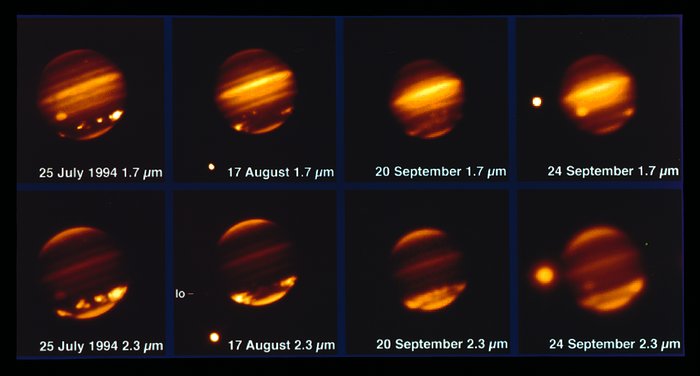
    Despite these astounding numbers, we know that space is a BIG place.  Collisions are not common occurrences, even with billions and trillions of micro-meteoroids scattered across the solar system.  Impact craters on Earth, the Moon, Mars, and elsewhere about the Solar System tell us that major impacts do happen with relative frequency in the space timeline, but our technology is just advancing to the capability of capturing such events.  Two such events have been documented, and both were with Jupiter.  Astronomers everywhere watched as Comet Shoemaker-Levy 9 flew its Icarus like path and was torn apart by the immense gravity of Jupiter, crashing into, and leaving a trail of temporary scars in the Jovian atmosphere in July 1994.  By comparison, on September 13th, 2021, a handful of amateur astronomers just happened to be photographing Jupiter when a bright flash appeared, estimated to have been caused by an asteroid around 300 ft in diameter.

    This image, taken with the MPG/ESO 2.2-metre telescope and the IRAC instrument, shows comet Shoemaker–Levy 9 impacting Jupiter in July 1994.

    As we develop new ways of tracking objects across space, such as by Greg Leonard and the team at the Catalina Sky Survey in Tucson, Arizona, more advance notice of impacts will follow.  Many professional observatories are dedicating their clear nights to hunting for unknown comets and asteroids, while amateur astronomers are leading the charge in following the larger objects we have placed in uncontrolled and forgotten orbits.  A SpaceX Falcon 9 booster that launched a weather satellite in 2015 was recently tracked by amateur astronomers to find that it will impact the far side of the Moon on March 4th.  The first known unintentional collision of a human made object with the Moon, the 3.6-ton rocket is expected to meet its fate around 12:26 UTC.  These calculations by amateur astronomers have allowed international space agencies to adjust the orbits of lunar satellites which may be in the way or – or may be able to witness this impact.

    Sadly, being the impact will be on the far side of the Moon, we will not be able to observe it with our backyard telescopes.  But with record numbers of orbital flights increasing year over year, I’m sure we will get more opportunities to witness collisions in space.

    And just maybe in a few thousand years, space archaeologists will look to all these defunct satellites, rocket bodies, landers, rovers, and nuts and bolts to catalog the many long forgotten adventures of our current era.  Or maybe it will just be another pile of orbiting space junk to dodge on our way to colonize the stars.

    Author’s note: With the above-described size of space, and the amount of stuff out there, our understanding of objects and orbits increases day-over-day.  Since the writing of this article, it has been hypothesized that the booster may be a Chinese Chang’e 5 booster instead of the originally reported SpaceX booster.  This has been disputed by the Chinese government, and at this point we just don’t know whose rocket it is.  As it gets closer to the moon, it is possible that the international fleet of satellites may properly identify it, and it’s just as possible that we may never know for sure.  Either way, we are in for a scientific treat on March 4th.

  • The James Webb Space Telescope

    As early as 1923, space telescopes were proposed to peer deeper into the universe, without the obstruction of the Earth’s tenuous atmosphere.  By the 1970s congress had funded the first of these great space telescopes, with the 2.4 meter primary mirror completed in 1981 for a Ritchey-Chreitien Cassegrain type telescope which finally launched in 1990 in the cargo bay of the Space Shuttle Discovery, carrying the name Hubble. A few servicing missions later, the Hubble Space Telescope has been gracing our computer screensavers with images of the cosmos for over 31 years.

    courtesy http://www.NASA.gov

    Before it’s launch, however, NASA knew that the narrow visible spectrum that Hubble was designed to observe in was not the end-all goal of space telescopes.  A series of additional orbiting laboratories able to capture light from all ends of the spectrum were developed, including the Chandra X-Ray Telescope, the Spitzer Space Telescope in the infrared, and the Kepler planet hunter telescope, but NASA engineers and astronomers dreamed of something bigger and better.  In 1989, the concept was floated for a much, MUCH larger space telescope that could open like an umbrella, with multiple mirrors converging to create a 4-meter aperture telescope that could image across a much larger swath of the visible to near infrared spectrum.  The next three decades of scientific advancements, engineering marvels, as well as numerous delays and drastic budget overruns have led up to this moment. 

    On December 25th the James Webb Space Telescope will launch aboard an Ariane 5 rocket from the European Space Agency spaceport in French Guyana, South America at 5:20 AM MST.  Whereas Hubble orbits at about 330 miles above the Earth, making it a previously accessible target for repair and upgrade mission with the now retired fleet of Space Shuttles, The JWST will orbit the Sun at what is known as the L2 Lagrange point.  This is a unique point in space where the gravitation forces of the Sun and Earth balance each other and create a stable point in space for an object to remain in relative equilibrium.  There are 5 such Lagarange points created by the Sun/Earth gravity wells, with the benefit of the L2 point being that it will always be in a line with the Earth directly between it and the Sun, helping to block the Sun’s light – and astronomers like it dark!  The JWST will take approximately a month to reach this point 1.5M km from earth, about 3 times further than the moon.  During this time, the observatory will open its mirrors, solar panels, and a unique solar shield that will add additional protection from the light and heat of the sun, allowing for more detailed observations in the near and mid-infrared.

    20 countries, more than 30 years, 9.7 billion dollars, and human capital that could never be accurately calculated, will all culminate in a Christmas gift to the world early this Saturday morning.  God speed James Webb!

  • NASA DART Mission – Armageddon Version 2.0

    When Billy Bob Thorton’s character approaches Bruce Willis, Ben Affleck and Steve Buscemi to save the world from impending doom in 1998’s blockbuster film “Armageddon” they only had 18 days to prevent an asteroid the size of Texas from annihilating life on Earth. In the years since, real NASA scientists have spent countless hours observing NEO’s – Near Earth Object’s – and painstakingly tracking their past and future orbits to find which will be the next major asteroid to cross path’s with Earth. And while we are yet to find one that with certainty will be the next major Chelyabinsk or Tunguska Event, that hasn’t stopped researchers from thinking about ways to prevent such a collision from happening.

    Since 2018, a joint planetary defense operation between NASA, Johns Hopkins Applied Physics Laboratory, and the space agencies of Europe, Italy, and Japan have come together to design the DART Mission. The “Double Asteroid Redirection Test” is scheduled to launch from Vandenburg Air Force Base in California at 11:20 PM MST Tuesday 23 November aboard a SpaceX Falcon 9 rocket for its one-way trip to the binary asteroid Didymos. While Didymos is not a threat to Earth, it was chosen as the perfect testing ground for a potential new technology that could be used for future asteroid redirect missions.

    On 2 October 2022 the DART spacecraft will collide with the smaller of the two asteroids in the Didymos binary system. Unlike most spacecraft full of scientific experiments, the primary craft is essentially a 500kg (1,100 lb) inert mass with little more than a guidance system and antenna powered by a small solar array. A few days prior to impact a small CubeSat designed by the Italian Space Agency will seaparte form the main spacecraft and trail behind to image the impact and relay both narrow and wide field images back to Earth.

    The plan is such that the impact will have a very small effect on the asteroid at the moment of collision, just a half a millimeter per second. That is enough change however that as Didymos continues its trek around the sun, Earth based telescope will be able to see how its orbit changes. This information will help us plan future missions to move asteroids of varying sizes out of orbits that may be deemed hazardous to Earth or other potential risks. A follow up mission is scheduled to revisit Didymos 5 years after the impactor to study its geology and the longer term affects of the initial mission.

    Here’s to hoping it works and we don’t have to sacrifice Ben Affleck again.