Category: Solar System

  • An Ancient Visitor From The Outer Solar System

    The Upper Paleolithic is a segment of human prehistory starting around 50,000 to 12,000 years ago, and is characterized by the first known organized settlements, advancements in tools and weapons, and artistic work.  These early petroglyphs (carved or etched) and pictographs (painted) started with simple lines and dots, and soon evolved to include traced hands, animals, people, and boats.  While we cannot presume to know the full intent of the respective artists, some of these appear to have been purely artistic, while others seem to relay information on game animals, locations, and even seasons and the passage of time.  Lunar cycles, constellations, and unique astronomical events have been found worldwide, documented in these cave walls. 

    These ancient people certainly looked to the skies, as we know similar stories behind constellations carry across continents and millennia.  Archaeoastronomers study how these cultures understood the heavens and the impact it had on their civilizations.  From Chaco Canyon, New Mexico, to the dense jungles of Borneo, to caves across Europe, we find repeated patterns of stars, crescent moons, seasonal equinoxes and solstices, supernovas, eclipses, and the sudden appearance and retreat of comets.

    Comets became some of the first objects to be predicted, as short-period comets make their return in cycles of less than 200 years.  Well before the invention of the telescope in the early 17th century, astronomers measured these long-tailed visitors against historical records and saw patterns in their return.  However, some of these comets never matched up to historical records.  Using modern technology, we now identify these as long-period comets coming from the distant Oort Cloud, a bubble of icy bodies well beyond the orbits of Neptune and Pluto.  These comets are extremely difficult to predict how much they will brighten as they approach the Sun, with some visible during the day, and others only seen through binoculars.
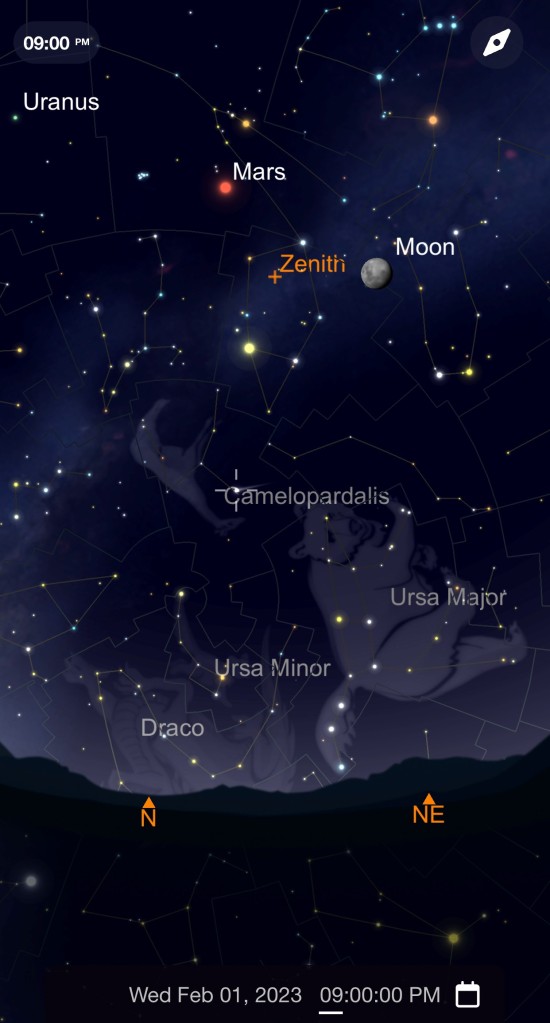
    Comet C/2022 E3 (TZF) is one of these long-period comets currently making its way through the inner Solar System.  Discovered at the Palomar Observatory in California on March 2nd, 2022, it reached perihelion – it’s closets approach to the Sun – on January 12th, became visible to the naked eye on January 17th, and will be closest to Earth on February 1st.  Clear skies permitting, step outside and look toward Polaris, the North Star.  Draw a line to the moon, and about a third of the way from Polaris, in the constellation Camelopardalis, you may be able to see this ancient interloper.  Grab a pair of binoculars or a telescope and you will certainly be able to resolve the fuzzy green tail of this comet, which last graced our skies and was seen by our ancestors nearly 50,000 years ago.
  • September 2022 – Jupiter

    Two months in a row we are fortunate to have the largest of our Solar System’s Gas Giants put on a stunning display.  While in August Saturn was at opposition, Jupiter will also be at its nearest and brightest to Earth on the night of September 26th.  Unlike the Saturnian opposition, however, when the Moon lit up the sky on August 14th at 93% fullness, on that Monday night in September, backyard astronomers the world over will appreciate the darkness afforded by a New Moon.

    Jupiter was the name given this planet by the ancient Romans in honor of their chief God.  This naming pattern follows the Grecian title of Zeus, the Babylonian designation of Marduk, the Sanskrit honorific of Brihaspati, the Hebrew epithet of Tsedek, and Nordic mythology of Thor, from which we still refer to a particular day of the week as “Thor’s-day” (Thursday).  Mùxīng as it is known in Chinese is so important in their mythology that the entirety of the zodiac revolves around the approximately 12-year cycle of Jupiter making a complete orbit of the Sun.

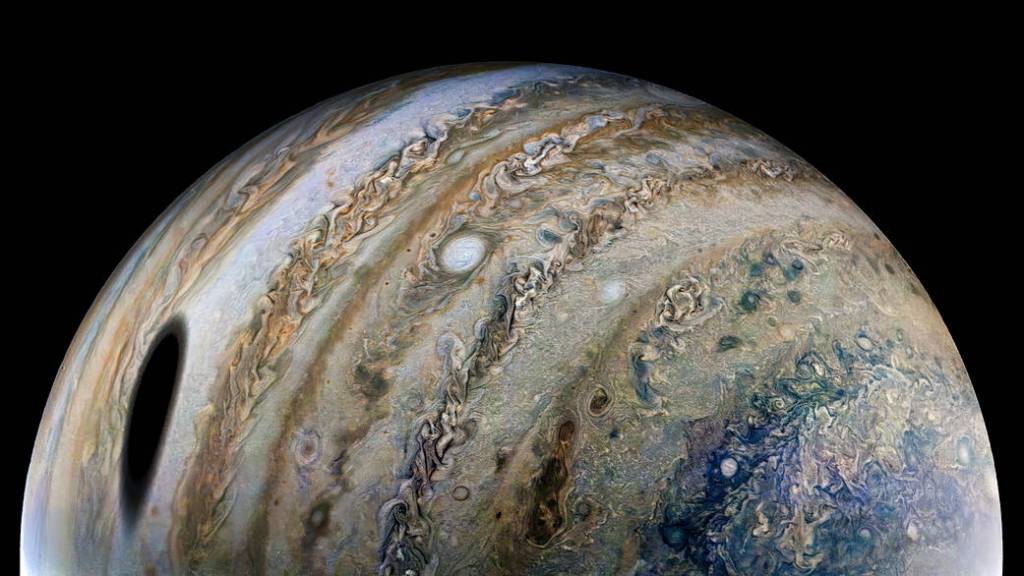
    If one was able to take all of the “stuff” in the Solar System – excluding the Sun – and push it together into a giant ball, Jupiter would still be more than twice as large as everything else combined.  Even the smallest of telescopes and binoculars can pick out the 4 Galilean moons orbiting the planet, though with larger scopes one can begin to resolve many more, with 79 known moons orbiting this giant.  On clear nights, you may also start to notice colored bands across the surface of the planet.  These are clouds of gas, like jet streams on Earth, with different currents moving in different directions and in colors ranging from white to orange and brown.

    The Juno spacecraft arrived in Jovian orbit in 2016 and has been studying the planet in detail ever since.  While your backyard observations will be in the visible light spectrum, Juno is able to study Jupiter’s gravitational field and magnetic field through microwave, infrared and ultraviolet astronomy.  In addition, the new James Webb Space Telescope has already gazed at Jupiter in the infrared, allowing scientists to merge data across light spectrum to understand more of how this giant planet formed and continues to evolve as the defender of our inner solar system today.

  • August 2022 – The Ringed Planet

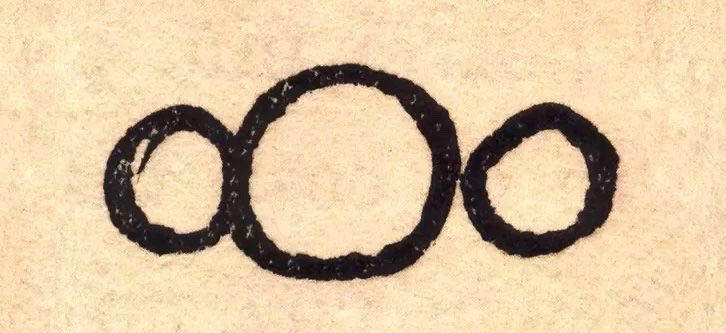
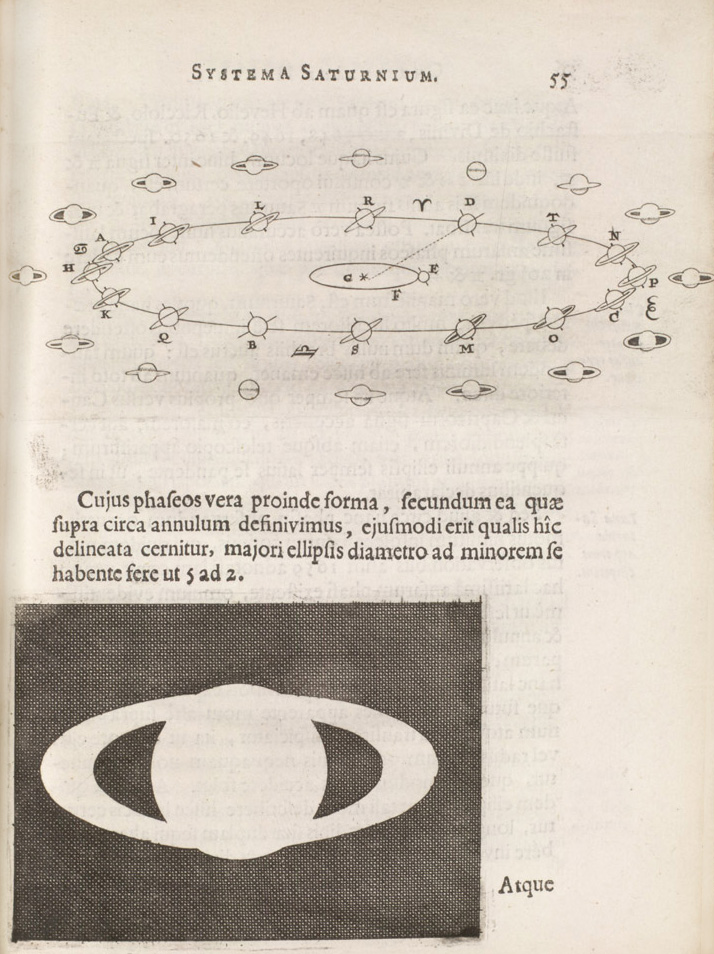
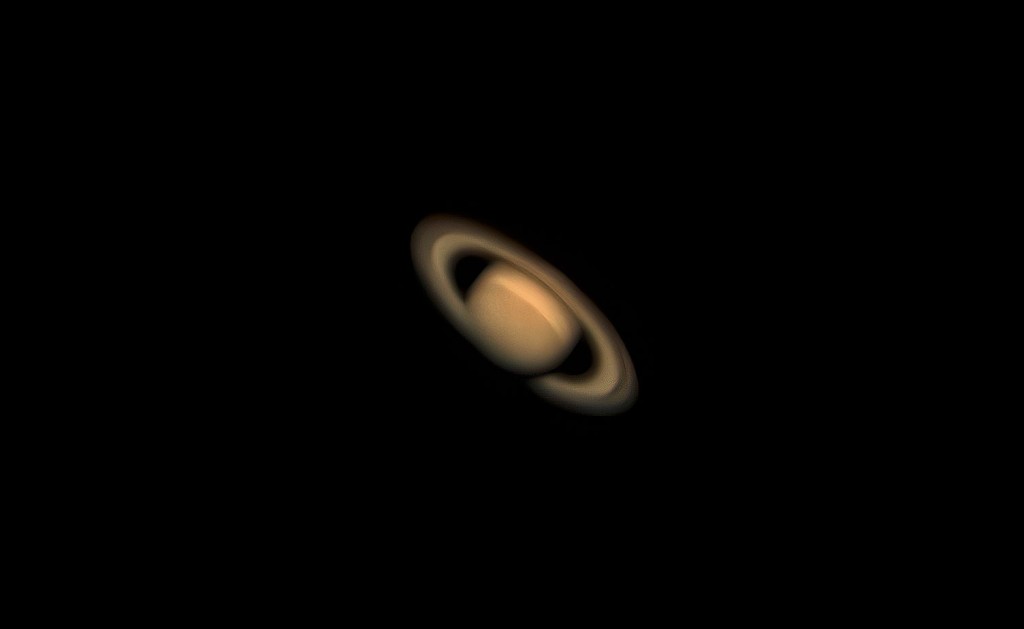
    The planet Saturn has intrigued astronomers – both professional and amateur – since Galileo first sketched what he thought were two odd-shaped moons on either side of the planet.  His final telescope at magnification 30x was still not quite able to resolve the rings that we love so much to gaze at.  Dutch mathematician Christiaan Huygens explained the rings of Saturn by 1659 and identified its moon Titan with a slightly larger telescope at 43x magnification.  Both major accomplishments for their time, we now benefit from even the most basic telescopes and binoculars able to show us the beautiful rings of Saturn and its moon Titan nearly any time of year.

    Saturn is the second largest of our solar system’s gas giants behind Jupiter, with a volume 763 times that of Earth.  Despite its massive size, the average density is less than that of water, and as such is only 95 times more massive than the Earth.

    In August, the planets align to give the best view of the year of this exceptional viewing opportunity.  Saturn reaches opposition on August 14th, meaning it is the closest to Earth, and also its brightest due to the Earthward facing side fully illuminated by the Sun.  It will be one of the brightest objects in the sky this month, moving Westward along the ecliptic, the path that all planets take across the Southern sky.  You can find it near the tail of the constellation Capricornus that night.

    At opposition, Saturn will be approximately 816 million miles away, a distance that takes light 73 minutes to traverse.  So, when you are gazing at the Ringed Planet, you are actually seeing light that left the Sun, travelled 1 hour 21 minutes to Saturn, and then back 1 hour 13 minutes to your eyepiece in Northern Arizona.  Those same particles of light may have taken upwards of a million years to escape the 430,000 miles of the Sun’s dense plasma, but we will discuss that in more detail another day.  If your telescope mirror is at least 2” or larger, you should also be able to see Titan off to the side, with the rings nearly making a line pointing to this moon that is larger than the planet Mercury.  Titan’s dense methane atmosphere often makes it appear slightly orange.

    The new James Webb Space Telescope will be photographing the planets outward from the orbit of Mars over the next few months and years and is sure to amaze.  In the meantime, if you are able to get a picture of Saturn through your telescope, share it with us on social media!

  • Planetary Collisions and the Seasons

    The early solar system was a violent place.  We know this courtesy of modern telescopes and models generated by today’s supercomputers, allowing us to peer at clouds of gas around distant stars, and observe their planets forming, and hypothesize how our solar system would have formed under similar conditions.  Like the rings around Saturn, a young star usually forms in a cloud of tenuous gas, slowly pushing inward and becoming more and more dense, with the star at the center hosting the majority of the mass – and therefore gravity – and the outer rings coalescing into planets, moons, asteroids and comets.  Over time, these objects run into each other, as we observed with objects hitting Jupiter over the past few decades, and large craters on the surface of Earth and elsewhere about the solar system preserved as monuments to these cataclysmic events.

    The Collision, courtesy NASA, Wikimedia Commons

    It is believed the Sun absorbed enough material to initiate nuclear fusion around 4.6 billion years ago.  Over the next 100 million years, the disk of gas around it formed all the planets we now know, as well as many others that are long since forgotten.  Theia was one of these protoplanets, about the size of Mars, having formed much further out in the solar system with the comets, and containing much more water ice than the inner planets. Its orbit was erratic, or possibly disturbed by the passing of a wayward star, and after countless close encounters, Earth and Theia collided in what must have been an awesome event.  The violent impact knocked Earth sideways, merged the heavy planetary cores into a much larger core and mantle, ejected debris for hundreds of thousands of miles into a new orbit around the Earth, and everything began a slow process of cooling to form continents and oceans, and even our moon.

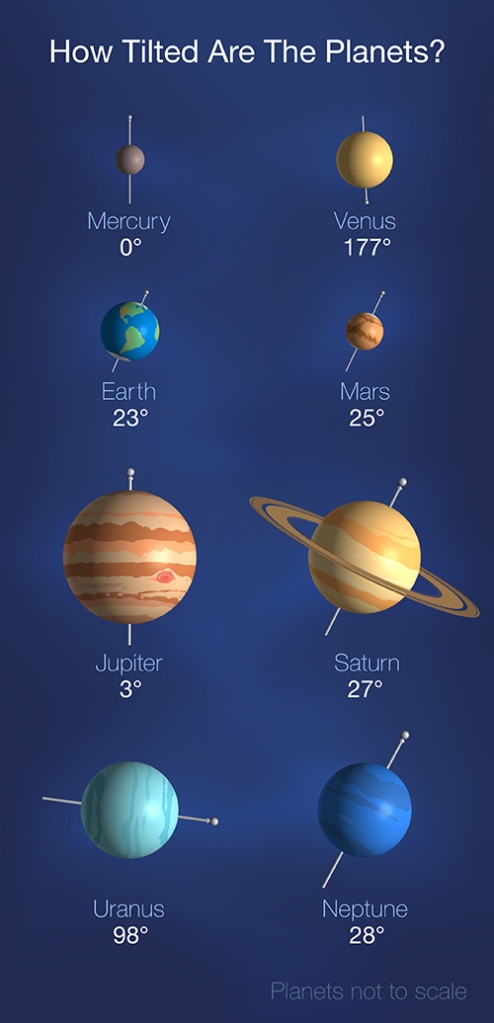
    Many other bodies experienced this same type of event, as we can see the tilt and rotation of every planet in our solar system slightly different from the others.  Jupiter being the largest was able to better withstand impacts than the smaller, rocky planets, and only has a tilt of 3°, while Venus was somehow knocked completely upside down to a 177° tilt and rotating in the opposite direction of the other planets.  Uranus lies at a 98° tilt relative to the sun and essentially orbits on its side, while Earth, Mars, Saturn, and Neptune all have relatively stable seasons due to their axial tilt – Earth at 23.5°, Mars at 25°, Saturn at 27°, and Neptune at 30°.

    The 23.5° tilt of Earth’s axis through the poles allows different parts of the Earth to lean toward or away from the Sun at different times of the year.  As we orbit the Sun, the northern Hemisphere gets closer and more direct sunlight, culminating on June 21st this year, which we celebrate as the Summer Solstice.  The sun will appear to stand still in the sky for three days as it reaches its northernmost view of Earth, and then will begin to move southward again for the next 6 months.  This change in the seasons affects all of Earth’s weather patterns and the evolutionary habits of plants and animals alike.

    And it’s all thanks to Theia.

  • NASA DART Mission – Armageddon Version 2.0

    When Billy Bob Thorton’s character approaches Bruce Willis, Ben Affleck and Steve Buscemi to save the world from impending doom in 1998’s blockbuster film “Armageddon” they only had 18 days to prevent an asteroid the size of Texas from annihilating life on Earth. In the years since, real NASA scientists have spent countless hours observing NEO’s – Near Earth Object’s – and painstakingly tracking their past and future orbits to find which will be the next major asteroid to cross path’s with Earth. And while we are yet to find one that with certainty will be the next major Chelyabinsk or Tunguska Event, that hasn’t stopped researchers from thinking about ways to prevent such a collision from happening.

    Since 2018, a joint planetary defense operation between NASA, Johns Hopkins Applied Physics Laboratory, and the space agencies of Europe, Italy, and Japan have come together to design the DART Mission. The “Double Asteroid Redirection Test” is scheduled to launch from Vandenburg Air Force Base in California at 11:20 PM MST Tuesday 23 November aboard a SpaceX Falcon 9 rocket for its one-way trip to the binary asteroid Didymos. While Didymos is not a threat to Earth, it was chosen as the perfect testing ground for a potential new technology that could be used for future asteroid redirect missions.

    On 2 October 2022 the DART spacecraft will collide with the smaller of the two asteroids in the Didymos binary system. Unlike most spacecraft full of scientific experiments, the primary craft is essentially a 500kg (1,100 lb) inert mass with little more than a guidance system and antenna powered by a small solar array. A few days prior to impact a small CubeSat designed by the Italian Space Agency will seaparte form the main spacecraft and trail behind to image the impact and relay both narrow and wide field images back to Earth.

    The plan is such that the impact will have a very small effect on the asteroid at the moment of collision, just a half a millimeter per second. That is enough change however that as Didymos continues its trek around the sun, Earth based telescope will be able to see how its orbit changes. This information will help us plan future missions to move asteroids of varying sizes out of orbits that may be deemed hazardous to Earth or other potential risks. A follow up mission is scheduled to revisit Didymos 5 years after the impactor to study its geology and the longer term affects of the initial mission.

    Here’s to hoping it works and we don’t have to sacrifice Ben Affleck again.

  • The Backyard Astronomer – The Dog Days of Summer and Giants at Opposition

    The “Dog Days of Summer” is an expression often used to define a seasonal period of stagnation or inactivity, usually brought on by long days and extreme heat.  In the Arizona Central Highlands – similar to that experienced by our ancient predecessors in Greece and Rome – this time correlates with the beginning of the monsoon season, connected with heat and drought, but also sudden thunderstorms.  While we may feel like spending this time laying in a backyard kiddie pool with our dog, the term has absolutely nothing to do with terrestrial canines, and everything to do with astronomy.

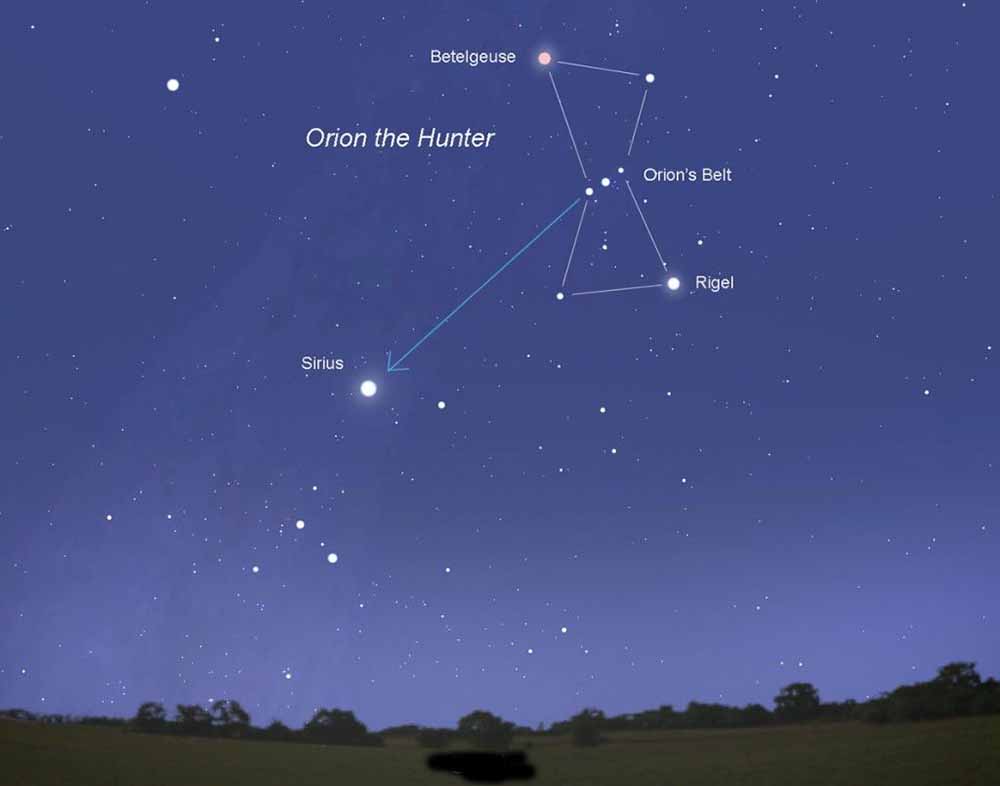
    Sirius – http://www.crystalinks.com

    The three stars of Orion’s belt point almost directly to the bright star Sirius which, in ancient times, returned to view in the Northern hemisphere at the hottest phase of summer, and just prior to the annual flooding of the Nile River valley.  Being not only the brightest star in the sky but also in its constellation Canis Major “The Greater Dog”, it was often referred to as the “Dog Star”.  It is from this reference that we still call this time of year the “Dog Days of Summer”.

    Saturn – Joel Cohen

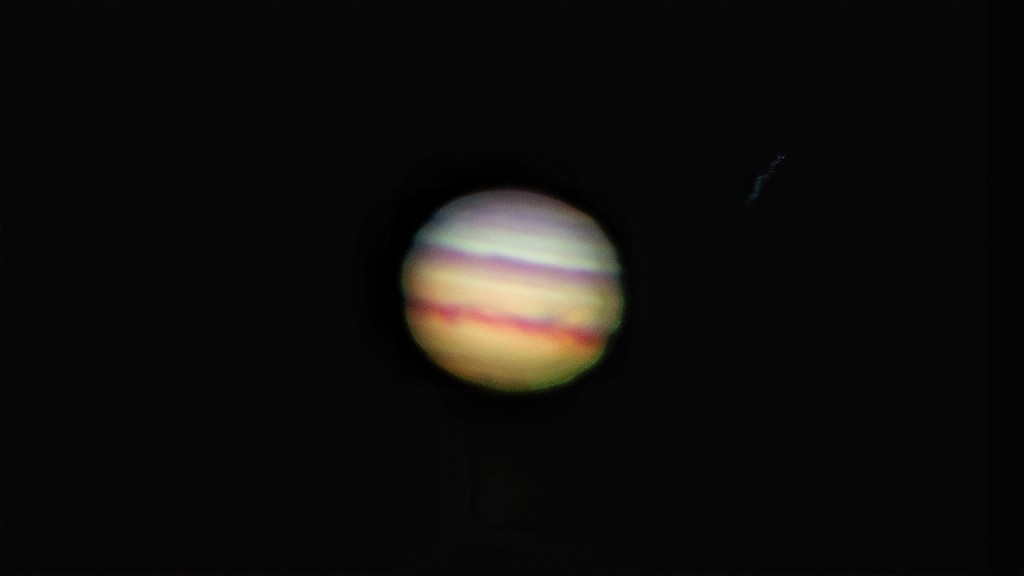
    This year, we can experience the opposition of both Saturn and Jupiter during this time, as we reach closest approach to these gas giants on August 2nd and 19th, respectively.  Just a few days on either side of the August 8th New Moon, this is the best opportunity of the year to view details of these planets and their natural satellites.  With the Sun giving us the brightest illumination on these evenings, even small to medium sized telescopes can pick out the weather bands of Jupiter, ring divisions around Saturn, and a handful of moons around each.  Specifically with Jupiter, watch over consecutive nights and sketch the locations of the four Galilean moons you see, documenting how they change position during their orbits from evening to evening.

    Jupiter – Joel Cohen

    Join us the evening of August 7th at Pronghorn Park in Prescott Valley for the opportunity to view these and other objects in the night sky!

    If you would like to learn more about the sky, telescopes, or socialize with other amateur astronomers, visit us at www.prescottastronomyclub.org or Facebook @PrescottAstronomyClub to find the next star party, Star Talk, or event. 

  • Mars, Cancer, and the Beehive Cluster

    The scientific community has been intently focused on Mars for the past couple months.  Every 26 months, our planets align in a way that shortens the time from Earth to Mars down to about 9 months, and as more countries develop space programs, more robotic explorers are sent to the red planet during this window.  In 2021, the UAE orbiter Hope arrived on February 9th, China’s Tianwen-1 entered orbit on February 10th, and the NASA Perseverance rover touched down February 18th.  Perseverance carried with it the Ingenuity helicopter, which has spent the last month proving the first powered flight on another world, and on May 14th, Tianwen-1 released the Zhurong rover which became only the second country to successfully land a rover on the Martian surface.

    Mars, Courtesy Joel Cohen, Prescott Valley, AZ, 10/2020.

    Mars is easily identifiable with the naked eye, having a deep red hue due to high levels of oxidized iron in its crust – basically the whole planet has rusted over the last couple billion years.  The arrivals of the orbiters and landers in February signaled a (relatively) close approach of our two planets, as they have spent most of 2021 pulling further distant from one another, and lower and dimmer in our night sky.  Sinking closer to the setting sun, Mars enters the constellation Cancer on June 8th.  As the moth wanes, you may be able to catch one last conjunction with Mars passing just 0.5 arcminutes from the Beehive Cluster M44 on June 23rd, just minutes after sunset, low in the western sky.

    M44 Beehive Cluster, Courtesy Joel Cohen, Prescott Valley, AZ.

    The Beehive Cluster – or Messier 44 – is one of the nearest open clusters to Earth.  Ptolemy referred to it as the “nebulous mass in the breast of Cancer”, proving how easily identifiable it is with the naked eye.  Galileo resolved 40 stars within the cluster, though we now count at least 1000 stars across 39 light years, which are close enough to be gravitationally bound to each other.  At least 3 exoplanets are known to orbit stars within the Beehive Cluster.  If you are lucky enough to catch the conjunction of this open cluster and our neighboring planet, both should easily fit within the field of view of your telescope or binoculars.  With the right magnification, one can resolve some nebulosity from the Beehive Cluster and the polar ice cap of Mars.

  • The Super Blood Moon

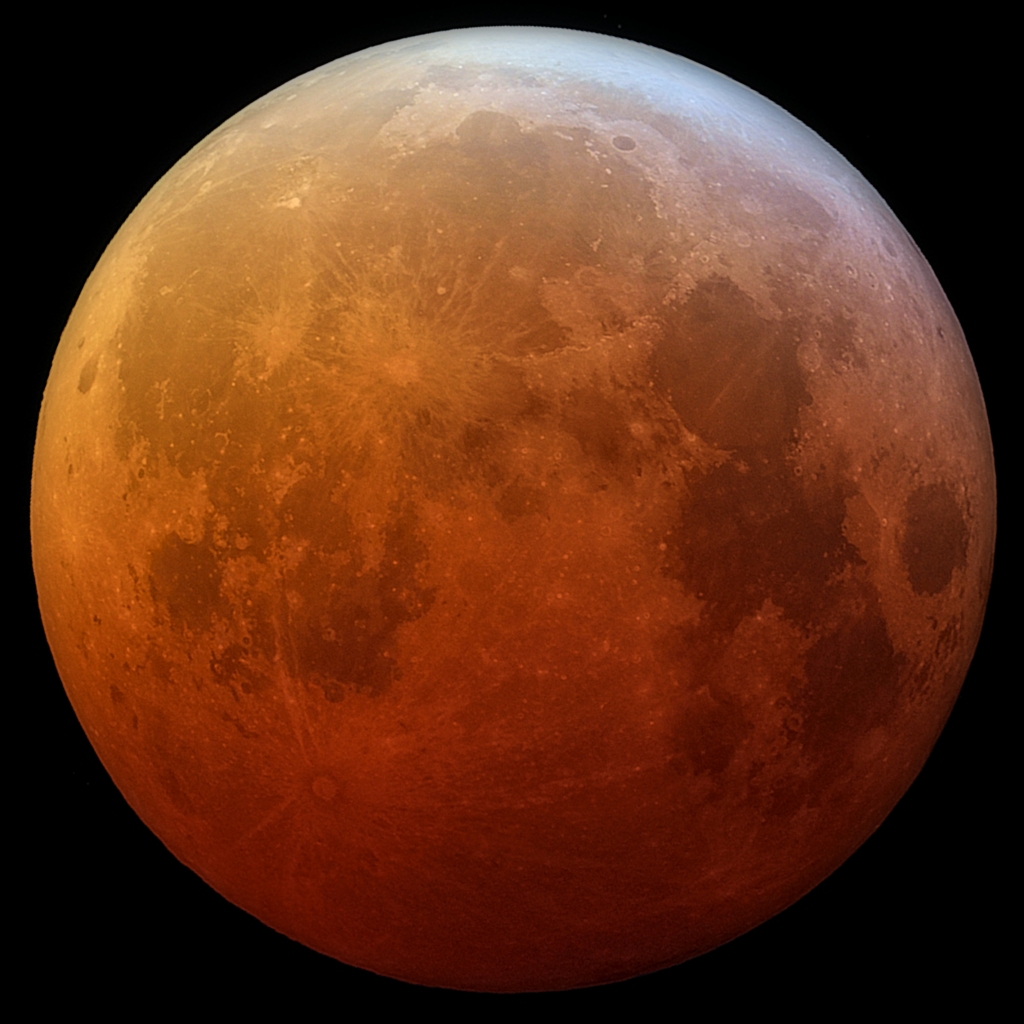
    In the early morning hours of Wednesday 26 May, the Western United States will be treated to an astronomical event not seen in nearly two and a half years – a total lunar eclipse.  The 3-hour and 40-minute event will reach totality over Central Yavapai County at 4:18 AM.  The culmination of totality is often referred to as a “Blood Moon” for the deep reddish hue often reflected off the surface of the Moon.  This is a result of the Sun’s direct rays being blocked by the Earth, with only a small amount of refracted light passing through Earth’s atmosphere, like light passing through a prism.

    Lunar Cresent, Adam England, 2017, Prescott Valley, AZ

    A lunar eclipse occurs when the Earth passes directly between the Moon and Sun, essentially forming a straight line, with the Earth’s shadow cast upon the surface of the Moon.  Since astronomers love to come up with cool names for astronomical events – usually based on ancient terms of a similar albeit generally terrestrial meaning – this type of alignment is called a syzygy, from the Ancient Greek suzugos meaning “yoked together”.  All three bodies gravitationally lined up in space, they are like three oxen abreast to pull a plough.  This alignment also means the moon is in its “Full” phase as viewed from Earth, so a lunar eclipse can only occur during a full moon.

    Being the brightest full moon was the one to darken, nearly disappear, and then turn a deep red color, ancient cultures often associated the lunar eclipse event as a bad omen.  Across continents and millennia, both the Inca and Chinese would attempt to scare away this demonic or evil power by throwing rocks and spears or yelling and the ringing of bells.  The Mesopotamians believed seven demons were attacking the sky, followed by the land, and specifically the King.  Using a stand-in dressed as the king to fool the would-be usurpers, the eclipse always ended without the predicted celestial battle, and the substitute king was made to disappear – often by poisoning.  However, viewing an eclipse as a harbinger of doom is not relegated to the ancient past, as fundamentalist pastors of the last decade predicted a tetrad or set of three eclipses in 2014-15 coinciding with the celebrations of Passover and Sukkot would bring about the rapture.

    Total lunar eclipse on January 21, 2019, Giuseppe Donatiello, Italy

    The Super Blood Moon Eclipse of May 2021 begins Wednesday morning at 1:47 AM when the edge of the Earth’s shadow intercepts the visible surface of the moon, peaking at 4:18 AM, and ends at 5:27 AM.  Unlike a solar eclipse, this event lasts much longer and is completely safe to observe with the naked eye.  This will also be a “Super Moon”, which may appear larger in the sky as it will be passing through perigee – the point when it is at or near its closest to Earth.

    If you normally stay up late, or get up early, or just want to set your alarm, take a few minutes to get out and look up.

  • Eclipsing Independence

    What’s Up? by Adam England

    On July 4 we celebrate the Declaration of Independence of the United States from the monarchy of Britain. Traditional ceremonies include community parades, neighborhood barbecues, fireworks, and here in Prescott, we rodeo. After all those festivities, beginning at 8:07 MST, a penumbral lunar eclipse will grace our skies.

    A lunar eclipse occurs when the Earth passes directly between the moon and sun. As this puts the two on directly opposite sides of the planet, it also creates 100% illumination of the moon’s visible surface, or the lunar phase we call a full moon. 

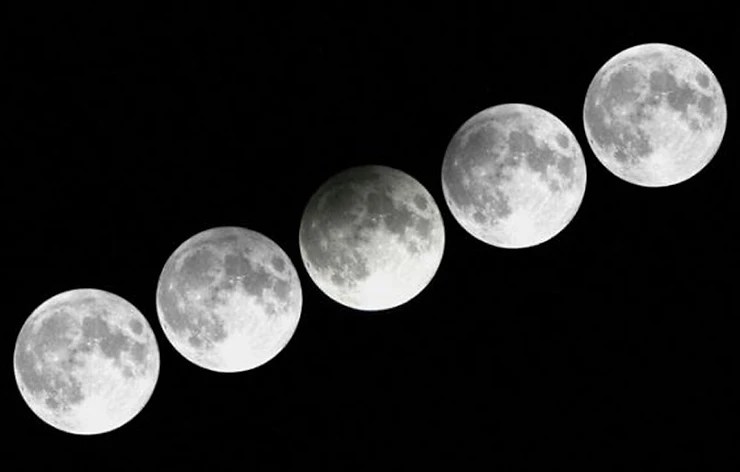
    Just after 8pm the moon will begin to slide into the outermost edge of the Earth’s shadow, called the penumbra. At 9:29 MST the moon will be at its dimmest and furthest into the shadow as we can see from Northern Arizona. The darkest eclipses pass through the center of the Earth’s shadow cone, called the umbra. This eclipse will not reach the umbra, and only about a third of the moon’s surface will cross the penumbral edge. The astute lunar observer will notice a darkening of the moon’s surface, should the weather permit us to see it at all. The first week of July traditionally signals the influx of the monsoon season and daily thunderstorms, with a 34% chance of cloudy skies over the last 20 years. If you still have a little energy remaining after a long Arizona summer day, and the heavens permit us to see it, look to the moon as it gives a nod to the terrestrial fireworks celebrating American independence.

    To learn more about the sky, telescopes, or socialize with other amateur astronomers, visit us at prescottastronomyclub.org or Facebook @PrescottAstronomyClub to find the next star party, Star Talk, or event. ​ Adam England is a local insurance broker who moonlights as an amateur astronomer, writer, and interplanetary conquest consultant. Follow his rants and exploits on Twitter @AZSalesman or at Facebook.com/AdamEfromAZ.

  • Miss Mitchell’s Comet

    What’s Up? by Adam England

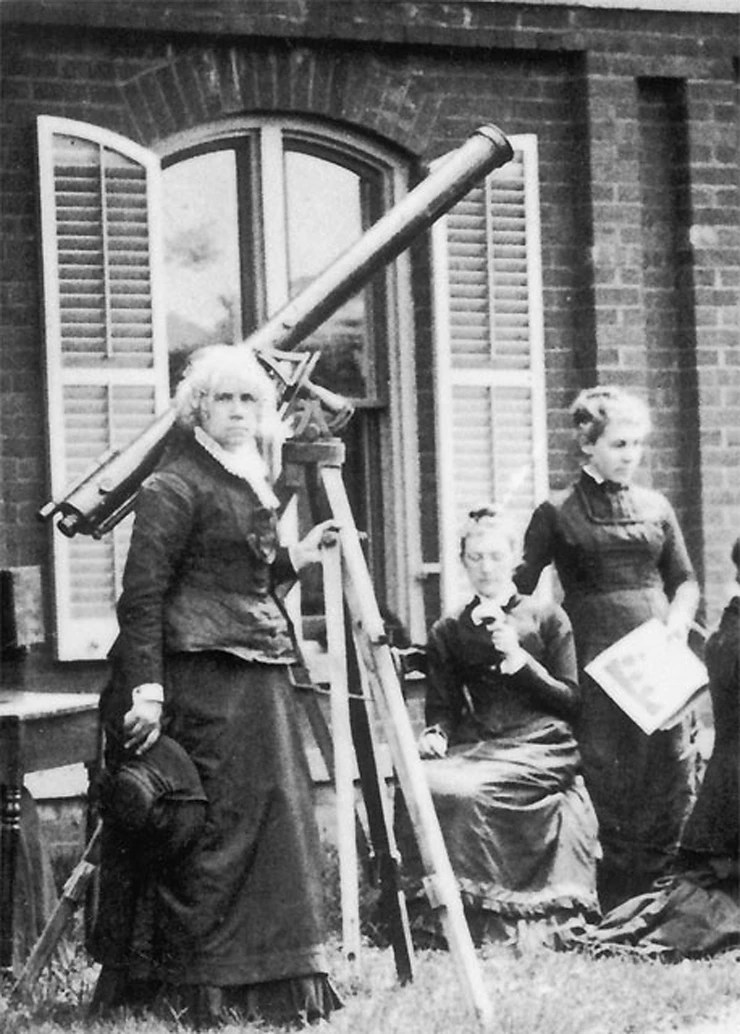
    Born August 1, 1818 to a Quaker family in the island town of Nantucket, Massachusetts, Maria Mitchell was the third of ten children raised by a schoolteacher father and librarian mother.

    The culture of fishing and whaling was such that the women were often left alone for months and raised to be just as educated as the men, something quite rare for the time. Her mother’s profession afforded her a nearly limitless supply of reading material, and her father took every opportunity to teach his children the science of astronomy. ​ By age 12 she was a teaching assistant to her father, and together they accurately calculated the exact moment of the 1831 eclipse. Before age 20 she opened her own school, allowing nonwhite children to learn side-by-side with their peers.

    On the night of October 1, 1847, at exactly 10:50pm, she discovered a telescopic comet, invisible to the naked eye. After a brief dispute with an Italian astronomer, it was learned that Mitchell’s discovery came two days before the other astronomer’s reported finding, and she received the Cometary Prize Medal from Denmark’s King Frederick VI, inscribed with words from Virgil’s Georgics: Non Frustra Signorum Obitus Speculamur et Ortus (“not in vain do we watch the setting and the rising of the stars”). The discovery of “Miss Mitchell’s Comet” made her only the third woman to win credit for a cometary discovery.

    She became a superstar back home in Nantucket, rubbing elbows with Ralph Waldo Emerson, Herman Melville, Frederick Douglass and Sojourner Truth. The US government took notice, and she took a position tracking the movements of the planets to aid in navigation.

    Still never having attended formal college herself, she was appointed professor of astronomy at Vassar College in 1865, a post she held for over 20 years. This made her the first woman to work as both a professional astronomer and a professor of astronomy.

    She began recording sunspots in 1868, and in 1873 began photographing them daily with her students, developing many theories about the sun, planets, nebulae and double stars that still hold today. Despite this, she was paid less than much younger male professors, so she fought for equal pay, and got it.

    She retired in 1888, a year before she died of brain disease at age 70.

    You may not get to see Miss Mitchell’s Comet in your lifetime, but if you ever find yourself on New York’s Metro North commuter line, you just might get to ride the train named the Maria Mitchell Comet.

    To learn more about the sky, telescopes, orsocialize with other amateur astronomers, visit us at prescottastronomyclub.org or Facebook @PrescottAstronomyClub to find the next star party, Star Talk, or event.

    ​Adam England is a local insurance broker who moonlights as an amateur astronomer, writer, and interplanetary conquest consultant. Follow his rants and exploits on Twitter @AZSalesman or at Facebook.com/AdamEfromAZ.