
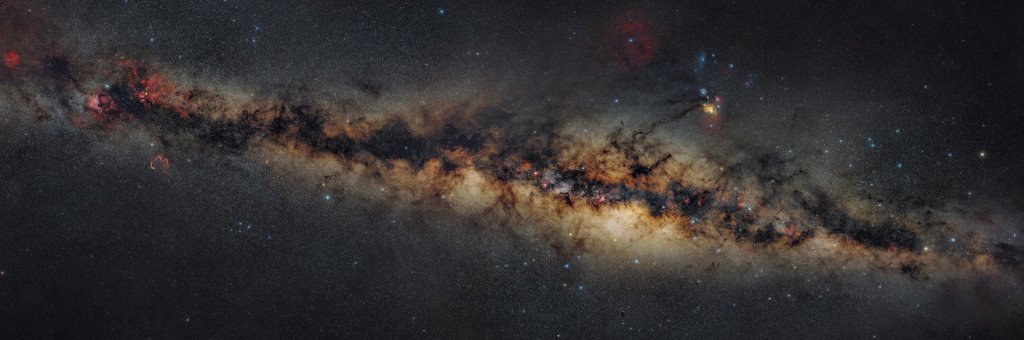
Summer can be a frustrating time for Arizona astronomers. Afternoon thunderstorms roll across the high desert with little warning, and many evenings that begin with promise end beneath a blanket of clouds. Yet every so often, the storms move on, the air settles, and the night sky opens above us. When it does, one of the finest sights in astronomy stretches from horizon to horizon.
The Milky Way.
People have looked up at this hazy ribbon of light for thousands of years. The ancient Greeks imagined it as milk spilled across the heavens, giving our galaxy the name we still use today. Other cultures saw it as a river, a road, or a bridge connecting Earth with the spirit world. Long before telescopes, it inspired people to wonder what lay beyond the stars.
Today we know the answer is even more remarkable than the legends.
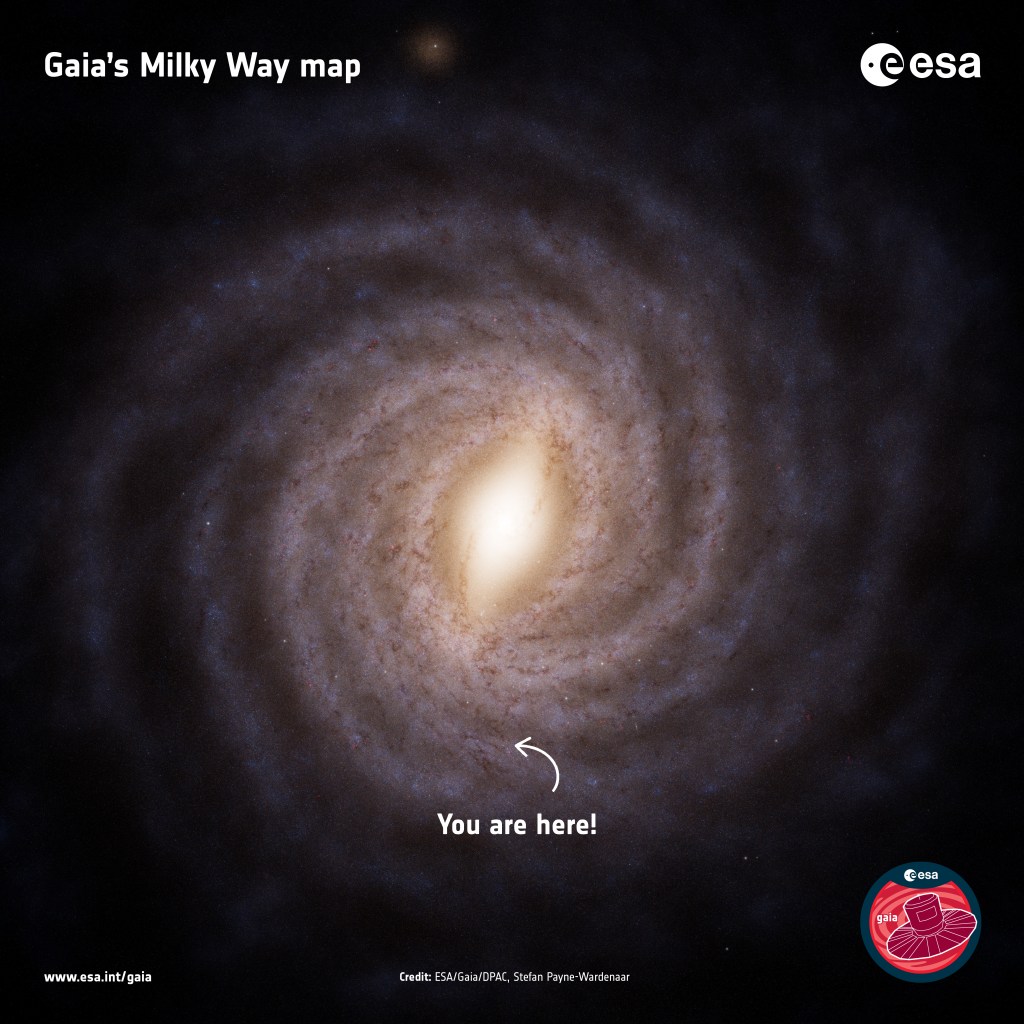
The Milky Way is our home galaxy, containing hundreds of billions of stars along with vast clouds of gas and dust. Unlike the beautiful spiral galaxies we see in photographs, we don’t have the luxury of viewing our own from the outside. Instead, our Solar System sits within one of its spiral arms, about 26,000 light-years from the galactic center. When we look toward the Milky Way, we’re looking across the disk of our own galaxy rather than at it from afar.
That soft glow isn’t a cloud. It is the combined light of countless distant stars, so numerous and so far away that our eyes blend them into a single band crossing the sky.
Running through that river of starlight are dark gaps that seem almost empty. In reality, they are enormous clouds of dust drifting between us and the stars beyond. Hidden inside many of those clouds are stellar nurseries where gravity is quietly shaping new generations of stars and, perhaps, future planetary systems.
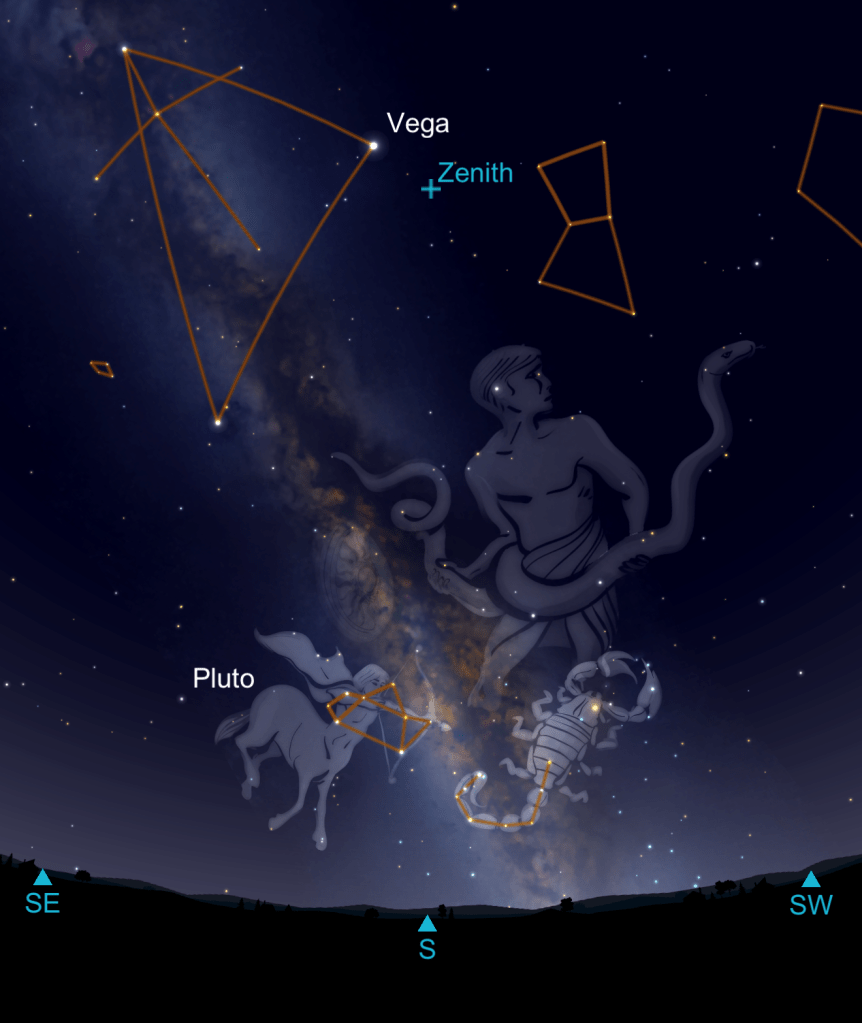
August offers some of the year’s finest views of this celestial landscape. Shortly after darkness falls, look low to the south for the constellation Sagittarius. Its brightest stars outline the familiar shape of a teapot. Follow the “steam” rising from its spout, and you’ll be looking toward the center of the Milky Way, some 26,000 light-years away.
From there, let your eyes wander north through Aquila and into Cygnus, the Swan. A pair of binoculars will reveal rich star fields, sparkling open clusters, and bright patches of nebulae that are easy to overlook with the naked eye. You don’t need expensive equipment to appreciate the view. Sometimes the best instrument is simply a comfortable chair and a dark sky.

One of my favorite moments is sharing that view with someone seeing the Milky Way under truly dark skies for the first time. There is usually a quiet pause as they realize they aren’t looking at some distant galaxy. They’re looking out across the one we call home.
If the monsoon clouds give you a break this month, spend a few minutes under the stars before setting up the telescope. Some of the most memorable nights in astronomy begin with nothing more than looking up.
Clear skies and happy viewing.
Adam England is the owner of a local financial services firm and moonlights as an amateur astronomer, writer, and interplanetary conquest consultant. Follow him on Instagram @TheBackyardAstronomerAZ and at http://www.ManzanitaInsuranceAndAccounting.com http://www.Manzanita-Insurance.com http://www.ManzanitaAccounting.com
 The Backyard Astronomer