
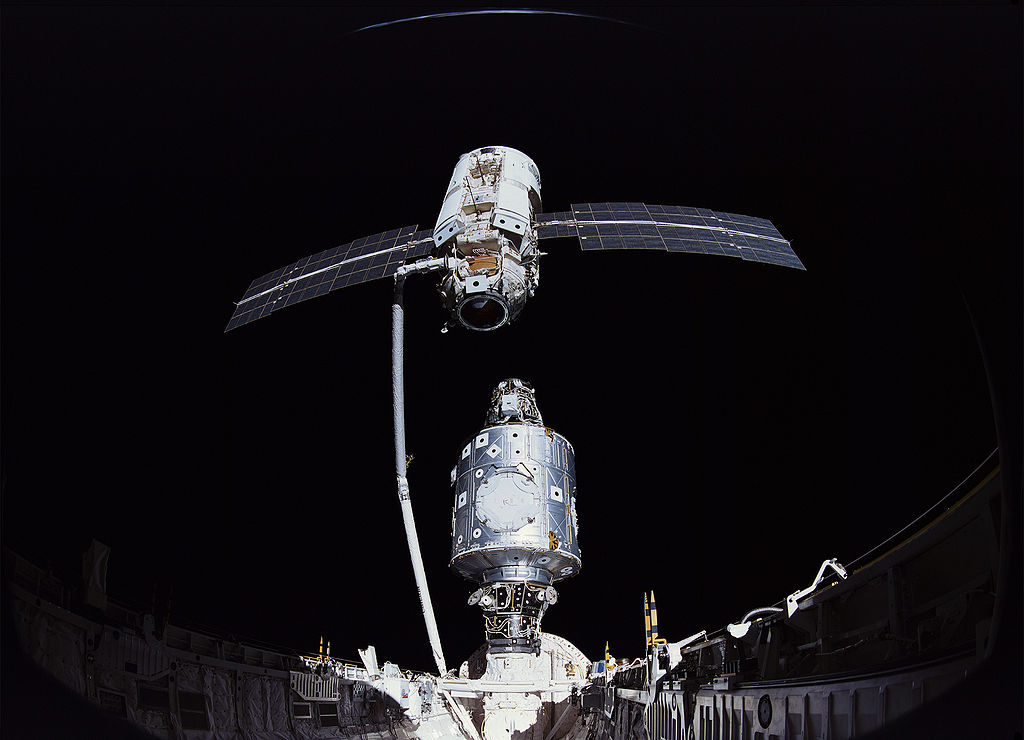
On December 4th, 1998, Space Shuttle Endeavour lifted off carrying some very special cargo: Unity, the first U.S.-built module of what would become the International Space Station. Two days later, NASA astronaut Nancy Currie skillfully maneuvered the shuttle’s Canadarm to capture Russia’s already-orbiting Zarya module. Eight days and three spacewalks after launch, Endeavour undocked—leaving behind a pair of connected modules and the first heartbeat of the ISS.
Over the next three years, the station slowly took shape as new components arrived: science labs, living quarters, trusses, and the massive double-sided solar arrays that now define its silhouette. On November 2nd, 2000, a Russian Soyuz delivered Expedition 1—three astronauts who stepped inside the ISS and marked the beginning of continuous human presence in space. As of this year, humanity has lived off-world for 25 straight years.
Contributions from the Japanese Space Agency (JAXA), the Canadian Space Agency (CSA), the European Space Agency (ESA), and private industry have expanded the ISS into a truly global endeavor. One of the more unusual additions is the Bigelow Expandable Activity Module (BEAM), an experimental inflatable habitat. Originally designed for a two-year test, BEAM has now served nearly a decade, proving its durability while offering extra storage and insight into how we might live on the Moon or Mars. Eight docking ports now allow crewed and automated spacecraft to come and go with supplies, experiments, and new inhabitants.
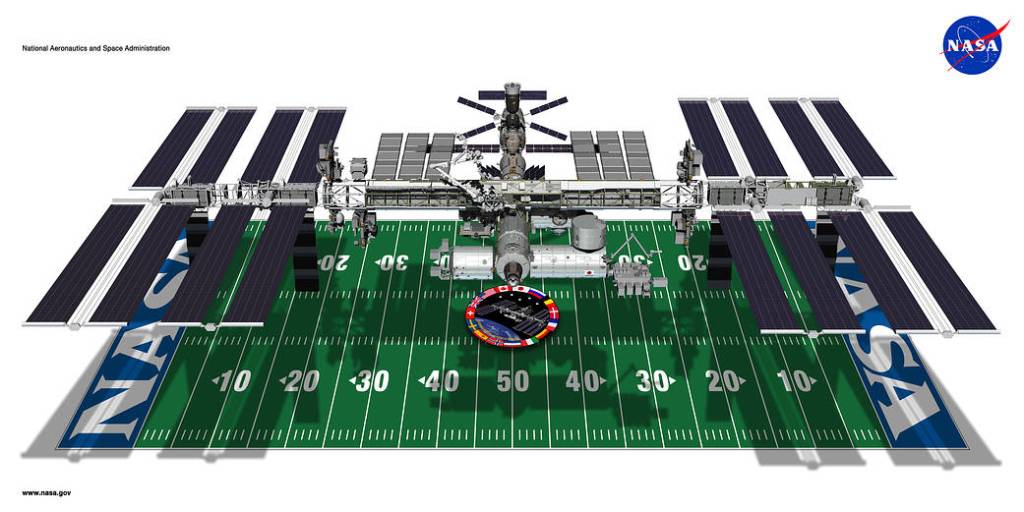
Today’s ISS spans nearly the area of a football field—though much of that footprint comes from its enormous solar arrays. The panels gather sunlight directly and also harvest light reflected from Earth below. Inside, the station holds 35,491 cubic feet of pressurized volume, though almost two-thirds of it houses equipment, life-support systems, and storage. After a quarter century of upgrades, experiments, and expansions, the interior has become a labyrinth of cables and conduits—20th-century hardware woven into 21st-century technology.
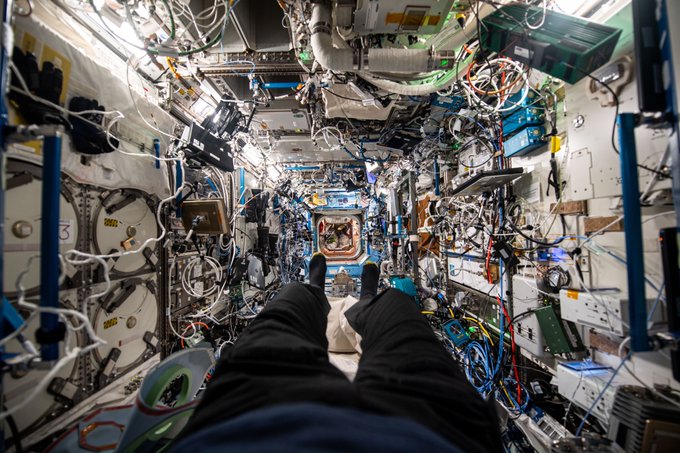
And like all aging spacecraft, the ISS is feeling the strain. Without the luxury of a trip to the mechanic, astronauts work constantly to keep the station healthy. But time has brought cracks, air leaks, computer glitches, and the occasional micrometeoroid impact. Originally designed for a 15-year mission, the ISS is expected to be retired and de-orbited over Point Nemo—the most remote place on Earth—sometime around 2030, having served twice its planned lifetime.

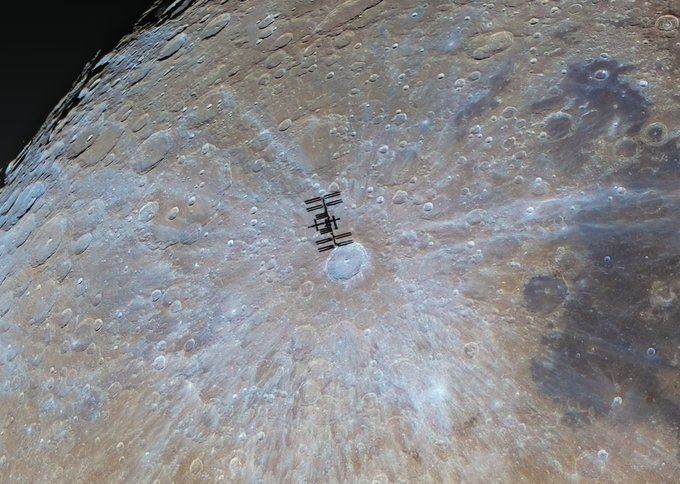
For now, though, our orbital outpost remains one of the brightest manmade objects in the night sky. At 260 miles up, its sprawling solar arrays reflect sunlight beautifully during the twilight hours. You can find sighting opportunities at nasa.gov/spot-the-station. Passes usually last 3–5 minutes, and you won’t need binoculars or a telescope—just step outside after sunset or before sunrise and watch for a brilliant, fast-moving light with no blinking aircraft markers.
As we prepare to hand low-Earth orbit over to commercial space stations, take a moment this month to look up. That bright streak racing overhead at 17,500 mph represents 25 years of cooperation, perseverance, and human ingenuity—proof that we truly can learn to occupy space.
 The Backyard Astronomer