
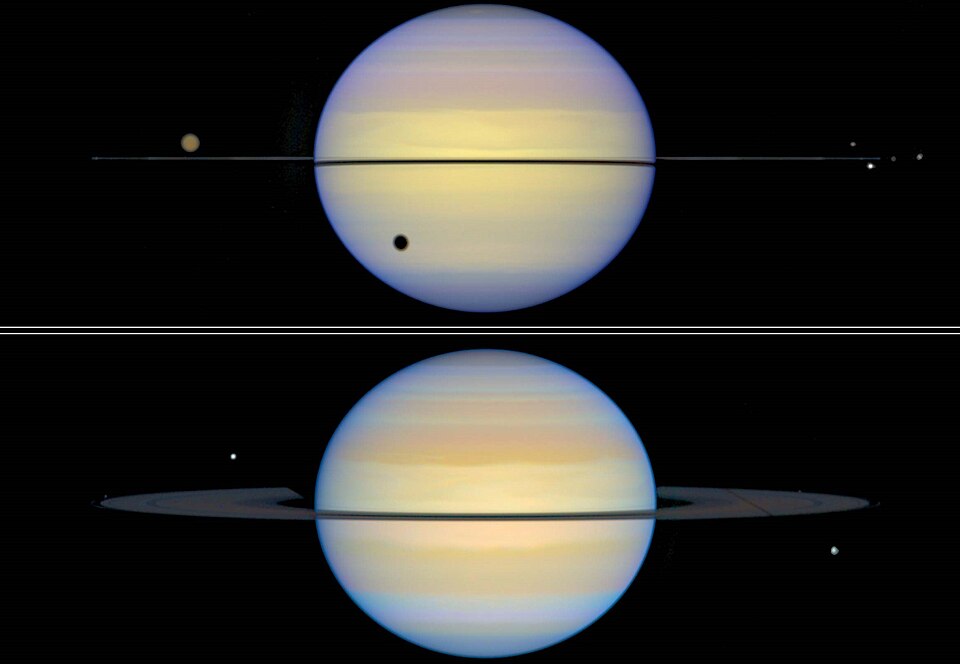
It seems that discoveries across the Universe are announced almost daily. The Hubble Space Telescope, launched into low Earth orbit in 1990, has been a workhorse in this effort, capturing and analyzing light in multiple wavelengths to probe the unknown. A growing suite of other instruments adds to this quest: the famed James Webb Space Telescope, the twin TRAPPIST telescopes in Chile and Morocco, and the now-retired Kepler Space Telescope, which discovered thousands of exoplanets during its decade-long mission from 2009 to 2018.
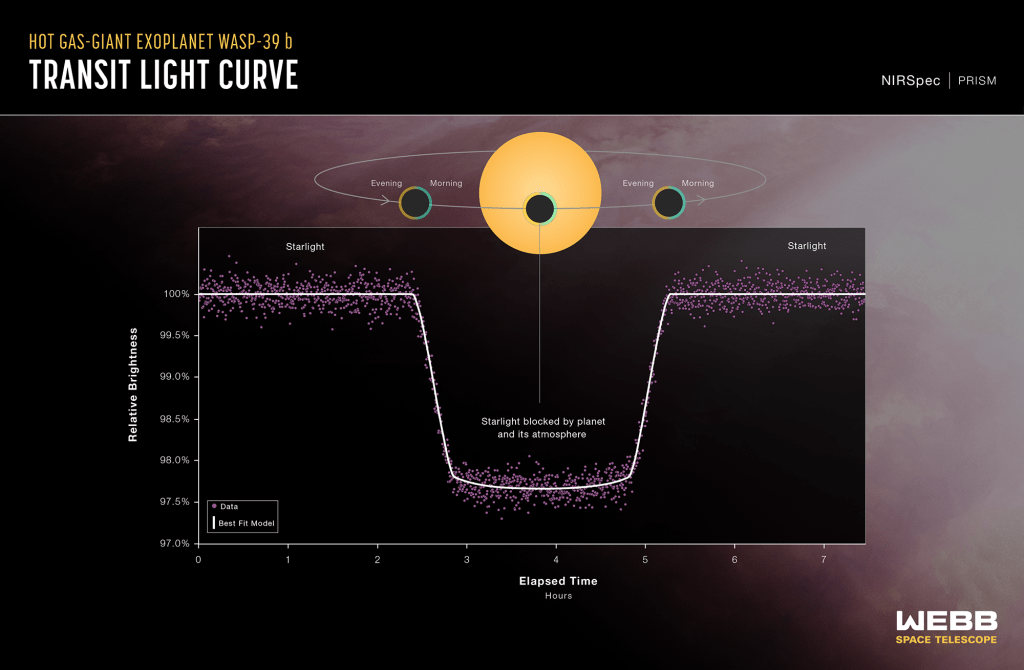
What these observatories share is the method they use to reveal hidden worlds: the transit method. By carefully measuring the dimming of a star as another body passes in front of it, astronomers can determine the size, mass, orbit, and distance of the interceding object. The most sensitive spectrometers can even parse starlight as it filters through an alien atmosphere, revealing its chemical makeup. From Earth, this technique lets us explore places light-years away without ever leaving home.

But transit watching is hardly new. Ancient astronomers noticed these celestial crossings long before modern instruments. Pythagoras is credited with realizing that the morning and evening stars were both Venus. In 1032, Persian polymath Avicenna recorded what appears to be a transit of Venus across the Sun. Frescoes at the Mayan ruins of Mayapan on the Yucatán peninsula may depict similar events in the 12th or 13th centuries. By the 1600s, astronomers were regularly predicting and observing the transits of Mercury and Venus.

The early 20th century brought a new focus: the moons of the outer Solar System. Between 1907 and 1944, careful observations before, during, and after a transit revealed that Saturn’s moon Titan had an atmosphere—a discovery confirmed when astronomers began splitting its light into elemental fingerprints. Decades later, in 1979, the Pioneer 11 spacecraft became the first visitor to glimpse Titan up close.
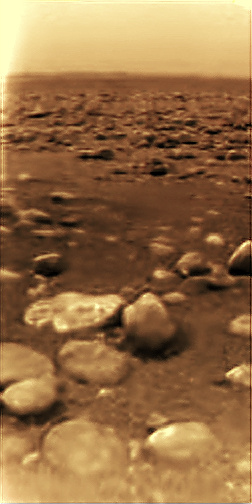
Titan remains one of the most intriguing worlds in our Solar System. The second largest moon after Ganymede, it is the only moon known to possess a thick atmosphere—denser, in fact, than Earth’s. Rich in nitrogen and methane, Titan’s skies shroud a surface carved by rivers, deltas, sand dunes, and glaciers. Its methane cycle, with lakes and rain that echo Earth’s water cycle, makes Titan feel oddly familiar despite its alien chemistry.
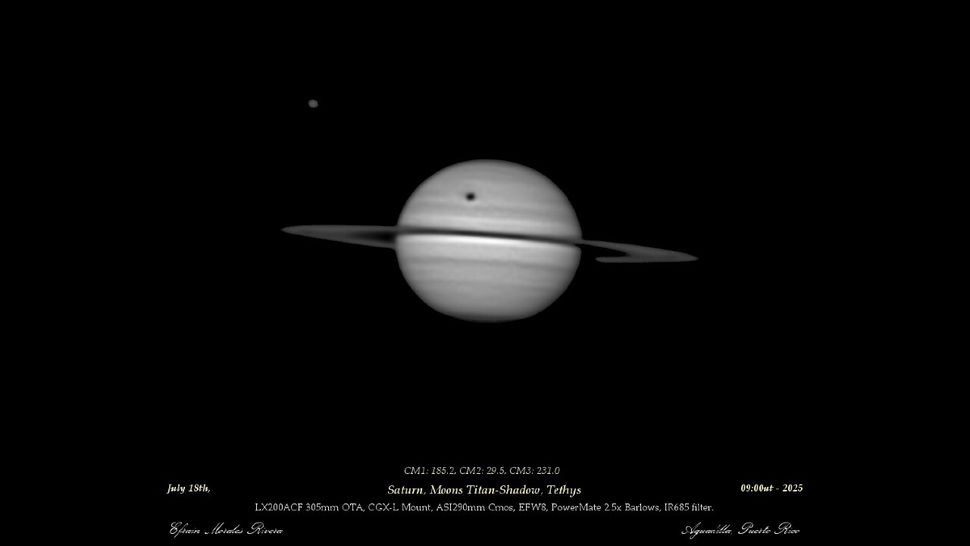
And this month, you can see Titan’s presence for yourself. Backyard astronomers will have two opportunities to observe Titan’s shadow crossing the disk of Saturn. The first begins at 1:25 AM on September 4th, lasting about three and a half hours. The second starts at 1:09 AM on September 20th, lasting two and a half hours. An 8-inch telescope at 200x magnification or greater should reveal Titan’s tiny shadow creeping across Saturn’s golden globe. Even smaller scopes—4 to 6 inches—can still capture Titan itself as a bright companion near the ringed planet on most nights.
So set your alarm, aim your telescope at the jewel of the outer planets, and watch as Titan casts its shadow. In those moments, you’ll be connecting with a tradition of skywatchers stretching back thousands of years—humans who, like us, couldn’t resist tracing the stories written in the light of distant worlds.

 The Backyard Astronomer