

As summer unfolds over Prescott, Arizona, July brings two celestial events that promise to captivate both seasoned astronomers and casual skywatchers alike: the New Moon on July 24 and the Delta Aquariid meteor shower, peaking around July 30. These occurrences offer ideal conditions for stargazing, with dark skies and minimal moonlight interference.
The New Moon phase, occurring on July 24, marks a period when the moon is positioned between the Earth and the Sun, rendering it invisible from our vantage point. This absence of moonlight provides the darkest skies of the lunar cycle, making it an excellent opportunity to observe faint celestial objects such as distant galaxies, nebulae, and star clusters. For Prescott residents, this means clear, unobstructed views of the night sky, free from the usual light pollution.
The Delta Aquariid meteor shower is set to peak on the night of July 29 into the early morning hours of July 30. This annual event is caused by Earth passing through debris left behind by Comet 96P/Machholz. As these fragments enter our atmosphere, they burn up, creating streaks of light across the sky. The Delta Aquariids are known for their steady stream of meteors, with an average rate of 15–20 meteors per hour under optimal conditions. The shower has been observed for centuries and was first scientifically documented in the 19th century. Its radiant point lies in the constellation Aquarius, near the star Delta Aquarii, from which the shower gets its name.
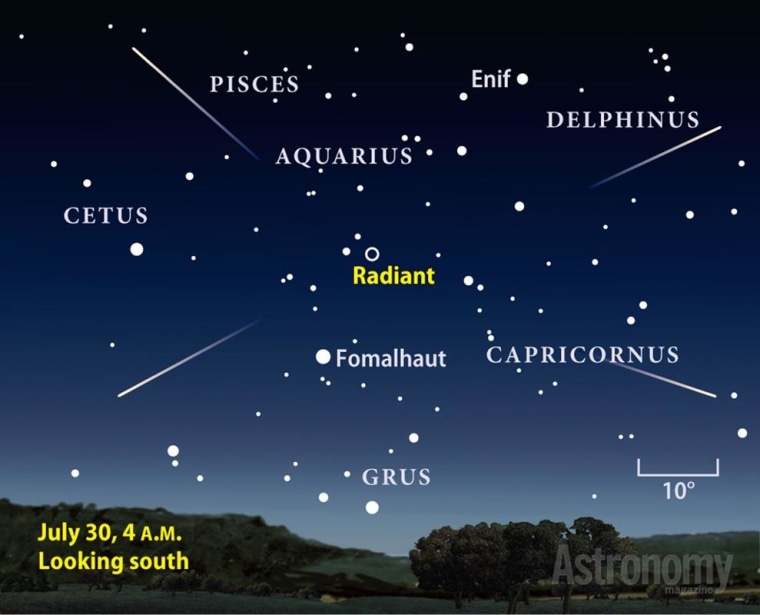
While the shower is best viewed from the Southern Hemisphere, observers in Prescott can still enjoy the spectacle. The radiant point, from which the meteors appear to originate, lies in the constellation Aquarius, near the star Delta Aquarii. To locate this point, look toward the southern sky after midnight. The meteors will be visible across the sky, but those radiating from the direction of Aquarius will appear to move in straight lines, while others may have curved paths.
To make the most of these celestial events, consider finding a dark location away from city lights, such as Lynx Lake or the Prescott National Forest, to ensure the darkest skies possible. For the best meteor viewing, plan to be outside between 2 a.m. and dawn, when the radiant point will be higher in the sky, increasing the number of visible meteors. Bring a reclining chair or blanket to lie on, dress warmly as temperatures can drop during the night, and give your eyes 20–30 minutes to adjust to the darkness, avoiding bright lights or screens that can disrupt night vision. Patience is key, as meteor showers can be unpredictable; some periods may have numerous meteors, while others may have none.
July offers a rare combination of events for stargazers in Prescott. The New Moon ensures dark skies, while the Delta Aquariid meteor shower provides a celestial display that is both beautiful and awe-inspiring. Whether you’re a seasoned astronomer or a casual observer, these events are an opportunity to connect with the cosmos and appreciate the wonders of the universe. Remember to check the weather forecast before heading out, as clear skies are essential for optimal viewing. Happy stargazing!
 The Backyard Astronomer