
The media was abuzz in November with Congressional Hearings on UAPs. As governments do, this new acronym was created to better describe unknown objects as “Unidentified Anomalous Phenomena” as opposed to our classic UFOs or “Unidentified Flying Objects”. One early “UFO” that was soon identified was the CCCP’s Sputnik I, the first artificial satellite to orbit the Earth, a product of the Soviet Union’s space program. One observer of this early UAP was Homer Hickam, a 14-year-old son of the West Virginia coal community. As retold in his written memoir and later in the 1999 film adaptation of “October Sky”, seeing this strange object traverse the night sky inspired a young Homer and his friends to build their own rockets, leading Homer to a career at NASA and a lifelong passion for space.

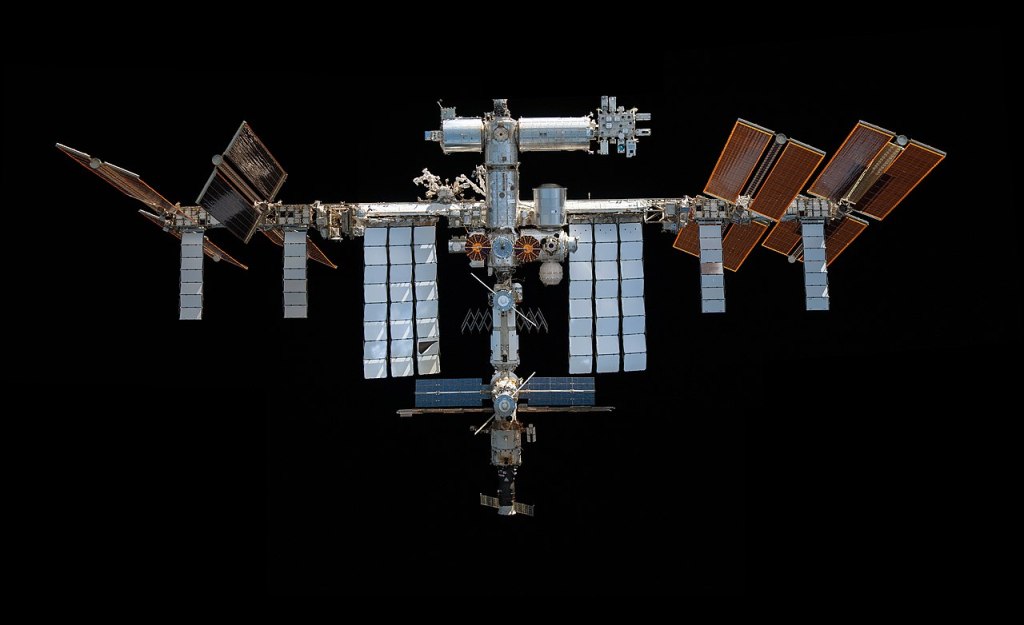
67 years later, the world has seen thousands of rockets having launched more than 12,000 satellites to places like LEO and GEO – more of those pesky acronyms, these specifically designating areas such as Low Earth Orbit and Geostationary Earth Orbit – the superhighways on which our satellites circle the globe. On any given day, weather permitting, while enjoying the crisp beauty of a Northern Arizona sunset, you can observe many of these satellites. As the Sun sets in the West and shadows fall across the land, the sky high above us may still reflect the Sun’s rays off the metallic frames and solar panels of many of these satellites. They will often get dimmer as they move East and into the shadow, or sometimes gain in brightness if moving West. The brightest of these is the ISS. Humanity’s continuously inhabited outpost in LEO since November 2000, the International Space Station represents global cooperation never before seen, and shines as a literal beacon in the night sky. The station and it’s solar arrays span nearly the area of an American football field, and reflect an enormous amount of light in the twilight hour, and you can see it overhead by visiting www.spotthestation.nasa.gov and typing in your city it will give you the time and direction to watch for the next ISS flyover.
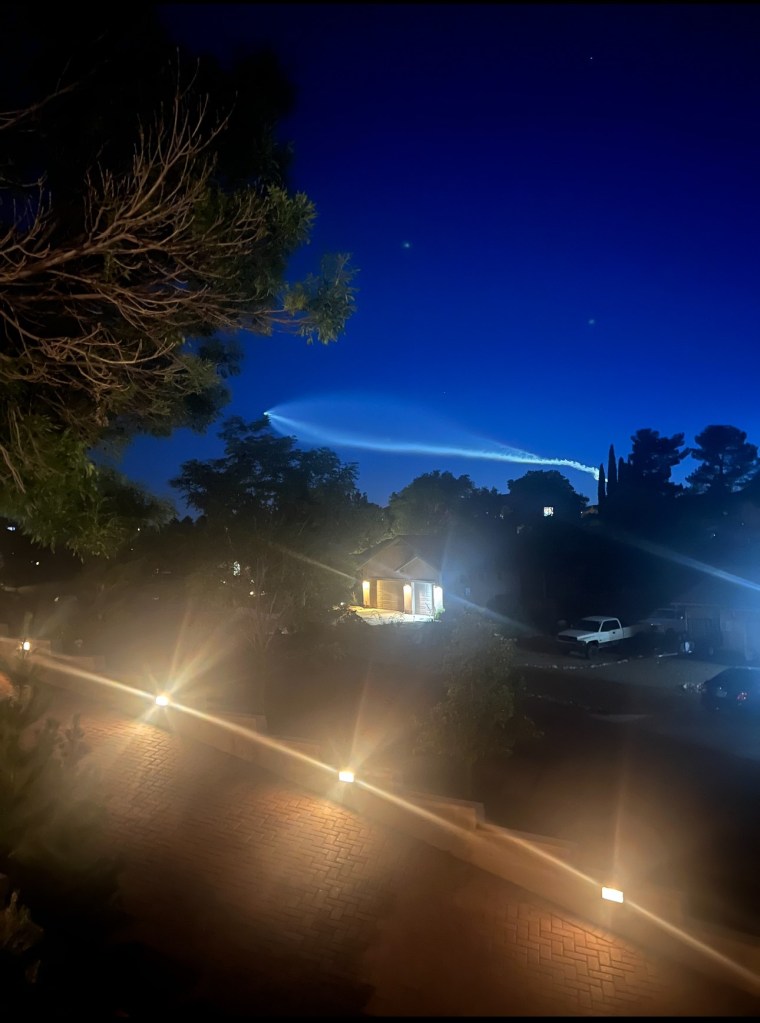
It used to be that only those residing in a small radius of Cape Canaveral, Florida could see regular rocket launches, however the locations and cadence at which Space X and other private companies are now launching rockets allows us in Arizona to sometimes see this marvel without travelling long distances. www.spacelaunchschedule.com is one site where you can view a list of upcoming launches, and if you sort by Vandenburg SFB (Space Force Base) in California, look for launch windows around sunset, then look to the West and you may see the iconic cloud created by the booster separation of a Falcon 9, just after passing through Max-Q – the moment of maximum dynamic pressure on a vehicle pushing through our atmosphere. The first stage of the rocket may come back and land on the ASDS or Autonomous Spaceport Drone Ship just offshore, returning the rocket to be used again and again.
If these types of events spark your own curiosity and passion, you can also join in the fun of rocketry. You don’t need to machine a custom nozzle like Homer Hickam, or worry about MECO (Main Engine Cut Off) for stage separation. A safe and fun launchable rocket will run you less than $50, and with a few extra SRMs (Solid Rocket Motors) and good weather conditions, you can establish your own EM (Exploration Mission) right in your own local park.
 The Backyard Astronomer