

September gives us prime viewing of two of our Solar System’s four ringed planets. Yes, you read that correctly; our Solar System has four planets with rings. You’re certainly familiar with Saturn, which we have known for its rings for nearly 400 years. However, as our telescopic technology has progressed, we have found that all four of the gas giants have rings. Both Saturn and Neptune will be at opposition this month, and though Neptune may appear as only a small blue dot through even the largest backyard telescopes, viewing a fully illuminated Saturn at its annual closest approach to Earth is always a treat for both new and experienced astronomers.
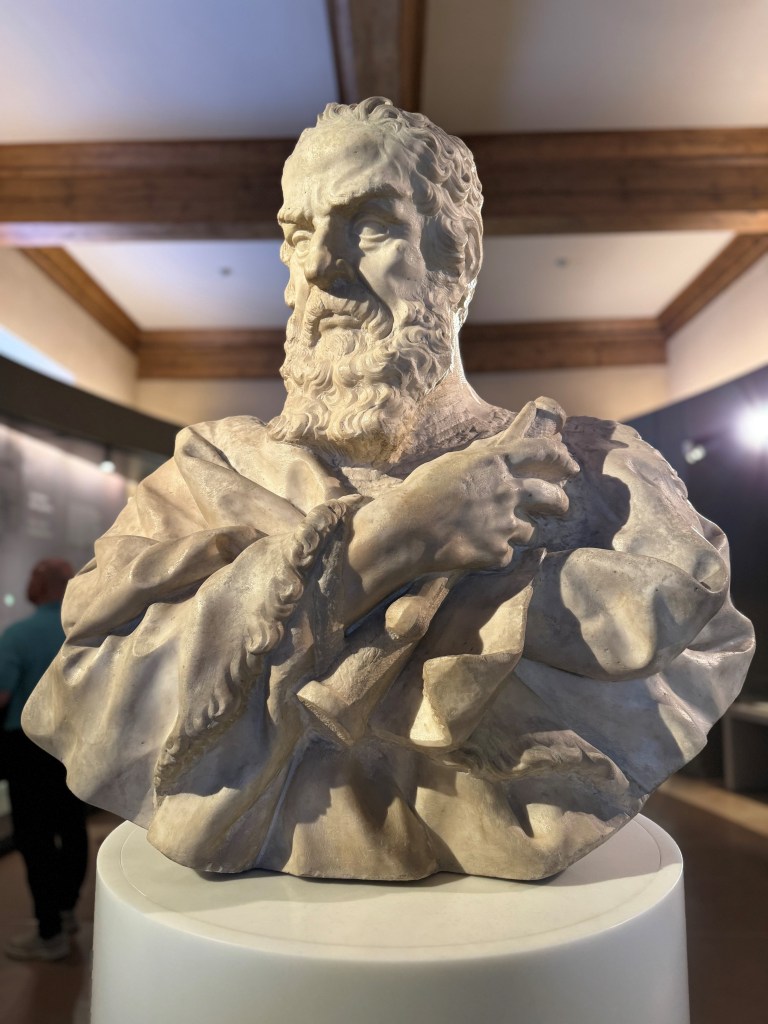
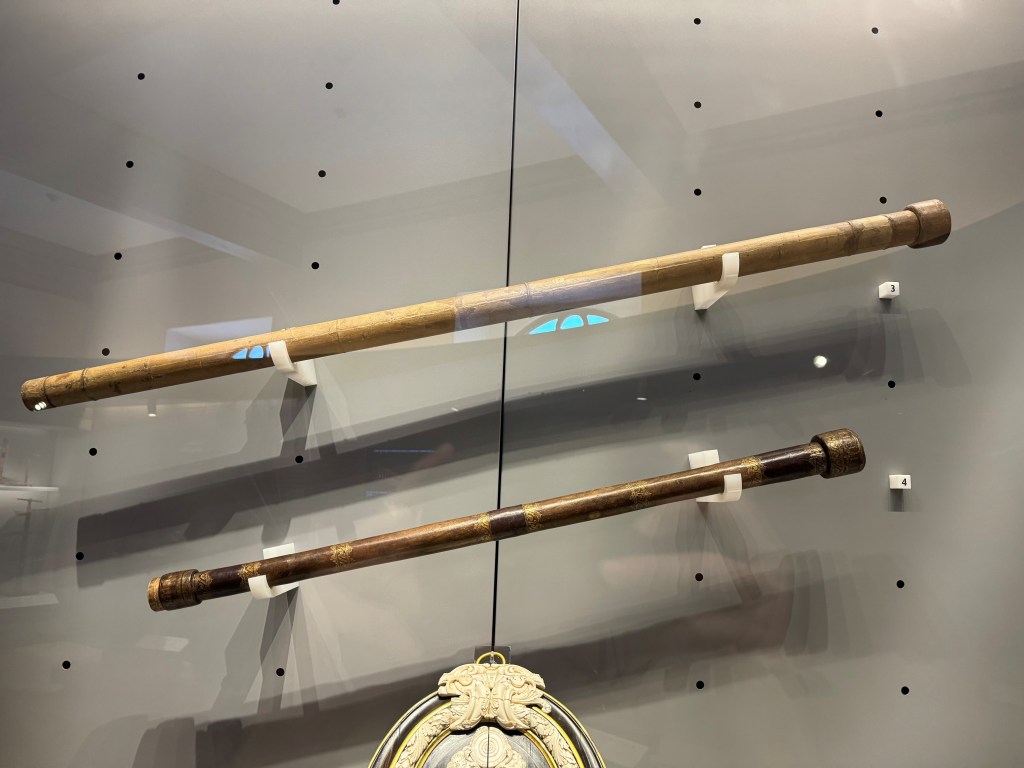
Florence, Italy, 1609. Galileo Galilei had completed his first telescope, with a magnification of about 3x, and began scanning the sky. Of course, he observed the Moon, Jupiter, and the phases of Venus, reinforcing Copernicus’ heliocentric model of the Solar System.
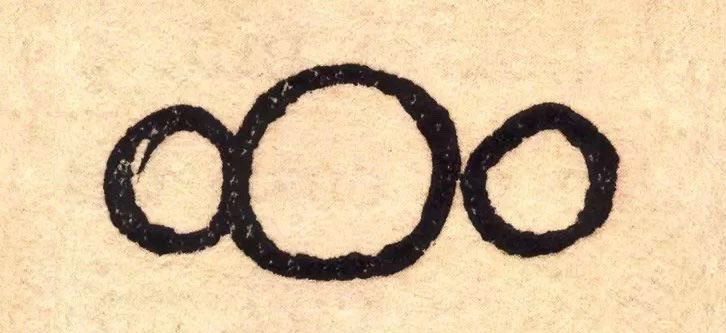
He then turned his attention to more distant objects, and sketched Saturn with what he believed to be two moons on either side of the planet. The next time he looked, these satellites seemed to have disappeared, but then reappeared again in 1616. Quite confused, it is believed he died without knowing that what he saw are the now famed rings, which, due to the respective tilts of Earth and Saturn, and the harmonics of our respective orbits, are viewed completely edge on and seem to disappear every 13-15 years.
His outspoken views of the Solar System (and Earth’s place within it) were not taken well by The Church, earning him a date with the inquisition, and he ultimately spent the last nine years of his life under house arrest at his villa (numbered 42, anybody?) overlooking the Tuscan countryside.

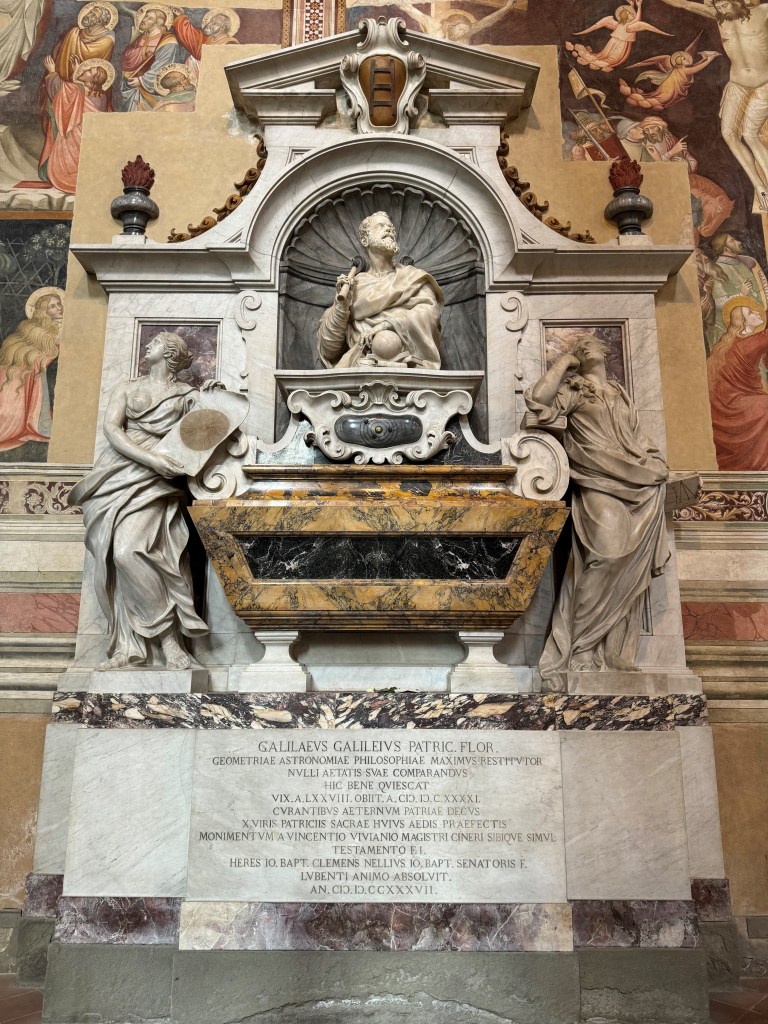
Galileo died in 1642 and was ultimately interred in the Florentine Basilica of Santa Croce, adjacent Renaissance virtuosos such as Da Vinci, Michelangelo, Alberti, Ghiberti, and Machiavelli.
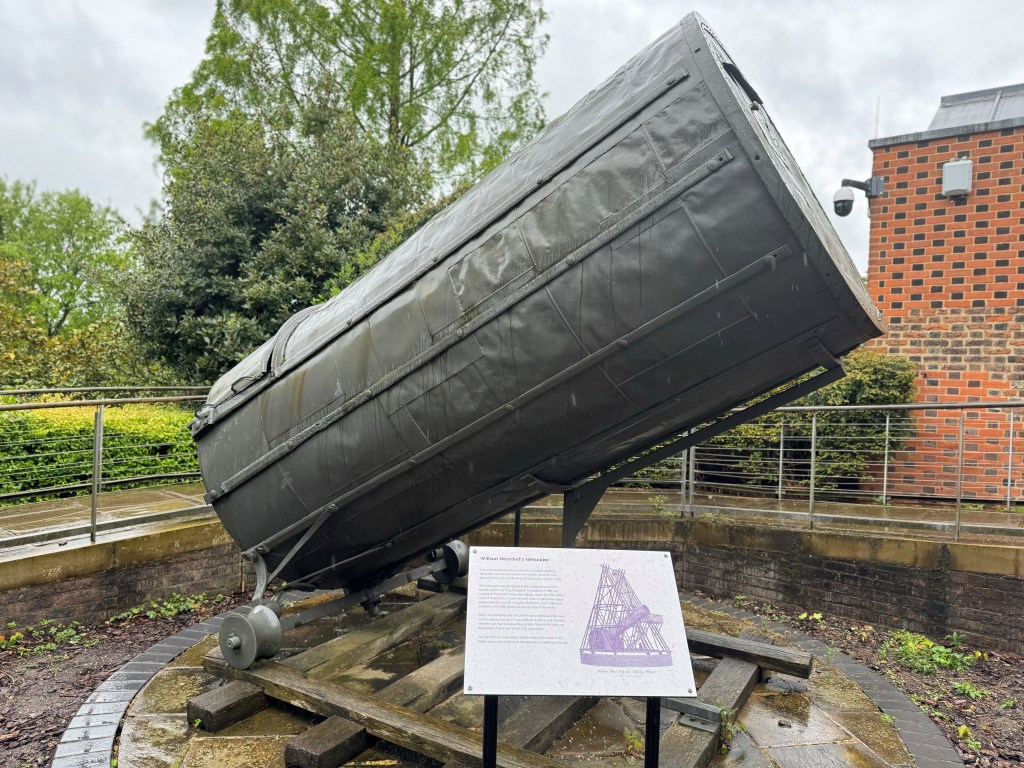
By the late 1700s, English Astronomer William Herschel had become fascinated with Saturn and its rings. He constructed a 40-foot telescope in 1789, the largest in the world for more than 50 years, and immediately began to observe the Saturnian system, keeping an astronomical journal of the positions of both the rings and multiple moons. Dutch astronomer Christiaan Huygens had discovered Titan in 1655, and Italian Giovanni Cassini charted four more moons between 1671 and 1684. Over a century later, and with the benefit of his mammoth telescope, Herschel stumbled across two more, bringing the number of known satellites to seven. (We now count 146 moons orbiting this ringed giant.)
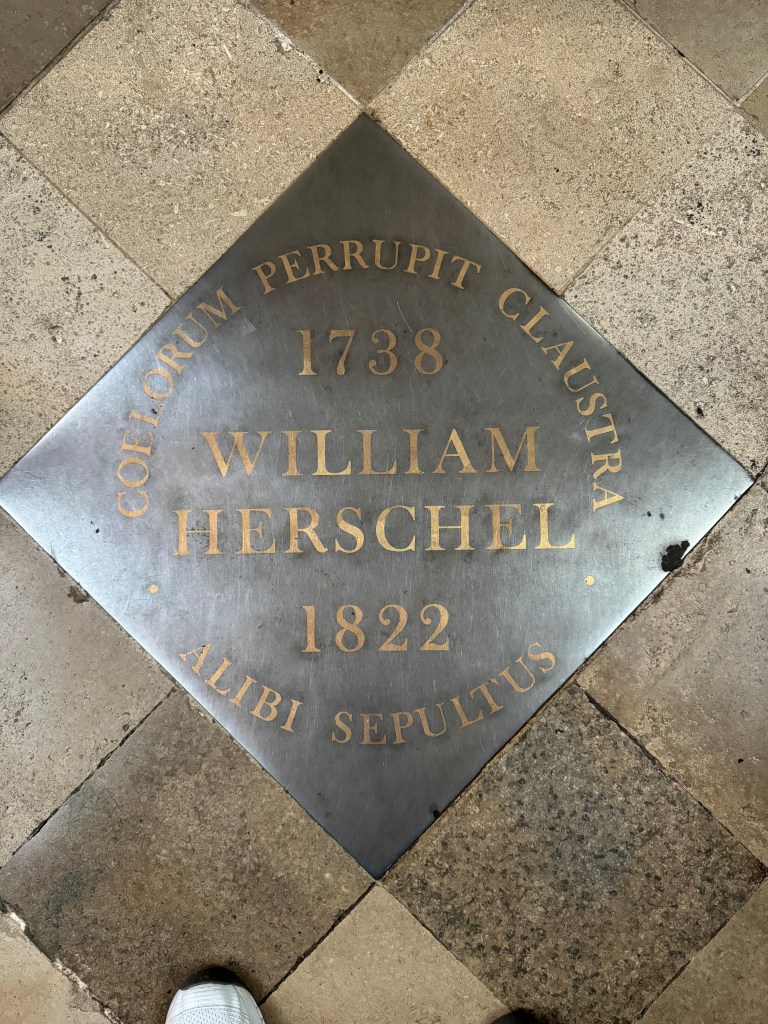
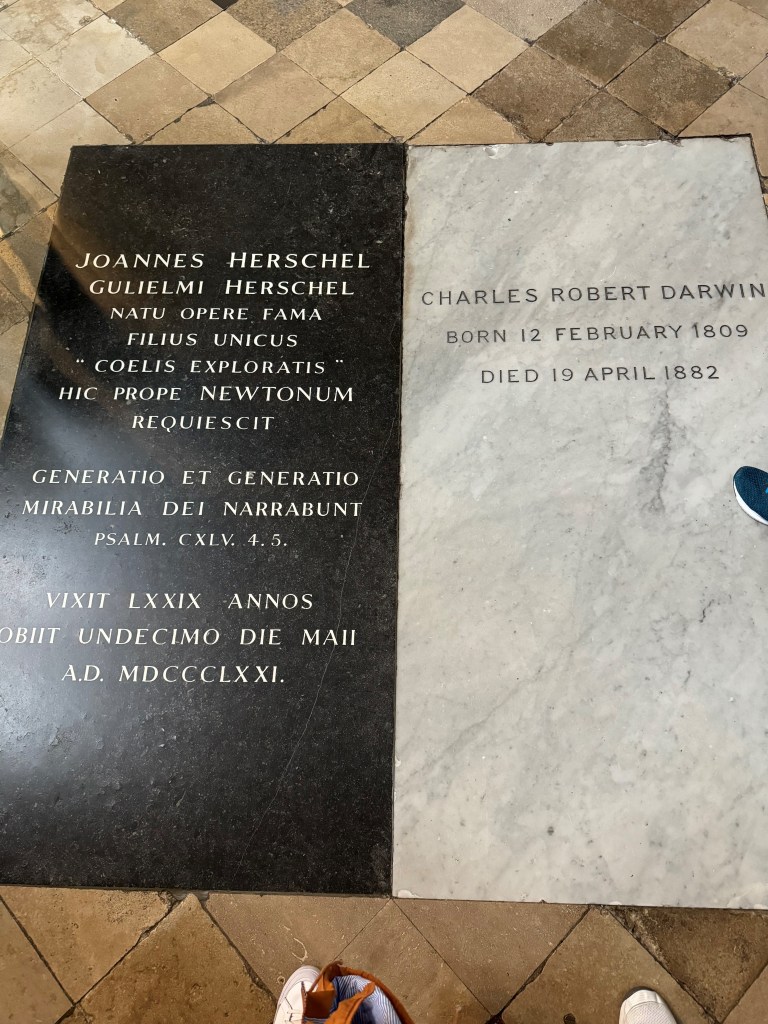
William’s son, John Herschel, built upon his father’s work, founded the Royal Astronomical Society in 1820, contributed advancements to the fields of botany and photography, and later suggested the moons of Saturn carry the names of the Giants in Greek mythology. Both father and son are memorialized in Westminster Abby’s Scientists’ Corner, in the company of Charles Darwin, Isaac Newton, and Stephen Hawking.
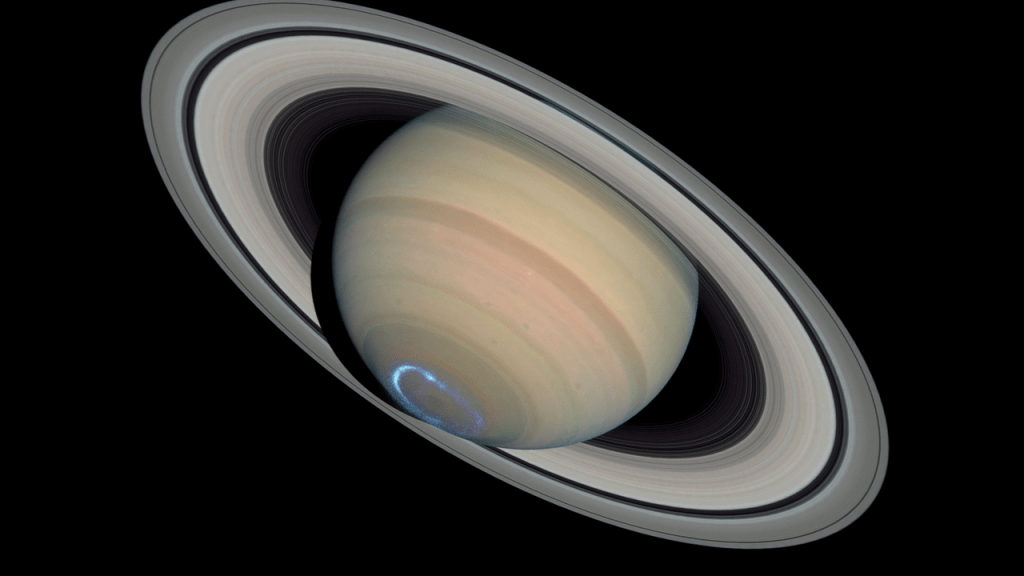
You also can observe these same rings and moons of Saturn throughout the month of September. A good pair of binoculars should define the elongated rings. 2-inch telescopes begin to see Saturn’s largest moon, Titan, and a 4-inch scope should define Iapetus, Rhea, Dione, and Tethys. Apertures of 8 inches or larger will allow views of Enceladus, Mimas, Hyperion, and other moons, as well as divisions within the rings, and weather bands on the planet itself. Whatever equipment you have, when you look at Saturn, you are following in the footsteps of generations of great astronomers.
 The Backyard Astronomer