
Recently there have been a string of stories in the news regarding objects falling from space. Both the universe and humanity have contributed to these episodes, such as a recent fireball that burned bright over New York City, or the Florida family who in April received quite the surprise when a piece of refuse from the International Space Station crashed through the roof of their home. So, what is going on? Are we now living in the space-junk-pocalypse?
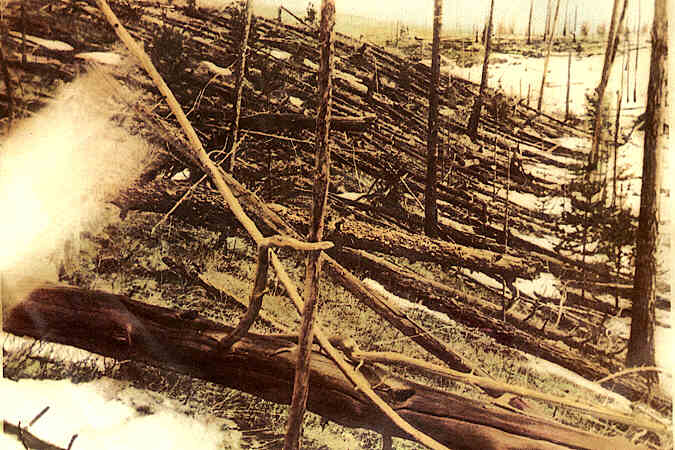
To put it simply – no, objects falling from the heavens is not a new phenomenon. Over 3600 years ago in the Dead Sea valley, evidence points to the destruction of a city from a fireball bursting in the air and causing the deaths of around 8,000 inhabitants. Russia has been hit twice in the last century or so, with the 1908 Tunguska event leveling 80 million trees across 830 square miles of unpopulated Siberia, and again in 2013 when the city of Chelyabinsk experienced a massive shockwave from an approximately 59ft wide space rock that caused millions of dollars in damage to more than 7200 buildings.
Smaller and more isolated events can still cause harm. In 1888 a town in Iraq experienced a bolide that exploded and rained down stones on the villagers, killing one and paralyzing another. Closer to home, Alabama resident Ann Hodges was resting on her couch in 1954 when a grapefruit sized rock smashed through her roof, bounced off her radio and smacked her on the side of her torso.

Since the dawn of the Space Age with the launch of Sputnik I on 4 October 1957, we humans have continued to send terrestrial materials into orbit around Earth. As satellites age and die, or fail prematurely, orbital decay drags these inert bodies from the sky, and the intense heat of atmospheric friction often disintegrates most if not all of the object. What remains has a high probability of falling in the ocean, or some inhospitable corner of the Earth, but the law of averages tells us that the more stuff we put up there, the more we will see some coming back down.
On 9 May 2024, a farmer in Saskatchewan was prepping his fields for seed when he found an object the size of a truck hood sticking out of the ground. This was the second time in 2 years that a piece of a SpaceX rocket had survived reentry, against expectations, but that doesn’t make them the only culprit. In 2000, worldwide orbital launches tallied at 85. The year 2023 saw 223 launches, and 2024 is set to blow that record out of the sky – pun intended.

As more players have entered the growing space economy, the United Nations Office of Space Affairs has formulated ground rules for both governmental and commercial entities and the liabilities they incur. 115 countries are party to the Outer Space Treaty, which says the launching state (government) is ultimately responsible for anything that originates from their sovereignty, which is often passed on to private space companies through insurance policies. Likewise, most standard home insurance policies do cover falling debris also.
So, rest assured, Chicken Little – you have a far better chance at winning the lottery or being eaten by a shark than that of being hit by space junk. But it does happen!
 The Backyard Astronomer