
In 1609 Galileo pointed his rudimentary telescope at the heavens, finding three, and then four moons orbiting Jupiter. He combined two polished glass lenses, slightly convex at different angles, and was able to magnify the image he gazed at. This wasn’t a new technology, but a basic monocular had been used for mostly terrestrial purposes, allowing humans to peer across valleys and mountaintops, or at their military foes from great distances.
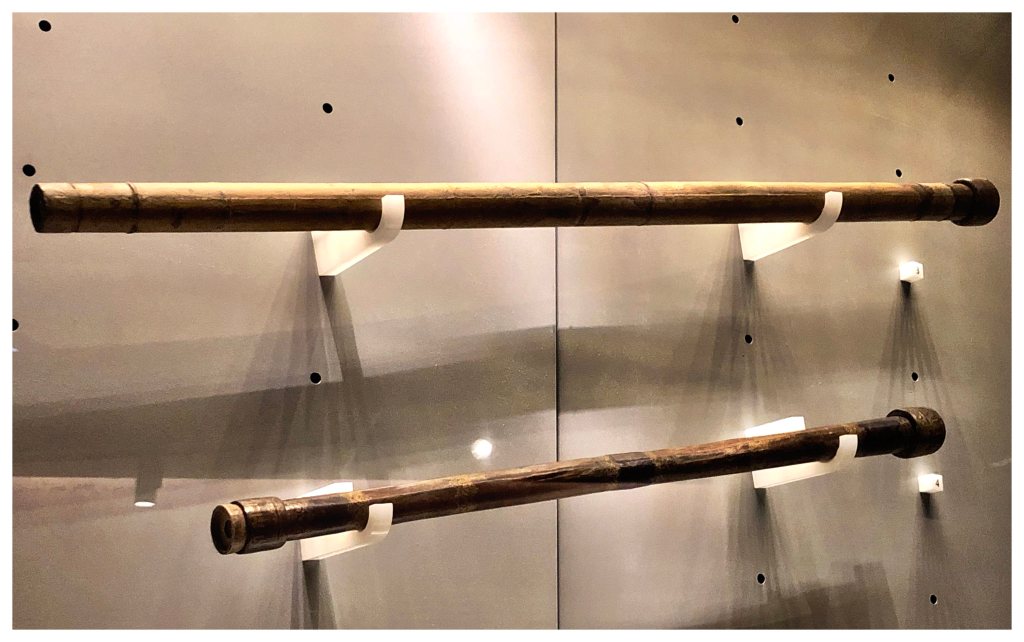
This type of magnifying device is known as a refractor scope, for the way it bends or refracts the light as it passes through the lens. The total light gathered across the surface is then bent to converge on a single point, with this distance from the lens to the converge point known as the focal length. By combining two lenses of different focal lengths at either end of a tube it was discovered that the image one looked at could be greatly magnified.
The technology of polishing lenses exploded, with royalty hiring glass makers to design bigger and better lenses for government sanctioned observatories and royal astronomers. However, as the lenses got bigger, the refracting process of light became more complicated. Just like a child’s toy prism – or the cover of a Pink Floyd album – the light we see enter the glass is divided into different colors as the various wavelengths of light are slowed at different speeds while passing through the dense medium of the glass. When this happens, a telescope can have an effect called chromatic aberration where the colors at the eyepiece don’t match up quite right and the image looks fuzzy. The other problem was that as lenses got bigger, the glass became very heavy, and can only be supported from the thin edge of the lens so as not to obstruct the light passing through it. And as the lenses got bigger, so did the tube, with the largest

To this end, a little-known polymath named Isaac Newton came up with a different type of magnification process in 1668, using a concave mirror to reflect instead of refracting the light back to the observer’s eye. A secondary mirror placed above the mirror sends the light out the side of the telescope. This solved all the main problems of the refractor, being the light was not divided into different wavelengths through the lens, the mirror could be fully supported on the back and therefore much stronger, and the light reflected back up through the tube and out at an angle allowed the tube to essentially be used twice, greatly reducing the long tubes of refracting telescopes to achieve the same focal length.

At present, some of the largest refracting telescopes have been used for great discoveries, such as the 24-inch telescope at Lowell Observatory which discovered the red shift of galaxies and mapped the moon for the Apollo missions. Reflectors on the other hand have gotten much MUCH larger, including many across Arizona like the Discovery Telescope in Happy Jack with its 4-meter primary mirror. This is also the format commonly used for the great space telescopes, with the James Webb Space Telescope’s 18 gold hexagon mirrors unfolding in early January 2022 to a completed primary mirror size of 6.5 meters.

So, which is best for you? Well, it depends on what you want to do. Many of the images we have featured in this article over the years have been from Joel Cohen who has a 7-inch refractor he uses for astrophotography. My personal telescope is a type of reflector called a Dobsonian, which is great for viewing but less so for astrophotography. Whichever route you choose to go, I wish you clear skies!
 The Backyard Astronomer