
By Adam England, The Backyard Astronomer
The beginning of Summer in the Northern Hemisphere brings warmer nights to the backyard astronomer, a stark contrast from the oft freezing viewing sessions of the Winter constellations. July offers longer days, but also some great stargazing for the moderate sized telescope. The constellations Aquila the Eagle, Cygnus the Swan, and Lyra the Lyre converge directly overhead at solar midnight, with their three brightest stars forming the Summer Triangle. Easily identifiable asterisms such as the Big Dipper, the Southern Cross, and the Summer Triangle have long been a way for the layperson to identify patterns of stars.

The Big Dipper is probably the first asterism kids in North America become familiar with. Popularized as the “Drinking Gourd” from an African American folk song in the 1920’s, the end stars of the bowl form a line to the bright star Polaris, the star closest to Earth’s Celestial Northern Pole, which helped lead escaped slaves North to freedom.
The Southern Cross is a series of 4 (sometimes 5) bright stars that is visible in the Southern Hemisphere nearly any time of year. Used in a similar fashion to find Earth’s Southern Celestial Pole, everyone from ancient Pacific navigators to Argentine gauchos have used this grouping of stars to navigate vast tracts of land and desolate expanses of ocean. Used in no less than 10 national, regional, or organizational flags, Crosby, Stills, Nash and Young spoke of it in their aptly named 1982 hit “Southern Cross”, positing, “When you see the Southern Cross for the first time, you understand now why you came this way.”
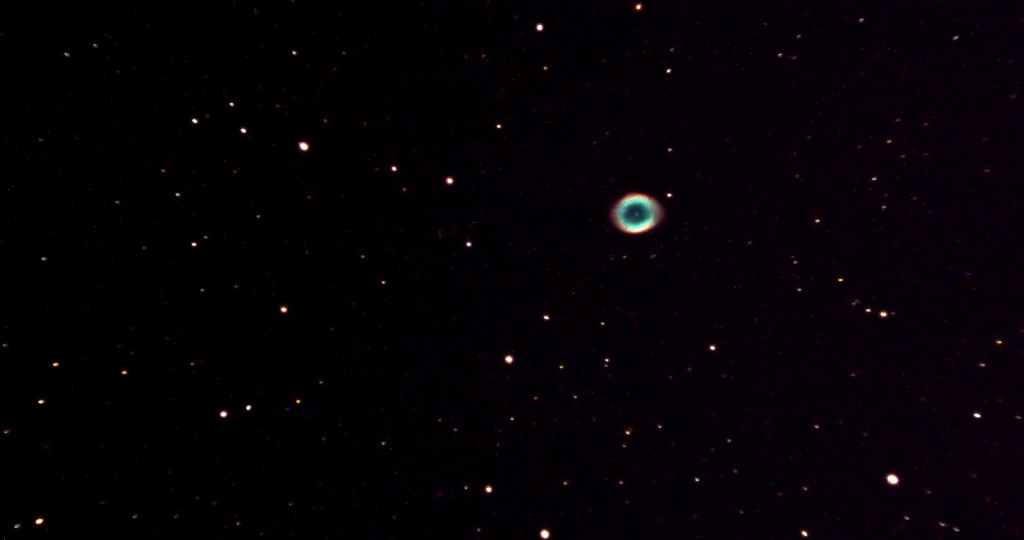
The Summer Triangle is formed by the three bright stars Altair, Deneb, and Vega, with Vega being the brightest of the three. The second star (after our Sun) to be photographed and the first to have its spectrum recorded, Vega is relatively close at just 25 light years distant and is the second brightest star visible in the Northern Hemisphere. Just below Vega, and directly on the leg of the Triangle formed with Altair, is The Ring Nebula, a small planetary nebula formed when a dying star ejects gas in all directions as it runs out of fuel required to maintain nuclear fusion. Becoming visible with 3–4-inch telescopes, you can begin to resolve the rings of gas and eventually the central remaining white dwarf star with 8-inch scopes and higher magnification.
 The Backyard Astronomer